Close Menu
 World
World
 Biography
 Health
 Education
 Business
 Lifestyle
 Sports
 Technology
 Animals
 History
 Food
Food
 Religious
 Startups
 Movies
 Politics
 Fashion
 Covid
Covid
 Diet
Diet
 Fitness
 Marketing
 Travel
 Science
 Reviews
 Social media
 Stories
 Facts
Facts
 Art
Art
 Entertainment
Hemant Code brew

Business
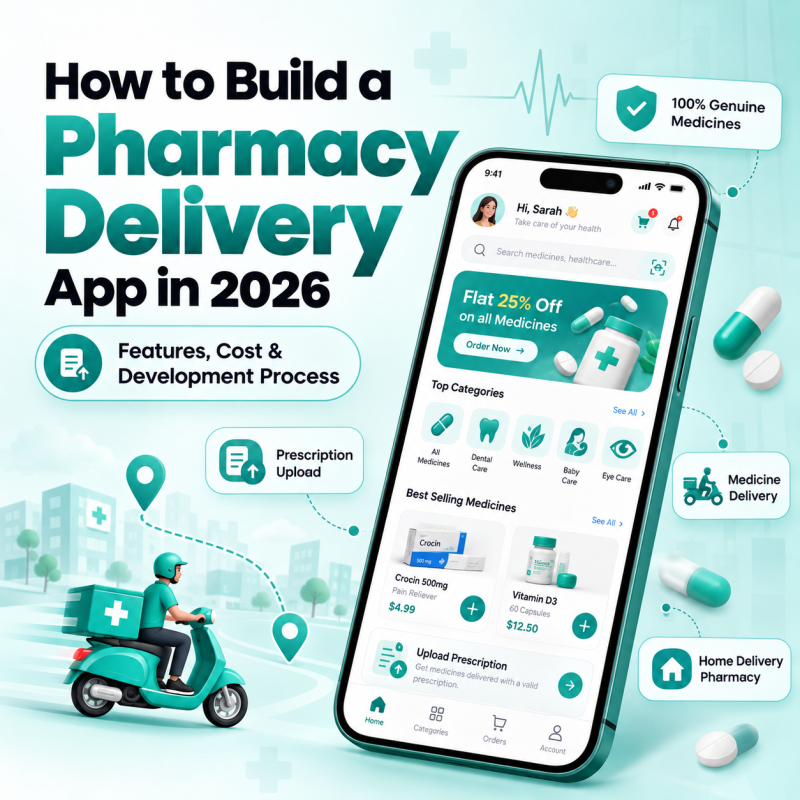
How to Build a Pharmacy Delivery App in 2026 | Features, Cost & Development Process
 Hemant Code brew
Online medicine ordering has become a convenient option for people who want medicines delivered without visiting a pharmacy. For businesses, this creates an opportunity to build a reliable Pharmacy Delivery App that connects customers, pharmacies, and delivery partners in one place.
However, pharmacy app development is different from building a regular eCommerce app. It involves prescription handling, medicine availability, payments, delivery tracking, customer data, and regulatory requirements.
What Is a Pharmacy Delivery App?
A pharmacy delivery app allows users to search medicines, upload prescriptions, place orders, make payments, and receive medicines at home.
A complete medicine delivery platform may include:
- Customer app
- Pharmacy dashboard
- Delivery partner app
- Admin panel
- Prescription verification
- Payment integration
- Order tracking
A well-designed home delivery pharmacy platform should make ordering medicines simple, secure, and convenient.
Important Features of a Pharmacy Delivery App
Medicine Search
Users should be able to search medicines by name, category, brand, or active ingredient.
Prescription Upload
For prescription medicines, customers should be able to upload a valid prescription. A proper prescription delivery service should also include a verification process before the order is approved.
Cart and Checkout
Users should be able to add medicines, check prices, enter their address, select a payment method, and confirm the order easily.
Online Payments
The app can support cards, digital wallets, UPI, cash on delivery, and other regional payment methods.
Order Tracking
Customers should be able to track every stage of their order, from confirmation to delivery.
Reorder Option
People who regularly purchase the same medicines can quickly reorder from their previous purchases.
Notifications
The app can send updates for prescription approval, order confirmation, dispatch, delivery, and medicine refill reminders.
Features for Pharmacy Owners
Pharmacy owners need a dashboard where they can manage:
- Orders
- Medicines
- Inventory
- Prescriptions
- Pricing
- Availability
- Payments
- Delivery status
For multi-pharmacy platforms, every pharmacy can have its own account and dashboard.
Admin Panel Features
The admin dashboard can help manage the entire platform, including:
- Customers
- Pharmacies
- Delivery partners
- Orders
- Payments
- Refunds
- Prescription requests
- Reports
- Service locations
How Much Does It Cost to Build a Pharmacy Delivery App?
The development cost depends on the number of features, platforms, design requirements, integrations, and overall complexity.
A basic pharmacy app may cost around $20,000 to $40,000, while a more advanced multi-pharmacy platform can cost $50,000 to $100,000 or more.
The final cost can vary depending on:
- Android or iOS development
- Native or cross-platform technology
- UI/UX design
- Prescription verification
- Payment gateway integration
- Maps and delivery tracking
- Backend complexity
- Security requirements
Pharmacy Delivery App Development Process
The development process usually starts with defining the business model and target audience.
Next, the team decides the essential features for the first version of the app.
A simple MVP can follow this flow:
Register → Search Medicine → Upload Prescription → Add to Cart → Pay → Track Order → Delivery
After that, designers create the user interface, developers build the platform, and QA teams test the app before launch.
How Long Does It Take?
A basic pharmacy delivery app may take around 3 to 5 months to develop.
A more advanced platform with multiple pharmacies, delivery partners, detailed admin controls, and several third-party integrations may take longer.
Why Start With an MVP?
Instead of adding too many features in the beginning, businesses can launch with the most important functions first.
An MVP helps you understand:
- What customers actually use
- Which features need improvement
- Where users face problems
- Which advanced features should be added later
This can reduce unnecessary development cost and speed up the initial launch.
Final Thoughts
Building a Pharmacy Delivery App in 2026 can be a strong opportunity for pharmacies, healthcare businesses, and startups.
A good medicine delivery platform should focus on easy medicine search, secure prescription handling, simple checkout, reliable payments, and timely delivery.
Whether you are creating a home delivery pharmacy platform or a complete prescription delivery service, the goal should be to make the medicine-ordering process easier, safer, and more convenient for customers.
Source:
Click for the: Full Story
You might like