



 Close Menu
 World
World
 Biography
 Health
 Education
 Business
 Lifestyle
 Sports
 Technology
 Animals
 History
 Food
Food
 Religious
 Startups
 Movies
 Politics
 Fashion
 Covid
Covid
 Diet
Diet
 Fitness
 Marketing
 Travel
 Science
 Reviews
 Social media
 Stories
 Facts
Facts
 Art
Art
 Entertainment
Yatin Samra

Technology
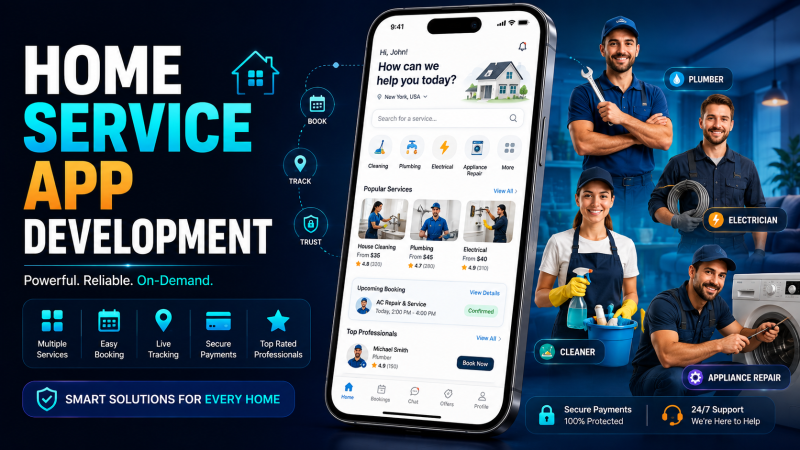
How to Build a Scalable Home Service Software Platform: 10 Key Development Considerations
 Yatin Samra
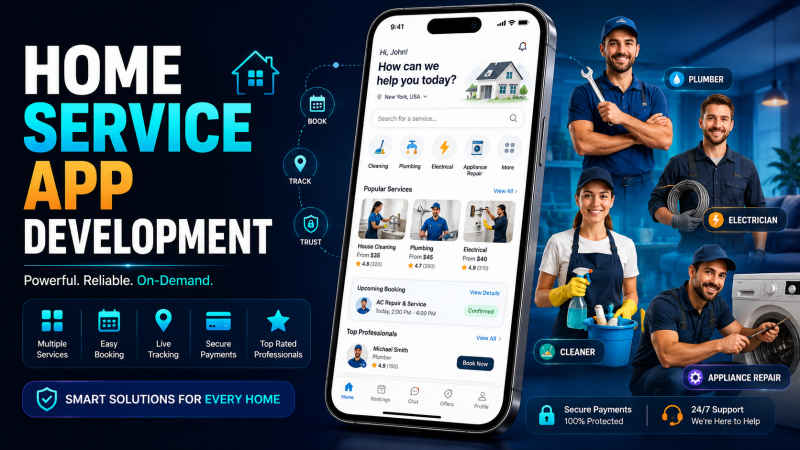
The field of home services is becoming increasingly digitized with solutions that enhance finding trustworthy service professionals and booking their services. Well-thought-out software may allow bringing customers, service professionals, and management in one integrated system.
Whether it comes to cleaning, plumbing, electrical, landscaping, appliance repair, or moving services, the potential of digital home service platforms is not yet limited. Platforms that will help discover local services and provide professionals with additional tools to perform their job will be in great demand in the USA.
For entrepreneurs who have decided to create an on-demand home service app, it is important to understand the key technical and operational specifications of such a platform before the development process starts.
1. Start With a Clear Platform Strategy
Before choosing technologies or designing screens, define what the platform is intended to accomplish.
Consider:
- Target customers
- Service categories
- Geographic coverage
- Provider types
- Booking model
- Revenue strategy
- Customer support approach
A platform serving one specific category, such as home cleaning, may have different requirements from a multi-service marketplace offering dozens of categories.
A clear scope helps prevent unnecessary features from increasing development complexity.
2. Create a Convenient Customer Experience
Customers should be able to complete the core booking journey with minimal effort.
A typical flow could be:
Choose a service → Enter location → Select date and time → Choose provider → Confirm booking → Pay → Track service
The application can make this process easier with:
- Personalized recommendations
- Saved addresses
- Favorite providers
- Service history
- Quick rebooking
- Clear pricing
The goal is to remove friction while providing enough information for customers to make confident decisions.
3. Develop a Dedicated Provider Experience
Service professionals have different needs from customers.
A provider application or dashboard can allow professionals to:
- Create and manage profiles
- Set service areas
- Define availability
- Accept bookings
- Update job status
- Communicate with customers
- Manage earnings
- View performance
A strong provider experience is essential because the quality and availability of service professionals directly affect marketplace performance.
4. Build an Intelligent Matching System
Matching customers with suitable professionals can become a major differentiator.
The system can consider factors such as:
- Location
- Service category
- Availability
- Ratings
- Experience
- Pricing
- Customer preferences
A basic platform may use predefined matching rules, while a more advanced system can incorporate data-driven recommendations.
The objective should be to connect customers with suitable providers efficiently without making the process difficult to understand.
5. Make Scheduling Flexible
Home services often require coordination between customers and professionals.
A scheduling system should support:
- Available time slots
- Provider calendars
- Recurring appointments
- Rescheduling
- Cancellations
- Buffer periods
- Automated reminders
Businesses can also use scheduling logic to reduce conflicts and improve provider utilization.
6. Integrate Location-Based Functionality
Location technology is highly relevant to home service marketplaces.
It can help the platform:
- Identify nearby professionals
- Verify service areas
- Estimate travel times
- Calculate distances
- Provide navigation
- Share arrival updates
If real-time provider tracking is offered, businesses should provide clear privacy information and controls.
7. Implement Secure Payments and Payouts
Payment infrastructure should support the needs of both customers and providers.
Depending on the business model, functionality may include:
- Online payments
- Digital wallets
- Payment authorization
- Receipts
- Refunds
- Provider payouts
- Transaction history
Businesses operating in the USA should also consider relevant tax, payment, consumer-protection, and financial requirements.
Security measures should protect payment information throughout the transaction lifecycle.
8. Establish Trust and Safety Mechanisms
Customers often need a high level of confidence before allowing a professional into their home.
A platform can build trust through:
- Provider profiles
- Ratings
- Reviews
- Identity verification
- Background checks where appropriate
- License or credential verification
- Insurance information where applicable
- Clear dispute policies
The exact verification process should depend on the services offered and applicable local requirements.
9. Build a Powerful Admin System
The administrative side of the platform is just as important as the customer application.
An admin dashboard can allow businesses to manage:
- Customers
- Providers
- Services
- Bookings
- Payments
- Refunds
- Reviews
- Complaints
- Promotions
- Reports
Real-time dashboards can also help administrators monitor operational issues and respond quickly to customer or provider concerns.
10. Design for Scalability From Day One
A platform that performs well with a few hundred users may struggle when thousands of customers and providers join.
Scalable architecture can incorporate:
- Cloud infrastructure
- Load balancing
- Caching
- Database optimization
- API management
- Automated monitoring
- Secure authentication
- Backup systems
This becomes particularly important when expanding from one US city to multiple cities and service regions.
Technology Components Behind a Modern Platform
A scalable home service ecosystem generally consists of several connected components.
Customer Application
The customer-facing application handles service discovery, booking, payments, tracking, communication, and reviews.
Provider Application
The provider interface focuses on availability, job management, communication, earnings, and performance.
Admin Dashboard
The administrative system manages users, providers, bookings, payments, content, and reports.
Backend Infrastructure
The backend connects applications with databases, payment providers, notification services, mapping tools, and other APIs.
Third-Party Integrations
Depending on the platform, integrations may include:
- Maps and geolocation
- Payment gateways
- SMS services
- Email services
- Push notifications
- Identity verification
- Analytics
Important Features for a Competitive Platform
A mature home service platform may include:
FeatureBusiness ValueService SearchImproves service discoveryProvider MatchingConnects customers with suitable professionalsOnline BookingSimplifies appointment schedulingLive Status UpdatesImproves service visibilityDigital PaymentsStreamlines transactionsRatings & ReviewsBuilds marketplace trustNotificationsKeeps users informedProvider DashboardImproves professional productivityAdmin PanelSimplifies operationsAnalyticsSupports business decisions
The platform does not necessarily need all these capabilities at launch. Features should be prioritized according to the target market and business objectives.
Testing Before Launch
A home service platform should be tested across its major workflows before going live.
Testing should cover:
- User registration
- Provider onboarding
- Service discovery
- Booking
- Scheduling
- Payments
- Cancellations
- Refunds
- Notifications
- Location services
- Reviews
- Administrative functions
Performance and security testing are also important to identify potential issues before the platform handles real customers.
How to Build for Long-Term Growth
A phased development strategy can reduce risk and make it easier to respond to market feedback.
Phase 1: MVP
Launch core functionality such as customer registration, provider onboarding, service listings, bookings, payments, notifications, and administration.
Phase 2: Marketplace Enhancement
Add provider matching, ratings, reviews, location tracking, advanced scheduling, promotions, and analytics.
Phase 3: Automation and Intelligence
Introduce AI-assisted recommendations, automated scheduling, predictive analytics, smart notifications, and other advanced features where they provide measurable value.
This approach helps businesses avoid overbuilding before understanding what customers actually need.
Conclusion
For a successful home service software platform, it is essential to connect both consumers and professionals via a secure and scalable online experience. Service discovery, professional management, smart matching, scheduling, payment solutions, location services, trust mechanisms, and administration will serve as the backbone of the ecosystem.
For those who decide to invest in on-demand home service app development, it is better to create a reliable core platform and then gradually develop additional features depending on customer behavior and needs.
Irrelevant of the target market – whether it is one city of the US or a bigger ecosystem, proper planning and architecture will help you to start growing sustainably.
To know more about this platform development, click the link below and watch the video.
Watch the video to learn more about home service platform development
Source:
Click for the: Full Story
You might like








You Might Like this