Close Menu
 World
World
 Biography
 Health
 Education
 Business
 Lifestyle
 Sports
 Technology
 Animals
 History
 Food
Food
 Religious
 Startups
 Movies
 Politics
 Fashion
 Covid
Covid
 Diet
Diet
 Fitness
 Marketing
 Travel
 Science
 Reviews
 Social media
 Stories
 Facts
Facts
 Art
Art
 Entertainment
Shewta Singh

Lifestyle
Ilkal Saree Online: Find Authentic Handloom Styles for Every Occasion
 Shewta Singh
Shopping for an Ilkal saree online can be confusing if you don't know what separates a genuine handloom piece from a power-loom imitation. This guide covers what to check before you buy, how handloom Ilkal sarees differ from mass-produced versions, and what makes the Ilkal silk saree distinct from other regional weaves — so you can make an informed choice, whether you're buying from a specialty weaver or a brand like Indeloom.
What Makes an Ilkal Saree Different from Other Handloom Sarees?
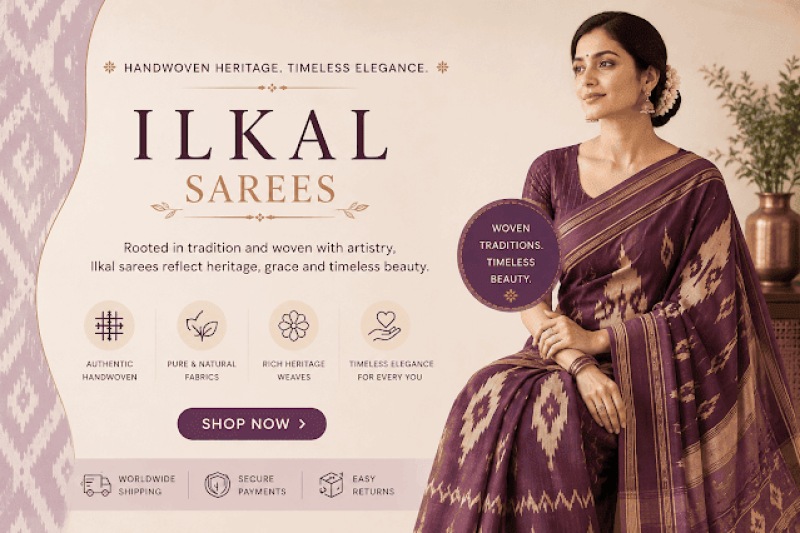
An Ilkal saree is identified by its unique weaving technique called "tope teni" or "kondi," where the body and the pallu (the decorative end piece) are woven separately using different sets of threads and then joined together. This is why an Ilkal saree online often shows a distinct color break between the body and the pallu — commonly a contrasting red, maroon, or black pallu against a lighter body. This technique is native to Ilkal town in Karnataka's Bagalkot district and isn't replicated in the same way in sarees like Kanjeevaram or Banarasi weaves.
Where Does the Ilkal Saree Originate From?
The Ilkal saree originates from Ilkal, a town in the Bagalkot district of Karnataka, where handloom weaving has been practiced for generations. The craft has been recognized with a Geographical Indication (GI) tag, which legally protects the name "Ilkal" for sarees woven using the traditional technique in this region. You can verify registered GI products, including regional handloom crafts, through the Government of India's official GI registry at ipindia.gov.in.
Why Does the GI Tag Matter When Buying Online?A GI tag confirms that a product's identity is tied to its specific geographic origin and traditional method of production, which helps buyers distinguish authentic regional handloom from imitations made elsewhere. When buying an Ilkal saree online, checking whether a seller references the GI status or sources directly from Karnataka's weaving clusters is a useful, though not the only, indicator of authenticity.
How Do You Identify a Genuine Handloom Ilkal Saree?
A genuine handloom Ilkal saree typically shows small irregularities in the weave that machine-made fabric doesn't have, since it's woven by hand on a pit loom or frame loom. Look for the traditional "Kasuti" embroidery-inspired motifs, the temple tower (gopura) border pattern, and the contrast-color pallu joined through the tope teni technique. A uniform, perfectly even weave with no texture variation often signals a power-loom reproduction rather than genuine handloom work.
What Materials Are Used in an Ilkal Saree?Traditional Ilkal sarees are woven using a combination of cotton warp threads and silk or art-silk weft threads, giving the fabric its characteristic sheen and texture. An Ilkal silk saree specifically refers to versions where silk is used more predominantly, offering a richer drape and finish suited to festive or ceremonial wear, compared to the lighter, everyday cotton-based Ilkal sarees.
Ilkal Saree vs Ilkal Silk Saree: What's the Difference?
FeatureRegular Ilkal SareeIlkal Silk SareePrimary MaterialCotton with silk/art-silk palluPredominantly silkWeightLighterHeavier, richer drapeBest OccasionDaily wear, casual festivitiesWeddings, festive, ceremonialSheenModerateHighPrice RangeGenerally more affordableComparatively higherMaintenanceEasy careNeeds careful handling/dry cleaning
If you want something for everyday or casual festive wear, a regular Ilkal saree works well. For weddings or special occasions, an Ilkal silk saree offers a more elevated, formal look.
What Occasions Suit an Ilkal Saree?
Ilkal sarees are versatile enough to fit multiple settings, including:
- Festivals and religious ceremonies
- Weddings and family functions (especially silk variants)
- Traditional or cultural events
- Everyday ethnic wear (cotton-based variants)
- Gifting for occasions tied to South Indian or Karnataka traditions
Their distinct pallu and border patterns also make them a popular choice for those wanting a traditional look that's visually different from more commonly seen weaves.
How Should You Style an Ilkal Saree?
Styling an Ilkal saree is fairly straightforward given its bold pallu and border design:
- Blouse choice: A contrasting solid-color blouse works best, letting the pallu's pattern stand out.
- Jewelry: Traditional gold or temple jewelry complements the saree's motifs well.
- Draping style: The Kasuti-style temple border looks most prominent with a classic Nivi drape.
- Footwear: Simple juttis or block heels keep the overall look balanced.
- Hair and makeup: A traditional bun with minimal makeup lets the saree's craftsmanship take center stage.
What Should You Check Before Buying an Ilkal Saree Online?
Before purchasing, go through this checklist:
- Weave technique — confirm if it's genuinely handloom or power-loom
- Material composition — check the cotton-to-silk ratio, especially for an Ilkal silk saree
- Pallu and border pattern — look for the tope teni join and temple tower border
- Seller transparency — check if the source or weaving cluster is mentioned
- Return and exchange policy — important since color and texture can vary from photos
- Care instructions — silk variants often need dry cleaning, while cotton ones may be hand-washable
Why Consider Indeloom for Ilkal Sarees?
Indeloom is among the brands offering handloom Ilkal sarees, including Ilkal silk saree options, for those looking to shop this weave online. As with any handloom purchase, it's worth reviewing the specific product details — material composition, weaving technique, and care instructions — listed on the individual product page before buying, since these can differ across styles and collections.
Frequently Asked Questions
Is an Ilkal saree the same as a handloom saree?
Not all Ilkal sarees are handloom; the name refers to the region and traditional weaving style, but the market also has power-loom versions. Checking for handloom-specific texture and GI-linked sourcing helps confirm authenticity.
What is special about the pallu of an Ilkal saree?
The pallu is woven separately from the body using the tope teni technique and is usually a contrasting color, often red or maroon, featuring temple tower motifs.
Can an Ilkal saree be worn for weddings?
Yes, particularly the silk variants, which have a richer drape and sheen suited to festive and wedding occasions.
How do I take care of an Ilkal silk saree?
Silk versions generally require dry cleaning and should be stored folded in a cotton or muslin cloth away from direct sunlight to preserve color and texture.
Is Ilkal saree GI-tagged?
Yes, the Ilkal saree carries a Geographical Indication tag, which ties its name and traditional weaving method to its origin in Karnataka.
Choosing an Ilkal saree online comes down to understanding what genuine handloom craftsmanship looks like — the tope teni weave, the contrasting pallu, and the material composition — before comparing it against everyday cotton versions or a richer Ilkal silk saree for special occasions. Checking a seller's transparency about sourcing and weave technique will help you land on a saree that's both authentic and right for your occasion.
Source:
Click for the: Full Story
You might like