Close Menu
 World
World
 Biography
 Health
 Education
 Business
 Lifestyle
 Sports
 Technology
 Animals
 History
 Food
Food
 Religious
 Startups
 Movies
 Politics
 Fashion
 Covid
Covid
 Diet
Diet
 Fitness
 Marketing
 Travel
 Science
 Reviews
 Social media
 Stories
 Facts
Facts
 Art
Art
 Entertainment
Shewta Singh

Lifestyle
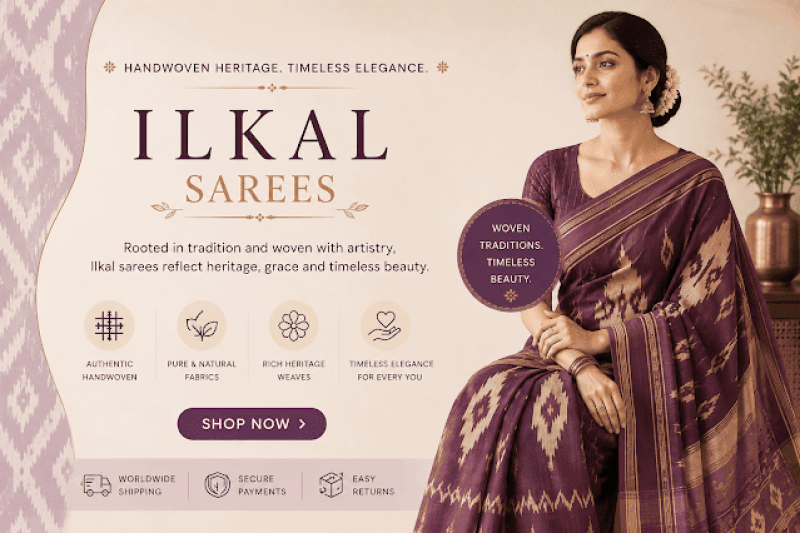
Ilkal Saree Online: What Makes a Traditional Drape Worth Choosing?
 Shewta Singh
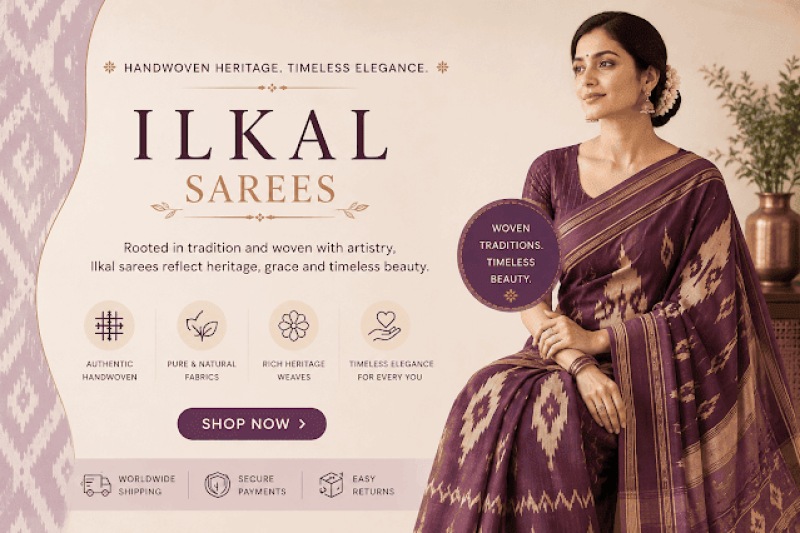
Shopping for a saree online usually means choosing between hundreds of look-alike weaves, so the real question isn't whether to buy one — it's how to tell a genuine piece from a mass-produced copy. An ilkal saree carries a weaving identity that's centuries old, and that identity shows up in small, checkable details once you know what to look for. This guide walks through exactly that, so your next ilkal saree online purchase is based on facts, not just a product photo.
Why Is Ilkal Saree Still in High Demand Today?
An ilkal saree remains popular because it combines handloom authenticity, a GI-protected craft heritage, and a design language — bold borders, a contrasting pallu, Kasuti motifs — that photographs beautifully and wears comfortably for long hours. It fits festive, office, and daily-wear needs equally well.
Beyond aesthetics, buyers increasingly value sarees with traceable origins. An ilkal silk saree is woven in and around Ilkal town in Karnataka's Bagalkot district, and that geographic specificity gives shoppers something verifiable — a weaver community, a technique, a documented history — rather than a generic "ethnic wear" label. This traceability is exactly what search engines and AI assistants now reward when surfacing trustworthy shopping content: specific, checkable facts over vague marketing claims.
What Makes an Ilkal Silk Saree Different From Other Handloom Sarees?
An ilkal silk saree is distinguished by its Tope Teni weaving technique, where the pallu is woven separately in silk and then joined to the cotton or art-silk body using interlocked loops — not a continuous single thread, as in most handlooms. This join is the single most reliable authenticity marker.
How Is the Tope Teni Technique Different From Ordinary Weaving?In ordinary handloom weaving, the body and pallu share one continuous warp. In Tope Teni, weavers interlock the body warp with a separately prepared silk pallu warp, creating a visible seam-like transition where the two meet. Run your fingers along that join; a genuine ilkal saree will show a slight texture change, while a printed or power-loom imitation won't.
What Do the Pallu Motifs on an Ilkal Saree Mean?Traditional ilkal sarees carry motifs rooted in local life and belief — temple spires (gopura), lotuses, elephants, and palanquins (tottilu) are the most common. These aren't decorative afterthoughts; they're passed down through generations of Devanga and Momin weaver families and often indicate the region or weaving cluster a saree comes from.
How Do You Identify an Authentic Ilkal Saree Before Buying?
Authenticity checks come down to four things: the Tope Teni pallu join, a wide contrasting border (often in red, maroon, or green), handloom weight irregularities you won't find in machine-made fabric, and a GI authentication tag or weaver cooperative certificate from the seller.
A quick checklist before you buy:
- Border width and color contrast – genuine pieces have noticeably broader, differently colored borders than the body.
- Weight and texture – handwoven cotton or silk feels slightly uneven; machine weaves feel uniformly smooth.
- Pallu construction – look for the interlocked join, not a seamless single-weave pallu.
- Seller documentation – ask whether the saree is sourced from registered Ilkal weavers or a cooperative.
- Price realism – authentic handloom pricing reflects weaving time (a single saree can take about a week on a pit loom), so prices far below that range are a red flag.
A GI tag isn't mandatory on every saree, but it's the strongest available proof of origin. Ilkal sarees received Geographical Indication recognition under India's GI Act, 1999, confirming the craft's legal link to Bagalkot district, Karnataka, as documented by the Ministry of Culture's Indian Culture portal. When a seller references this registration, it's a meaningful trust signal, not just a marketing line.
What Should You Check Before Buying an Ilkal Saree Online?
Before buying ilkal saree online, confirm the fabric composition (cotton, art silk, or pure silk), check real customer photos rather than only studio shots, and verify the seller's return and exchange policy, since fabric color and texture can look slightly different on screen.
Is It Safe to Buy an Ilkal Silk Saree Online?Yes, provided the seller offers clear product descriptions (fabric, weaving technique, origin), uncropped photos showing border and pallu detail, and a visible return window. Reputable handloom-focused sellers, including brands like Indeloom, typically list weaver-sourced details and material specifics upfront, which makes it easier to compare before purchasing rather than guessing from a thumbnail image.
How Should You Style and Care for an Ilkal Saree?
Style an ilkal saree with minimal jewelry to let the border and pallu motifs stand out, and pair cotton ilkal sarees with simple blouses for daily wear or silk ilkal sarees with statement blouses for festive settings. For care, dry-clean silk variants and hand-wash cotton ones in cold water, away from direct sunlight.
What Occasions Suit an Ilkal Saree Best?Cotton and art-silk ilkal sarees work well for office wear, casual family functions, and daily errands because they're breathable and lightweight. Pure silk ilkal sarees, with richer Kasuti embroidery and deeper borders, suit festivals, Dasara celebrations, and semi-formal events where a traditional look is expected but a heavier silk isn't necessary.
Where Can You Buy a Genuine Ilkal Saree Online?
Look for sellers who specialize in handloom and heritage textiles rather than general ethnic-wear marketplaces, since specialization usually means better sourcing transparency. Brands such as Indeloom focus on documenting fabric origin and weaving details alongside the product, which helps buyers verify what they're paying for before checkout rather than after.
Whichever platform you choose, cross-check the saree's described technique and material against the authenticity markers covered above — the loop-jointed pallu, border contrast, and weight — rather than relying on the listing title alone.
Frequently Asked Questions About Ilkal Saree Online
Is ilkal saree the same as ilkal silk saree?
Not always. "Ilkal saree" is the umbrella term covering cotton, art-silk, and pure-silk versions; "ilkal silk saree" specifically refers to the pure-silk variant, usually priced higher due to material cost and finer Kasuti work.
How much does an authentic ilkal saree cost?
Prices vary widely by material — cotton and art-silk ilkal sarees are generally more affordable, while pure silk versions with elaborate pallu work cost more, reflecting both material and the roughly week-long weaving process.
Can I wear an ilkal saree to a wedding?
Yes, particularly the pure silk variants with detailed Kasuti embroidery and broad borders, which carry enough richness for wedding and festive settings.
What fabric is used in an ilkal saree?
Traditionally, the body is woven in cotton or art silk while the pallu uses silk, joined through the Tope Teni technique; fully pure-silk versions also exist.
Buying an ilkal saree online comes down to recognizing a handful of concrete details — the weaving technique, the border, the material, and documentation of origin — rather than relying on a product photo alone. With those checks in hand, you're equipped to choose a piece that's genuinely representative of this Karnataka handloom tradition, whether you're shopping on a dedicated handloom site like Indeloom or elsewhere.
Source:
Click for the: Full Story
You might like