



 Close Menu
 World
World
 Biography
 Health
 Education
 Business
 Lifestyle
 Sports
 Technology
 Animals
 History
 Food
Food
 Religious
 Startups
 Movies
 Politics
 Fashion
 Covid
Covid
 Diet
Diet
 Fitness
 Marketing
 Travel
 Science
 Reviews
 Social media
 Stories
 Facts
Facts
 Art
Art
 Entertainment
Moore Nadia

Entertainment
Infinite Craft: I Started With Water and Accidentally Built a Rabbit Hole
 Moore Nadia
I honestly thought Infinite Craft would be one of those “press buttons, get a result” browser games. Like, cool idea, sure… but I’d probably poke around for ten minutes and move on. Then I made my first few element combinations, and suddenly I was doing the thing I never admit out loud: opening “just one more” experiment because I had a new question in my head.
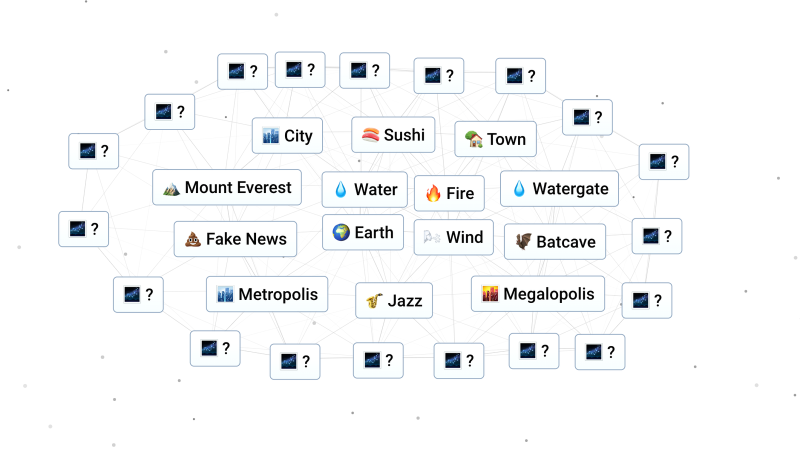
It starts simple. You begin with Water, Fire, Earth, and Wind. I dragged one onto the crafting board, added another, and waited for the game to do its magic. Most of the early results felt familiar in a way that made me overconfident—like I’d almost “figured it out.”
And then it clicked: this isn’t a straight-line puzzle with one obvious path. It’s an open-ended crafting game built around trying stuff, seeing what happens, and then using what you got as fuel for the next attempt.
The fun part is not knowing what’s next
The moment that hooked me was how naturally I started thinking, What happens if I combine these two? After each discovery, I’d feel this little rush—like the game had given me a clue—except the clue wasn’t always what I expected.
Sometimes a combination produced something useful, and I’d immediately try it again with another element. Other times, I’d get a surprise result that felt completely random… but in a fun way. I kept ending up in these loops where I’d discover something, then want to test it right away with Water or Fire or Earth, just to see how the outcome changes.
I also noticed something I didn’t expect at first: in this browser version, repeating the same combination can sometimes give a different result. So I’d think I was “done” with a pairing, only to retry it later and get something new. That variability made experimenting feel less like memorizing and more like actually exploring.
Building a Pokémon-ish team… except it’s an element stash
In my head, I started organizing discoveries like I was building a Pokémon team (I know, my brain does this for everything). Certain elements felt like they had roles—some were great for branching into new ideas, others seemed like good “connectors” between categories.
The nice part is that discovered items don’t just vanish. They’re saved in my collection, and that’s what keeps me from feeling like I’m constantly starting over. If I forget where something is, the search function is there, and when the list gets big, I really appreciate being able to sort discoveries by emoji. It sounds silly until you’re scrolling for way too long and realize grouping by little icons is way easier than reading.
Mistakes that made me better (and a couple that were just embarrassing)
I made plenty of mistakes early on. I’d see a combination that seemed promising and rush the next step without checking what else was already in my collection. A few times I accidentally went too far down a “cool idea” route and ran into dead ends where I had nothing that fit the direction I was forcing.
There was also the classic problem: I’d think an interaction would be obvious—like combining two things that “should” lead somewhere specific—and then I’d get a totally different result. Instead of getting frustrated, that confusion made me want to test new pairings, because it proved the game isn’t going to reward assumptions. It rewards curiosity.
Using the board like a scratchpad (broom vs. trash)
What surprised me was how much I cared about managing the chaos on the crafting board itself. The game gives you tools for that, and they’re honestly helpful in a very “casual gamer” way.
When I wanted to reset without losing everything I’d discovered, I used the broom to clear the crafting board. That was great when I had the board cluttered with experiments I didn’t want to keep juggling.
But I also used the trash tool once or twice when my collection got messy. Deleting a discovery from the collection felt a little drastic, so I mostly saved that for obvious clutter—things I knew I wasn’t going to touch again. It made me realize that even though the system is open-ended, I still had to steer my own attention.
What I learned after a few runs
The biggest lesson: planning helps, but flexibility matters more. The game is open-ended, so there’s no single objective to grind toward. What kept me playing wasn’t “winning,” it was the satisfaction of widening my options—discovering something new, saving it, then using it in another experiment.
A couple of casual tips I ended up relying on:
I try to keep track of which discoveries actually open new branches instead of just chasing whatever looks cool.
When I’m stuck, I don’t force it—I test a few other element combinations, and sometimes retrying an earlier pairing is worth it.
Final thought
Now when I open Infinite Craft , I’m not thinking about finishing a quest. I’m thinking about curiosity. I’m thinking, “Okay, but what if I try this with something I haven’t used yet?”
If you like browser games where the fun is experimenting, you’ll probably get hooked too. Jump in, combine Water, Fire, Earth, and Wind, and then tell me what weird discovery you got—because I’d honestly love to compare notes. We can even play a little “what should I try next?” together.
Source:
Click for the: Full Story
You might like







You Might Like this