



 Close Menu
 World
World
 Biography
 Health
 Education
 Business
 Lifestyle
 Sports
 Technology
 Animals
 History
 Food
Food
 Religious
 Startups
 Movies
 Politics
 Fashion
 Covid
Covid
 Diet
Diet
 Fitness
 Marketing
 Travel
 Science
 Reviews
 Social media
 Stories
 Facts
Facts
 Art
Art
 Entertainment
Nidhi Singh

Business
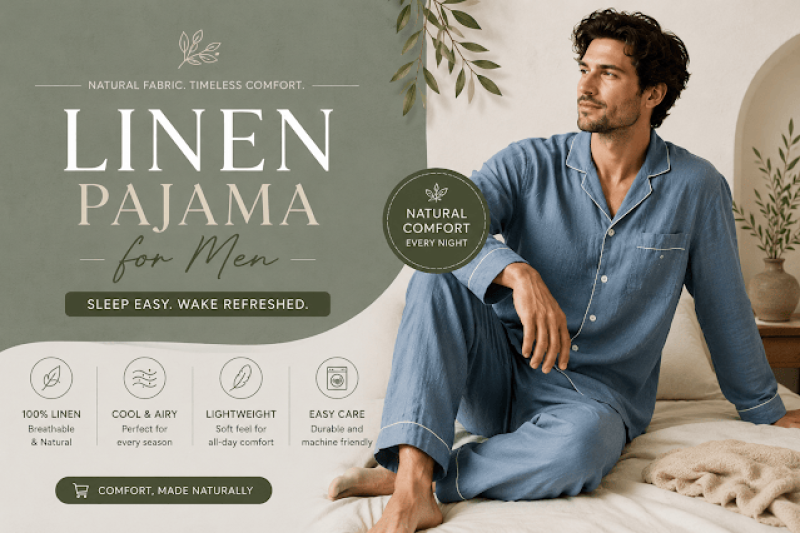
Men's Linen Pajama by Fabmade: Redefining Everyday Comfort With Effortless Style
 Nidhi Singh
A well-made men's linen pajama solves a specific problem: staying genuinely comfortable through warm days and humid nights without the fabric clinging or trapping heat. Linen's open weave lets air move through far more freely than tighter cotton weaves, which is the main reason it's become a go-to choice for everyday loungewear in warmer climates. The sections below cover exactly what to check in fabric, fit, and finish before you buy one, and what to verify on a brand's product page before checkout.
Why Choose a Men's Linen Pajama Over Regular Cotton Pajamas?
How Linen Handles Heat and Humidity
Linen fibers are naturally more porous than cotton, allowing greater airflow against the skin and faster moisture absorption and release. This makes a linen pajama noticeably cooler to sleep or lounge in during humid nights compared to a similarly weighted cotton pajama. It's a practical reason linen has moved from occasional resort wear into regular everyday men's pajama rotations across warmer regions.
The Natural Texture That Looks Intentional
Linen develops a soft, relaxed crease with wear and washing, which reads as a deliberate, lived-in texture rather than an unkempt one. This natural finish is part of why linen pajamas now appear in casual daywear collections, not just bedtime wear — the texture looks considered even when you haven't ironed it, which isn't true of most other everyday fabrics.
What Should You Look for When Buying a Linen Pajama for Men?
Fabric Weight and Weave
Check the product listing for fabric weight, often shown in GSM (grams per square meter). A lighter-weight linen pajama for men suits hot, humid climates and everyday lounging, while a slightly heavier weave holds its shape better and works for cooler evenings. The weave density also affects transparency, so a tighter weave is preferable if you plan to wear the pajama outside the home occasionally.
Fit and Drawstring Details
Look for a visible, adjustable drawstring waistband rather than a fully elastic one, since this allows a more secure, customizable fit that holds up through movement. Check whether the listing specifies a regular, relaxed, or tapered fit, as linen's drape varies noticeably depending on the cut — a tapered leg generally looks neater, while a relaxed cut prioritizes maximum airflow and ease.
How Does Linen Compare to Other Men's Pajama Fabrics?
FabricBreathabilityMaintenanceBest ForLinenVery HighNeeds occasional ironingHot, humid weatherPure cottonHighLow–ModerateEveryday, year-round wearCotton-linen blendHighModerateBalance of comfort and easePolyester blendModerateVery LowTravel, low-maintenance use
Linen vs Cotton for Daily Wear
Cotton tends to hold a cleaner, less creased look through the day, making it slightly more practical for daily wear with minimal upkeep. Linen, by comparison, prioritizes breathability over a crisp appearance, so it suits those who value maximum airflow and don't mind a relaxed, naturally creased look by the end of the day.
Linen vs Blended Fabrics for Low Maintenance
A cotton-linen blend offers a middle ground — retaining much of linen's breathability while reducing how quickly the fabric creases, which makes it easier to maintain for frequent wearers. If low maintenance matters more than maximum breathability, a blend or pure cotton pajama may suit your routine better than 100% linen.
How Should a Men's Linen Pajama Fit for All-Day Comfort?
Waist and Length
The waistband should sit comfortably at the natural waist with the drawstring fully adjustable, avoiding both a sagging, loose fit and an overly tight one that digs in while seated. Length should reach the ankle without excess fabric pooling at the feet, since linen's drape tends to look better with a clean, consistent break.
Leg Width and Movement
A straight or slightly relaxed leg allows better airflow and ease of movement than a very fitted cut, which matters more with linen since the fabric has minimal stretch. If you move around a lot at home or step out in the pajama, check that the inseam allows a full stride without fabric pulling across the thigh.
How Do You Style a Linen Pajama for Different Settings?
At-Home and Lounge Styling
Pair a linen pajama with a simple cotton t-shirt or a half-sleeve shirt for comfortable at-home wear, letting the breathable fabric do most of the work through warm afternoons or evenings. Solid, muted tones tend to be the most versatile for everyday lounging, since they pair easily with whatever top you reach for.
Stepping Out Casually
For short outings, pair the pajama with minimal footwear like slides or sneakers and a slightly more fitted top to balance the relaxed bottom. A solid-colored linen pajama with a clean, tapered fit generally looks more outing-appropriate than a heavily printed or very loose-cut one.
How Do You Care for a Men's Linen Pajama to Keep It Looking Good?
Washing and Drying
Wash linen in cool or lukewarm water on a gentle cycle to protect the fibers, and avoid high-heat drying, which accelerates wrinkling and can weaken the fabric over repeated cycles. Air-drying or a low-heat tumble setting generally keeps linen pajamas in better condition over time than regular high-heat drying.
Ironing and Storage
Iron linen while it's still slightly damp for the smoothest finish, or simply embrace the natural crease for a relaxed look. Store linen pajamas folded rather than tightly packed to avoid deep, hard-to-remove creases forming before the next wear.
What Should You Check Before Buying a Men's Pajama From Fabmade?
Fabric and Fit Details to Verify
Before buying a men's pajama from Fabmade, check the specific product listing for fabric composition, GSM weight, and fit description, since these details determine how the pajama will actually feel and drape once worn. Collections can vary by season, so confirming these specifics on the exact product page is more reliable than going by category images alone.
Reading the Product Page Carefully
Look for a clear size chart with waist and length measurements, and cross-check it against your own body measurements rather than relying on standard S/M/L sizing. Checking the return or exchange policy before ordering also helps, particularly for a fabric like linen where fit and drape can feel different once worn compared to how it appears in photos.
For broader context on India's growing focus on domestic linen and flax fibre production, the Indian Council of Agricultural Research (ICAR) has noted that a significant share of linen fibre is currently imported, with research underway to expand domestic flax cultivation.
FAQs
Is linen pajama good for daily use?
Yes, linen pajamas work well for daily use in warm or humid climates due to their breathability, though they require slightly more care than cotton to stay crease-free.
Does a men's linen pajama shrink after washing?
Linen can shrink slightly after the first few washes, so checking the care label and washing in cool water helps maintain the original fit.
Is linen or cotton pajama better for summer?
Linen generally offers better breathability and cooling in summer due to its more open weave, though cotton requires less maintenance.
How do I choose the right size for a men's pajama online?
Compare the brand's size chart measurements against your own waist and length rather than relying on standard size labels, since fit can vary between brands.
Final Thoughts
A well-chosen men's linen pajama comes down to the right fabric weight, a fit that holds up through daily wear, and care that keeps the natural texture looking intentional rather than worn out. Whether you're drawn to a breathable linen pajama for men for its cooling comfort or simply browsing a men's pajama range from Fabmade, checking fabric details, fit, and sizing on the specific product page remains the most reliable way to get a pajama that earns its place in daily rotation.
Source:
Click for the: Full Story
You might like







You Might Like this