



 Close Menu
 World
World
 Biography
 Health
 Education
 Business
 Lifestyle
 Sports
 Technology
 Animals
 History
 Food
Food
 Religious
 Startups
 Movies
 Politics
 Fashion
 Covid
Covid
 Diet
Diet
 Fitness
 Marketing
 Travel
 Science
 Reviews
 Social media
 Stories
 Facts
Facts
 Art
Art
 Entertainment
Sakshi Padiyar

Education
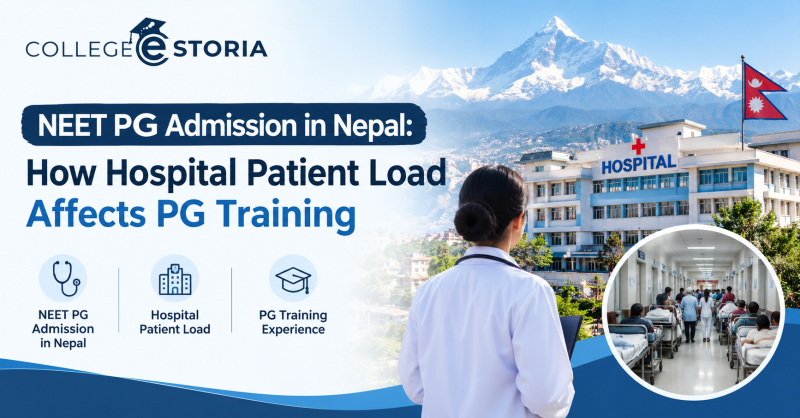
NEET PG Admission in Nepal: How Hospital Patient Load Affects PG Training
 Sakshi Padiyar
When comparing options for postgraduate medical education, students often focus on college reputation, fees, location, and available specialities. However, one factor deserves equal attention: hospital patient load. For an MD/MS resident, the teaching hospital is where theoretical knowledge is converted into practical clinical skills.
For Indian medical graduates researching Top NEET PG Admission in Nepal, understanding patient volume and case diversity can help them make a more informed college preference. Similarly, students comparing NEET PG Admission in India with postgraduate opportunities in Nepal should evaluate the actual clinical training environment rather than looking only at rankings or tuition fees.
Why Does Patient Load Matter in PG Training?
Postgraduate medical education is highly clinical. Residents need regular exposure to patients to develop skills such as history taking, physical examination, diagnosis, treatment planning, emergency management, procedures, and follow-up.
A hospital with a healthy patient inflow can expose residents to a broader range of clinical presentations. This can be particularly important for clinical branches such as General Medicine, General Surgery, Paediatrics, Orthopaedics, Anaesthesiology, Obstetrics & Gynaecology, and Emergency Medicine.
Nepal's postgraduate medical education regulations state that PG programs should be competency-based and include clinical exposure to related subspecialties. The regulations also emphasize meaningful clinical training and independent learning.
Therefore, when evaluating a PG medical college, students should ask a simple question: What kind of clinical exposure will I actually receive during residency?
Patient Volume Is More Than Just a Number
A high patient count does not automatically mean better postgraduate training. What matters is the combination of patient volume, case diversity, resident involvement, faculty supervision, and department infrastructure.
For example, a busy emergency department may expose residents to trauma, acute infections, surgical emergencies, and other urgent conditions. A high-volume Obstetrics & Gynaecology department may provide exposure to antenatal care, normal deliveries, complications, and operative procedures.
Similarly, a strong General Medicine department can expose residents to multiple chronic and acute conditions, allowing them to develop clinical reasoning over time.
This is why students searching for Top NEET PG Admission in Nepal should look beyond the name of the medical college and investigate the hospital attached to the program.
OPD and IPD Exposure: What Should Students Check?
Two important indicators are Outpatient Department (OPD) and Inpatient Department (IPD) activity.
OPD Exposure
OPD gives residents opportunities to evaluate patients who may present with common diseases, chronic conditions, undiagnosed complaints, and follow-up requirements. Consistent OPD exposure can help residents improve history-taking, examination, differential diagnosis, and treatment planning.
IPD Exposure
Inpatient care provides a different learning environment. Residents can follow patients over several days, observe disease progression, review investigations, modify treatment plans, and understand complications.
For PG students, both OPD and IPD exposure are valuable because they develop different aspects of clinical decision-making.
Does Patient Load Improve Hands-On Training?
Potentially, yes—but only when residents are actively involved in patient care under appropriate supervision.
A large patient volume can create more opportunities for residents to observe and participate in clinical procedures. However, students should not assume that a busy hospital automatically guarantees hands-on experience.
Before selecting a college, ask:
- How many patients does the department typically handle?
- How much resident involvement is permitted?
- What procedures can residents perform under supervision?
- How many faculty members are available?
- Is emergency exposure included?
- Are specialty clinics available?
- Does the department have adequate diagnostic facilities?
These questions provide a much clearer picture than simply looking at a college's overall reputation.
Patient Diversity Is Equally Important
Patient volume should also be considered alongside case diversity.
A hospital that serves a wide geographical population may encounter different types of diseases, complications, age groups, and clinical conditions. This can make residency training more comprehensive.
For instance, a resident who regularly encounters both routine and complicated cases may gradually develop better confidence in clinical assessment and management.
This is particularly relevant when comparing NEET PG Admission in India and postgraduate medical education opportunities in Nepal. Instead of assuming that one country or institution automatically provides better exposure, students should compare the specific department, hospital, patient profile, faculty, and training structure.
How Should Indian Students Evaluate a Nepal PG College?
Indian students considering postgraduate education in Nepal should create a checklist before making their preference list.
Start with the recognition and regulatory status of the institution. Then examine its university affiliation, postgraduate programs, teaching hospital, department infrastructure, faculty strength, OPD/IPD activity, emergency services, and available clinical procedures.
The official Medical Education Commission also publishes PG seat information by institution and program, so students should verify the latest seat matrix and admission information before applying.
It is also important to understand that the admission process and examination framework for postgraduate medical education in Nepal should not simply be assumed to be identical to NEET PG Admission in India. Students should verify the current eligibility and admission requirements applicable to foreign candidates through official sources before making decisions.
Final Takeaway
For students looking at Top NEET PG Admission in Nepal, hospital patient load should be an important part of the college-selection process. However, patient volume alone should never determine the final choice.
A stronger evaluation combines patient volume, case diversity, clinical workload, faculty supervision, infrastructure, emergency services, procedural exposure, and speciality-specific training.
The same approach is useful when comparing NEET PG Admission in India with postgraduate options abroad. Instead of choosing a college only because of its name or fee structure, examine where and how you will actually train.
A good postgraduate program should help you move from observing cases to understanding them, managing them under supervision, and gradually developing the confidence required of an independent specialist.
Source:
Click for the: Full Story
You might like






You Might Like this