Close Menu
 World
World
 Biography
 Health
 Education
 Business
 Lifestyle
 Sports
 Technology
 Animals
 History
 Food
Food
 Religious
 Startups
 Movies
 Politics
 Fashion
 Covid
Covid
 Diet
Diet
 Fitness
 Marketing
 Travel
 Science
 Reviews
 Social media
 Stories
 Facts
Facts
 Art
Art
 Entertainment
Yatin Samra

Technology
On-Demand Home Services App Development in USA: A Complete Business and Technology Guide
 Yatin Samra
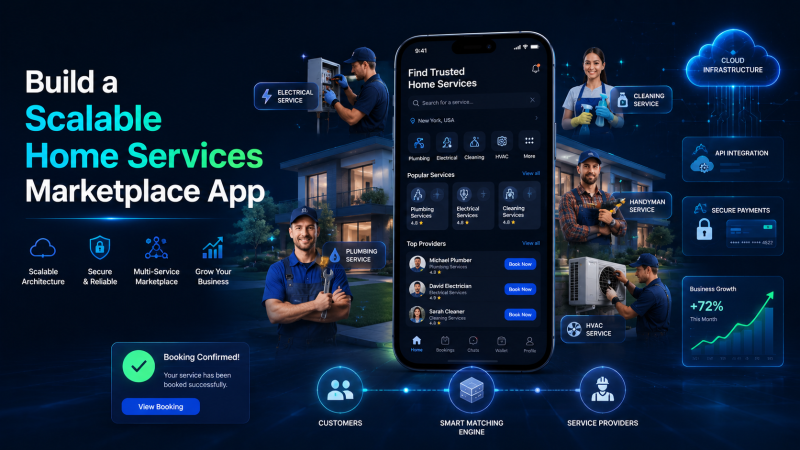
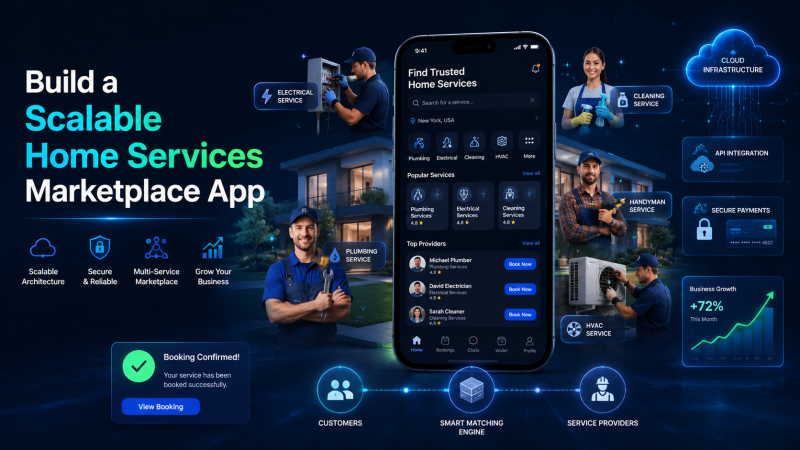
The need for convenient and efficient apps to provide household services is ever-increasing as customers want to quickly book qualified service providers through their mobile devices. Home Services App Development allows companies to integrate their cleaning, plumbing, electrical, appliance, beauty services, relocation, and many other local services in one online platform. This will allow companies to have an on-demand marketplace which, in the USA, with its preference to convenient and reliable services, will present great opportunities.
However, creating an on-demand platform is not just about bringing clients and service providers together but also considering a number of aspects before even starting.
What Is an On-Demand Home Services App?
An on-demand home services app is a digital platform that allows customers to discover, compare, schedule, and pay for professional services through a mobile or web application.
A typical platform connects three major groups:
- Customers who need home or personal services
- Service professionals who provide those services
- Platform administrators who manage users, bookings, payments, providers, and operations
For example, a customer in the USA could use the application to find a nearby plumber, select an available time slot, review the provider's profile, confirm the booking, make a payment, and rate the service after completion.
This creates a more structured alternative to traditional service discovery through phone calls, local advertisements, or word-of-mouth referrals.
Why the U.S. Market Is Attractive
The USA offers a large market for digitally enabled local services. Consumers are increasingly comfortable using mobile platforms for scheduling appointments, ordering services, making digital payments, and tracking service professionals.
An on-demand model can be particularly valuable because many home-service requirements are time-sensitive. A customer may need an urgent plumbing repair today rather than searching for a provider several days in advance.
For businesses, the opportunity lies in creating a reliable ecosystem where customers can easily find qualified professionals while service providers gain access to new customers and better scheduling tools.
Choosing the Right Business Model
Before development begins, the business model should be clearly defined. Different approaches can support different market strategies.
1. Commission-Based Marketplace
The platform charges a percentage of each completed transaction.
This model can work well when the platform manages customer acquisition, booking, and payment processing.
2. Provider Subscription
Professionals pay a recurring fee to access platform tools, customer leads, analytics, or premium features.
3. Lead Generation Model
Customers submit service requests, and relevant professionals pay for qualified leads.
4. Featured Listings
Service providers can pay to receive greater visibility in search results or promotional sections.
5. Hybrid Revenue Model
Businesses can combine commissions, subscriptions, advertising, and premium services to diversify revenue.
The best model depends on the target audience, service categories, geographic coverage, and competitive environment.
Core Components of the Platform
A successful home services marketplace usually requires separate experiences for customers, providers, and administrators.
Customer Application
The customer side should make service discovery and booking straightforward.
Important capabilities can include:
- Account registration and login
- Service category browsing
- Location-based provider discovery
- Provider profiles
- Service descriptions and pricing
- Availability and scheduling
- Instant or scheduled bookings
- Booking status updates
- In-app communication
- Digital payments
- Reviews and ratings
- Booking history
- Cancellation and refund requests
- Push notifications
- Customer support
The goal is to minimize the number of steps between identifying a need and confirming a service.
Service Provider Application
The provider application should focus on productivity and business management.
Useful features include:
- Provider registration
- Identity and business verification
- Service category selection
- Availability management
- Service area configuration
- Booking acceptance or rejection
- Job status updates
- Customer communication
- Navigation support
- Earnings dashboard
- Payment history
- Reviews and ratings
- Performance analytics
- Notifications
For professionals who receive multiple requests per day, a well-designed provider dashboard can become one of the platform's most important features.
Admin Dashboard
The administrative system controls the marketplace behind the scenes.
Administrators may need tools for:
- Customer management
- Provider verification
- Service category management
- Booking management
- Payment monitoring
- Commission configuration
- Dispute resolution
- Refund management
- Promotions
- Reviews and complaints
- Geographic service areas
- Reports and analytics
- Content management
A strong admin panel allows the business to manage operations without depending on developers for routine tasks.
The Booking Experience Matters
A home services platform can have dozens of features, but the booking journey should remain simple.
A practical flow could look like:
Select Service → Confirm Location → Choose Provider → Select Time → Review Price → Pay → Track Booking → Complete Service → Rate Provider
For certain categories, customers may need to upload photographs or provide additional information before receiving an estimated price.
For urgent services, the platform could also offer an immediate booking option based on provider availability.
Location Technology and Service Coverage
Location technology is especially important for on-demand home services.
The platform can use location data to:
- Identify nearby professionals
- Define provider service areas
- Estimate travel distance
- Calculate arrival times
- Support navigation
- Improve provider matching
- Enable location-based pricing
For a business expanding across multiple U.S. cities, the platform should be designed to support different service zones rather than assuming one geographic market.
Payments and Marketplace Transactions
Payments become more complex when multiple parties are involved.
The platform may need to manage:
- Customer payments
- Provider payouts
- Platform commissions
- Taxes
- Refunds
- Promotional discounts
- Payment status
- Failed transactions
- Transaction records
A marketplace architecture should clearly separate customer charges from provider earnings and platform revenue.
Payment processing should also use appropriate security controls and reputable payment infrastructure rather than storing sensitive payment information directly within the application.
Trust and Provider Verification
Trust is one of the biggest challenges in the home services industry because professionals may enter customers' homes.
A U.S.-focused platform can strengthen trust through processes such as:
- Identity verification
- Business verification
- License verification where applicable
- Background-check workflows where appropriate
- Provider ratings
- Customer reviews
- Profile information
- Service history
- Complaint management
The exact verification requirements can vary depending on the service category and jurisdiction, so businesses should review applicable federal, state, and local requirements before launching.
Technology Architecture
The technology stack should support both current operations and future expansion.
A typical architecture may include:
Mobile Apps: Flutter, React Native, Swift, or Kotlin
Web Application: React, Next.js, or another modern web framework
Backend: Node.js, Python, Java, or similar technologies
Database: PostgreSQL, MySQL, MongoDB, or another suitable database
Cloud Infrastructure: AWS, Microsoft Azure, Google Cloud, or comparable providers
Maps & Location: Mapping and geolocation APIs
Payments: Marketplace-compatible payment gateway
Notifications: Push notifications, SMS, and email services
Analytics: Application and business intelligence tools
The right combination depends on the platform's expected traffic, feature requirements, development budget, and long-term roadmap.
How Much Does Development Cost?
The cost of developing an on-demand home services platform varies significantly because every marketplace has different requirements.
Major cost factors include:
- Number of applications
- UI/UX complexity
- Number of service categories
- Booking logic
- Payment architecture
- Location and mapping functionality
- Real-time communication
- Provider verification
- Third-party integrations
- Admin dashboard complexity
- Security requirements
- Cloud infrastructure
- Testing
- Development team location and expertise
A basic MVP may focus on registration, service discovery, booking, payments, notifications, and provider management. More advanced platforms can later introduce intelligent matching, dynamic pricing, automated support, subscription plans, advanced analytics, and other capabilities.
Instead of building every possible feature initially, businesses can prioritize functionality that validates demand and supports the core marketplace transaction.
A Practical Development Roadmap
A structured development process can reduce unnecessary costs and improve time to market.
Phase 1: Market and Business Research
Identify the target customer, service categories, competitors, geographic market, and revenue strategy.
Phase 2: Product Definition
Define user roles, booking workflows, marketplace rules, essential features, and business requirements.
Phase 3: UI/UX Design
Create intuitive interfaces for customers, service professionals, and administrators.
Phase 4: MVP Development
Build the core marketplace functionality and integrate essential services such as payments, maps, notifications, and authentication.
Phase 5: Testing
Test booking flows, payment scenarios, location functionality, security, performance, and different user journeys.
Phase 6: Pilot Launch
Launch within a limited geographic area or selected service categories to collect real-world feedback.
Phase 7: Expansion
Use customer behavior and operational data to improve the platform before expanding into additional cities or service categories.
Features to Consider After Launch
Once the basic marketplace is stable, businesses can introduce more sophisticated capabilities.
These may include:
- AI-powered provider recommendations
- Smart service matching
- Automated customer support
- Dynamic pricing
- Predictive demand analytics
- Recurring service subscriptions
- Loyalty programs
- Personalized offers
- Route optimization
- Advanced provider analytics
- Corporate service accounts
These features should be introduced based on actual business needs rather than simply adding technology for its own sake.
Challenges to Plan For
On-demand home services platforms face several operational and technical challenges.
Supply and demand balance: The platform needs enough professionals to serve customers without creating excessive provider competition.
Service quality: Ratings, verification, complaints, and support processes must work together to maintain customer confidence.
Cancellations: Businesses need clear policies for customer and provider cancellations.
Geographic expansion: Entering new cities can introduce different service availability, pricing, regulations, and operational requirements.
Marketplace liquidity: A large number of registered users does not necessarily mean a healthy marketplace. Businesses need sufficient activity on both sides of the platform.
Security: Customer information, provider data, payment processes, and platform accounts must be protected through appropriate security practices.
Final Thoughts
On-demand home service platforms are emerging as one of the critical areas within the digital services economy, especially in such markets where clients value convenience, transparency, and prompt availability of professionals. Within the USA, companies have a chance to create great marketplaces by offering a good customer experience along with the proper management of providers and good back-end functionality.
Good platforms may not necessarily be characterized by the most feature-rich set. Instead, they are the ones that do a great job of solving the core problem – finding the right professional, making a booking, and completing the transaction.
With a good development approach in mind, companies have an opportunity to lay the groundwork for releasing their MVP, testing out the business model, and expanding to new locations and service types.
More information on how to develop your own platform can be found by clicking the link below and watching the video.
Source:
Click for the: Full Story
You might like