


 Close Menu
 World
 Biography
 Health
 Education
 Business
 Lifestyle
 Sports
 Technology
 Animals
 History
 Food
 Religious
 Startups
 Movies
 Politics
 Fashion
 Covid
 Diet
 Fitness
 Marketing
 Travel
 Science
 Reviews
 Social media
 Stories
 Facts
 Art
 Entertainment
Manisha

Technology
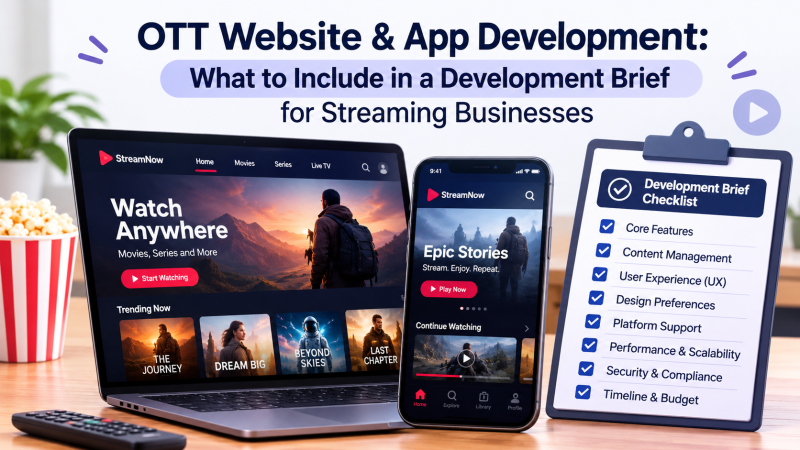
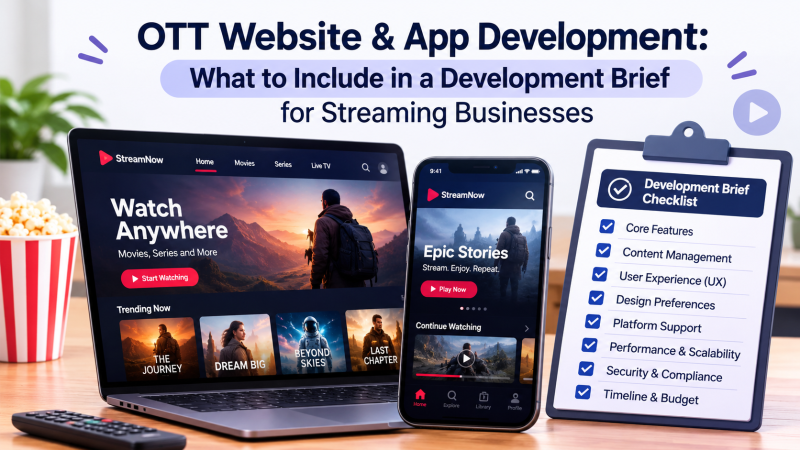
OTT Website & App Development: What to Include in a Development Brief for Streaming Businesses
 Manisha
Launching a streaming platform involves more than providing a video player and a content catalogue. A streaming business must consider subscriptions, user accounts, content management, playback quality, device compatibility, payment processing, and content rights. If these requirements are not explained clearly before development begins, the project may face scope changes, missed deadlines, or unexpected technical costs.
A detailed brief for OTT Website & App Development gives the development team a clear understanding of the business model and the experience expected by viewers. It also helps business owners compare proposals from different providers using the same requirements.
Describe the Streaming Business Model
Start by explaining how the platform will earn revenue and how viewers will access content. Different business models require different features and payment rules.
Common OTT models include:
- Subscription Video on Demand (SVOD): Users pay a recurring fee to access a content library.
- Advertising Video on Demand (AVOD): Viewers access content with advertisements.
- Transactional Video on Demand (TVOD): Users pay to rent or purchase individual titles.
- Hybrid model: The platform combines subscriptions, advertising, rentals, or purchases.
Mention whether the platform will support free previews, trial periods, promotional plans, or multiple subscription tiers. These decisions affect account management, payment processing, and content access rules.
Define the Content Catalogue Requirements
The brief should explain how content will be organized and presented to viewers.
List the expected content types, such as movies, series, live channels, documentaries, short videos, or educational programmes. Explain whether content will be arranged by genre, language, release date, popularity, or curated collections.
Also identify the information required for each title:
- Title and description.
- Poster and thumbnail images.
- Genre and language.
- Cast and production details, where relevant.
- Age rating and content advisories.
- Release date and availability period.
- Subtitle and audio options.
If the platform supports regional content restrictions, specify how availability should vary by country or licensing agreement.
Explain the Viewer Experience
Describe how viewers should move from registration to playback. A typical journey may include account creation, subscription selection, browsing, title selection, and video playback.
The brief should also cover features such as watchlists, continue watching, viewing history, search filters, recommendations, and profile management.
For households with multiple viewers, clarify whether separate profiles are required. If parental controls are planned, explain whether they should restrict content by age rating, PIN, or profile-level settings.
Specify Supported Devices and Platforms
An OTT product may need to work across websites, Android and iOS applications, smart TVs, and streaming devices.
List the platforms required for the first release and identify any planned expansion. Also explain whether users should be able to continue watching content on another device.
Device compatibility affects interface design, playback technology, testing, and release planning. A television interface, for example, must support remote-control navigation rather than relying on touch gestures.
Document the Admin and Content Management Needs
Streaming businesses need an administrative system to manage content and platform activity.
Specify whether administrators should be able to upload videos, manage metadata, organize categories, schedule releases, update availability, and review content performance.
Include the required staff roles. A content editor may need permission to update descriptions, while a finance administrator may manage subscription records. These responsibilities should be separated through access controls.
The brief should also explain how content approval and publishing will work.
Include Technical and Integration Requirements
List the external systems the platform needs to connect with, such as payment gateways, video hosting, content delivery networks, analytics tools, email services, and identity providers.
Mention any existing systems that must be retained or replaced. Include security requirements, expected traffic, supported video formats, backup expectations, and content protection needs.
If digital rights management is required, identify the content licensing conditions that make it necessary. Do not assume that every video needs the same protection method.
Define the First Release and Success Measures
Separate essential launch requirements from features that can be introduced later. A first release may focus on account management, content browsing, secure playback, subscription payments, and basic administration.
Define how success will be measured. Useful indicators may include completed registrations, subscription conversions, playback failures, viewing duration, and cancellation rates.
Conclusion
A development brief should explain the OTT business model, content structure, viewer experience, supported devices, administration requirements, integrations, and first-release priorities. Clear documentation helps a streaming business communicate its needs, compare development proposals, and begin the project with a shared understanding of the expected product.
Source:
Click for the: Full Story
You might like








You Might Like this