



 Close Menu
 World
World
 Biography
 Health
 Education
 Business
 Lifestyle
 Sports
 Technology
 Animals
 History
 Food
Food
 Religious
 Startups
 Movies
 Politics
 Fashion
 Covid
Covid
 Diet
Diet
 Fitness
 Marketing
 Travel
 Science
 Reviews
 Social media
 Stories
 Facts
Facts
 Art
Art
 Entertainment
Bruce Wayne

Technology
10 Reasons RWA Tokenization Will Become Mainstream This Year
 Bruce Wayne
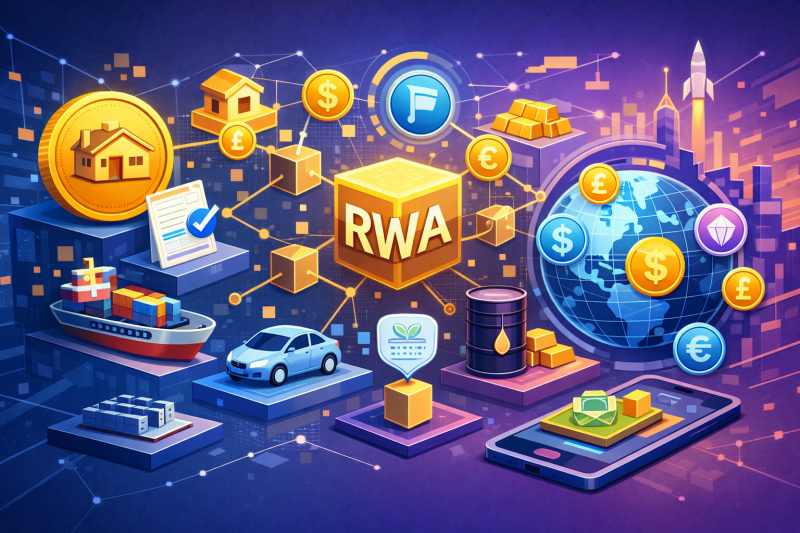
Real World Asset Tokenization is no longer a theoretical concept discussed only in blockchain whitepapers or niche investment circles. It is rapidly evolving into a practical financial infrastructure that bridges traditional assets with decentralized digital systems. As institutions, regulators, and enterprises move beyond experimentation, this year marks a turning point where RWA tokenization is set to enter the mainstream.
From real estate and commodities to bonds and private equity, tokenized assets are unlocking new efficiencies, liquidity models, and investment access. The convergence of regulatory clarity, enterprise adoption, and maturing blockchain infrastructure has created the perfect environment for accelerated growth.
This article explores ten clear reasons why RWA tokenization will become mainstream this year, supported by methods, structural shifts, and real-world implementation patterns shaping the market right now.
1. Institutional Adoption Is Moving From Pilots to Production
For years, large institutions tested tokenization through proof-of-concept initiatives. This year, that phase is ending. Financial institutions are now deploying production-grade systems for asset issuance, settlement, and lifecycle management.
Banks, asset managers, and custodians are integrating Real World Asset Tokenization into their core operations to streamline asset administration and reduce reconciliation costs. This shift is driven by the realization that tokenization is not just a blockchain innovation but an operational efficiency upgrade.
Key methods driving institutional adoption include:
- Integration of tokenized assets into existing portfolio management systems
- Use of permissioned blockchains for compliance-ready issuance
- Collaboration with a specialized RWA tokenization development company for scalable deployment
As institutions commit capital and infrastructure, tokenized assets gain legitimacy, trust, and volume, all essential for mainstream adoption.
2. Regulatory Frameworks Are Becoming Clearer and More Supportive
One of the biggest barriers to tokenization adoption has been regulatory uncertainty. That barrier is rapidly eroding. Regulatory bodies across major markets are issuing clearer guidelines around digital asset custody, token issuance, and investor protections.
This year, compliance is no longer a blocker but a design requirement embedded directly into Real World Asset Tokenization Services. Smart contracts now include rule-based compliance logic such as transfer restrictions, identity verification, and jurisdictional controls.
Key regulatory-driven methods include:
- Built-in KYC and AML enforcement at the protocol level
- On-chain audit trails aligned with financial reporting standards
- Regulated custodial integration for tokenized assets
With clearer rules, enterprises are confident partnering with a Real world asset tokenization platform company that understands both blockchain architecture and regulatory expectations.
3. Liquidity Unlocking Is Reshaping Traditional Asset Markets
Many traditional assets suffer from illiquidity. Real estate, private credit, infrastructure projects, and fine art often lock capital for years. RWA tokenization directly addresses this challenge by enabling fractional ownership and secondary market trading.
By converting physical and financial assets into tokens, investors gain the ability to buy, sell, or transfer ownership with greater flexibility. This liquidity transformation is one of the strongest forces pushing tokenization into the mainstream.
Effective liquidity-driven methods include:
- Fractional token issuance for high-value assets
- Programmable transfer rules that allow compliant peer-to-peer trading
- Integration with regulated digital marketplaces
RWA Tokenization Services are increasingly designed to support liquidity without compromising asset integrity or compliance.
4. Tokenization Is Reducing Operational Costs Across Asset Lifecycles
Traditional asset management involves multiple intermediaries, manual processes, and reconciliation layers. Tokenization replaces these inefficiencies with automated, transparent workflows.
From issuance to settlement and reporting, blockchain-based systems eliminate redundant steps. Smart contracts automate dividend distributions, interest payments, and corporate actions, reducing administrative overhead.
Operational efficiency methods include:
- Automated settlement cycles using tokenized ownership records
- Smart contract driven cash flow distribution
- Real-time asset performance tracking
Enterprises working with an experienced rwa tokenization platform development company are discovering cost savings that directly impact profitability and scalability.
5. Investor Access Is Expanding Beyond Traditional Barriers
Tokenization democratizes access to assets that were previously restricted to institutional or ultra-high-net-worth investors. Fractional ownership models allow broader participation while maintaining regulatory compliance.
This expanded access is not limited to retail investors. Family offices, global investors, and emerging market participants can now engage with assets previously locked behind geographic or capital barriers.
Access-expansion methods include:
- Lower minimum investment thresholds
- Borderless participation with compliant onboarding
- Transparent ownership records improving investor confidence
As Real World Asset Tokenization Offerings expand, investment ecosystems become more inclusive and globally connected.
6. Blockchain Infrastructure Has Reached Enterprise Maturity
Earlier blockchain systems struggled with scalability, security, and interoperability. This year, enterprise-grade blockchain infrastructure is capable of supporting large-scale tokenization projects.
Improved consensus mechanisms, secure custody solutions, and cross-chain interoperability are making tokenized assets viable at institutional volumes.
Infrastructure maturity methods include:
- Permissioned and hybrid blockchain networks for enterprise use
- Advanced custody solutions for tokenized asset security
- Interoperability layers connecting traditional finance systems
Real world asset tokenization platform development now focuses on reliability, uptime, and compliance rather than experimentation.
7. Demand for Transparent Asset Ownership Is Increasing
Transparency is becoming a core expectation in financial markets. Investors want visibility into asset ownership, valuation, and performance. Tokenization delivers this transparency through immutable on-chain records.
Every transaction, ownership change, and cash flow event is recorded in a tamper-resistant ledger. This reduces disputes, enhances trust, and simplifies auditing.
Transparency-driven methods include:
- On-chain ownership registries
- Real-time reporting dashboards
- Immutable transaction histories
A well-structured RWA tokenization platform ensures transparency without exposing sensitive data, balancing openness with privacy requirements.
8. Tokenized Assets Enable Faster Settlement and Capital Efficiency
Traditional asset settlement can take days or weeks. Tokenization enables near-instant settlement, freeing capital and reducing counterparty risk.
This faster settlement cycle improves capital efficiency for both issuers and investors. Funds that were previously locked during settlement periods can now be redeployed more quickly.
Settlement optimization methods include:
- Atomic transactions using smart contracts
- On-chain escrow mechanisms
- Real-time reconciliation
RWA token development increasingly prioritizes settlement speed as a competitive advantage.
9. Enterprises Are Building Tokenization Into Core Business Models
Tokenization is no longer treated as a side experiment. Enterprises are embedding tokenization into their long-term business strategies. Asset issuers, fund managers, and platforms are building proprietary tokenization capabilities.
This strategic integration is driving demand for specialized partners such as an RWA Tokenization Company that can deliver end-to-end solutions.
Enterprise adoption methods include:
- Custom tokenization platforms tailored to specific asset classes
- Integration with existing ERP and financial systems
- Long-term platform scalability planning
As more enterprises commit to tokenization, network effects accelerate mainstream adoption.
10. Market Education and Awareness Have Reached Critical Mass
Understanding of Real World Asset Tokenization has grown significantly among decision makers, investors, and regulators. Educational initiatives, pilot success stories, and industry collaboration have reduced skepticism.
This awareness is translating into action. Organizations now understand not only what tokenization is, but how to implement it responsibly and profitably.
Education-driven methods include:
- Internal training programs for asset managers
- Clear communication of tokenization value propositions
- Collaboration between traditional finance and blockchain experts
As awareness increases, demand for professional RWA Tokenization Services and trusted development partners continues to rise.
Final Thoughts
This year represents a defining moment for Real World Asset Tokenization. The convergence of regulatory clarity, institutional adoption, infrastructure maturity, and market demand is pushing tokenized assets into the financial mainstream.
What was once considered an emerging innovation is now becoming a foundational layer of modern asset management. Organizations that act now and collaborate with an experienced rwa tokenization development company will be best positioned to capture the opportunities ahead.
RWA tokenization is not replacing traditional finance. It is transforming it from within, creating more efficient, transparent, and accessible markets that are ready for the future.
Source:
Click for the: Full Story
You might like







You Might Like this