



 Close Menu
 World
World
 Biography
 Health
 Education
 Business
 Lifestyle
 Sports
 Technology
 Animals
 History
 Food
Food
 Religious
 Startups
 Movies
 Politics
 Fashion
 Covid
Covid
 Diet
Diet
 Fitness
 Marketing
 Travel
 Science
 Reviews
 Social media
 Stories
 Facts
Facts
 Art
Art
 Entertainment
john adam

Technology
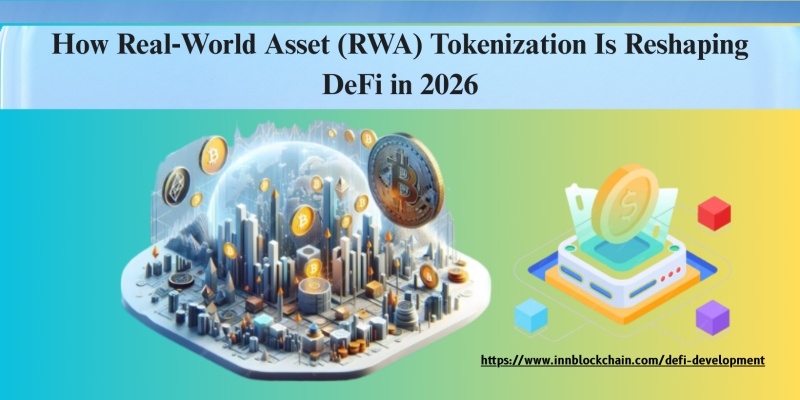
How Real‑World Asset (RWA) Tokenization Is Reshaping DeFi in 2026
 john adam
The world of decentralized finance (DeFi) has always promised a borderless, permissionless financial system. However, for much of its existence, DeFi largely revolved around crypto-native assets — volatile tokens whose value and utility were confined to blockchain ecosystems. Fast forward to 2026, and the landscape is transforming dramatically. The advent of Real‑World Asset (RWA) tokenization is no longer a futuristic concept; it has become a cornerstone of modern DeFi development, bridging the gap between traditional finance and decentralized systems in unprecedented ways.
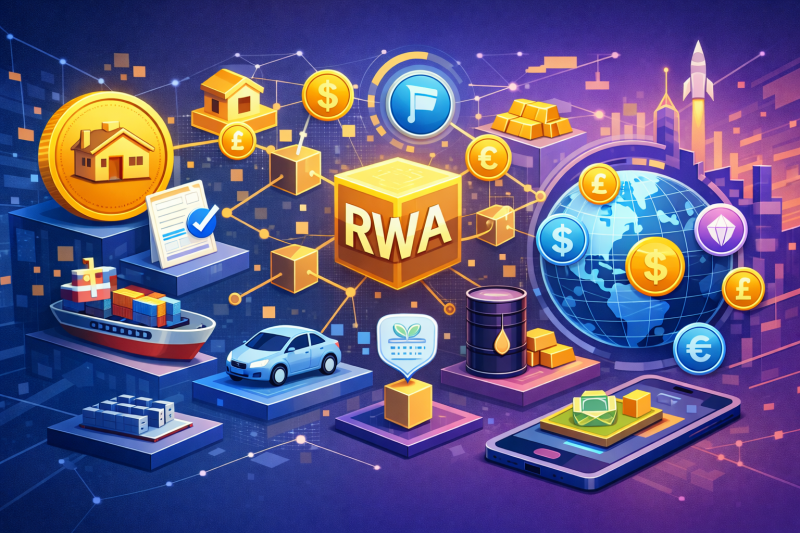
RWA tokenization refers to the process of converting tangible assets — such as real estate, bonds, commodities, or private credit — into digital tokens that can be traded, lent, or used as collateral on blockchain platforms. This transformation is more than a technical innovation; it is redefining risk, yield, and accessibility in DeFi ecosystems.
The Rise of RWA Tokenization: From Concept to Core Infrastructure
In 2026, RWA tokenization has transitioned from experimental pilots into robust, institutional-grade infrastructure. Whereas early DeFi initiatives were dominated by speculative tokens, today, the focus is on real value creation. Tokenized assets are being integrated into lending protocols, automated market makers (AMMs), and derivatives platforms, providing a tangible bridge between blockchain liquidity and real-world economic activity.
Several factors have accelerated this evolution:
- Regulatory Maturity: Regulators in multiple jurisdictions have now created frameworks that allow the issuance and trading of tokenized assets in a compliant manner. This regulatory clarity attracts institutional investors who previously viewed DeFi as risky or opaque.
- Institutional Adoption: Major banks, asset managers, and private equity firms are tokenizing assets to access DeFi liquidity pools. By doing so, they can reduce costs, improve settlement times, and tap into a global market of retail and institutional investors.
- Technological Advancements: Oracles, smart contracts, and blockchain interoperability have matured, allowing real-world assets to be represented on-chain securely and transparently. These innovations form the backbone of ongoing defi development and market expansion.
RWA Tokenization’s Impact on DeFi Development
The integration of tokenized real-world assets is transforming DeFi on multiple fronts, from lending and borrowing to liquidity provision and yield generation. Here’s how:
1. Tangible Collateral Enhances Lending Markets
One of the most immediate effects of RWA tokenization is the enhancement of lending and borrowing protocols. Historically, DeFi lending required crypto-collateral, which exposed lenders and borrowers to high volatility. Tokenized real-world assets, such as government bonds or commercial real estate, offer stable, income-generating collateral, reducing liquidation risk and attracting more conservative capital.
This integration also allows for sophisticated financial instruments on-chain. For instance, tokenized mortgage-backed securities can be used as collateral in lending platforms, enabling new classes of structured products that were previously impossible in pure crypto environments.
2. Democratizing Access to High-Value Assets
One of the most exciting aspects of RWA tokenization is fractionalization. Assets that were traditionally accessible only to institutional investors — such as high-end real estate or private equity — can now be broken into tokens that anyone can purchase. A retail investor with a modest portfolio can now hold a fractional stake in a prime commercial property, effectively gaining access to markets that were once exclusive.
This democratization is a major milestone for defi development, as it expands the user base from tech-savvy crypto enthusiasts to a broader audience seeking real-world economic exposure.
3. Increased Liquidity in Traditionally Illiquid Markets
Liquidity is a persistent challenge in traditional financial markets. Tokenization transforms illiquid assets into digital tokens that can trade 24/7 on blockchain platforms. For example, a tokenized corporate loan can be bought, sold, or used as collateral almost instantly, providing a level of liquidity previously unimaginable in traditional finance.
The ability to unlock liquidity in these markets is not just a convenience; it is a catalyst for deeper DeFi innovation. Projects can now design hybrid liquidity pools that combine crypto and tokenized real-world assets, optimizing yields and risk profiles in entirely new ways.
Economic Implications of RWA Tokenization
The economic impact of tokenized assets on DeFi is profound, affecting yield structures, risk management, and the overall financial ecosystem.
Yield Opportunities
Tokenized RWAs bring real economic yield to DeFi. Unlike speculative crypto yield, which often comes from protocol incentives or liquidity mining, RWAs can generate income tied directly to the underlying asset — rent from tokenized real estate, interest from tokenized bonds, or revenue from infrastructure projects.
These real yields make DeFi more attractive to institutional and conservative investors, helping to bridge the gap between traditional finance and decentralized systems. By integrating RWAs, defi development is moving toward a more sustainable, economically grounded model.
Risk and Transparency
While tokenization enhances access and yield, it also introduces new risks. Investors must trust that the digital representation accurately reflects the underlying asset, and protocols must provide robust audits, proof of ownership, and legal frameworks. Transparent risk assessment mechanisms are becoming a critical focus of DeFi development to maintain investor confidence and regulatory compliance.
Challenges on the Path Forward
Despite rapid adoption, RWA tokenization faces several hurdles:
- Regulatory Fragmentation: Global regulations are not uniform, and differing standards can create legal and operational risks.
- Liquidity Constraints: Not all tokenized assets will have active secondary markets, particularly in private credit or niche real estate sectors.
- Custody and Security: Institutional players demand secure custody solutions and verifiable proofs of the underlying assets.
- Valuation Complexity: Accurately pricing tokenized RWAs requires sophisticated models and frequent updates, especially for assets with fluctuating market values.
Addressing these challenges is central to ongoing defi development, as protocols must balance innovation with compliance and investor protection.
The Future: Integrated Financial Ecosystems
Looking ahead, the integration of RWAs into DeFi is likely to redefine the global financial landscape. By 2026, we are seeing the emergence of hybrid markets where:
- Institutional and retail capital coexist seamlessly,
- Traditional assets coexist alongside crypto-native assets,
- Financial transactions are more transparent, efficient, and automated,
- Access to investment opportunities is more inclusive than ever before.
This convergence is not simply about adding blockchain technology to old finance; it’s about reimagining finance itself. Defi development fueled by RWA tokenization is creating a system where liquidity, accessibility, and real economic value coalesce into a new financial paradigm.
Conclusion
The tokenization of real-world assets is reshaping DeFi in 2026 by providing tangible collateral, democratizing access to high-value markets, and increasing liquidity across previously illiquid asset classes. While challenges remain, the benefits — more inclusive finance, sustainable yields, and integrated economic ecosystems — are clear.
As DeFi continues to mature, RWA tokenization will play a central role in driving defi development, bridging the gap between traditional finance and decentralized innovation, and ultimately delivering a more open and efficient financial system for all participants.
In short, RWA tokenization is not just a trend; it’s the evolution of finance itself.
Source:
Click for the: Full Story
You might like








You Might Like this