


 Close Menu
 World
World
 Biography
 Health
 Education
 Business
 Lifestyle
 Sports
 Technology
 Animals
 History
 Food
Food
 Religious
 Startups
 Movies
 Politics
 Fashion
 Covid
Covid
 Diet
Diet
 Fitness
 Marketing
 Travel
 Science
 Reviews
 Social media
 Stories
 Facts
Facts
 Art
Art
 Entertainment
samiksha

Business
Top 10 Healthcare App Development Trends You Should Know in 2026
 samiksha
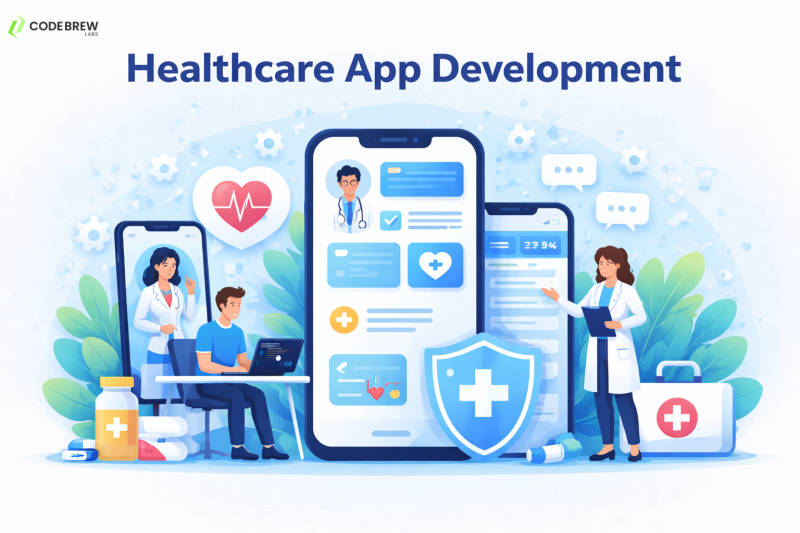
The healthcare industry is undergoing a digital revolution, and mobile applications are at the center of this transformation. From remote consultations to AI-driven diagnostics, healthcare apps are redefining how patients interact with medical services and how providers deliver care.
In 2026, healthcare app development is no longer just about digitizing services—it’s about creating intelligent, secure, and highly personalized experiences. With rapid advancements in technology, evolving patient expectations, and stricter regulatory requirements, businesses must stay ahead of emerging trends to remain competitive.
In this blog, we explore the top 10 healthcare app development trends in 2026 that are shaping the future of digital health.
1. AI-Powered Diagnostics and Decision Support
Artificial intelligence is transforming healthcare apps by enabling smarter diagnostics and clinical decision-making. AI algorithms can analyze medical data, detect patterns, and provide insights that assist doctors in diagnosing diseases more accurately.
Healthcare apps are increasingly integrating AI to:
- Analyze symptoms and suggest possible conditions
- Assist in medical imaging interpretation
- Provide predictive insights for patient outcomes
This not only improves accuracy but also reduces the time required for diagnosis, ultimately enhancing patient care.
2. Rise of Telemedicine and Virtual Care
Telemedicine continues to be one of the most significant trends in healthcare app development. Patients now expect the convenience of consulting doctors remotely without visiting clinics or hospitals.
Modern healthcare apps are offering:
- Video and audio consultations
- Digital prescriptions
- Remote follow-ups
- Virtual health monitoring
This trend is especially important for improving access to healthcare in remote and underserved areas.
3. Integration of Wearable Devices and IoT
The integration of wearable devices and Internet of Things (IoT) technology is enabling continuous health monitoring like never before.
Healthcare apps can now connect with devices such as smartwatches and fitness trackers to collect real-time health data, including heart rate, activity levels, and sleep patterns.
This allows:
- Early detection of health issues
- Continuous patient monitoring
- Personalized health recommendations
As wearable technology continues to evolve, its integration with healthcare apps will become even more seamless and impactful.
4. Personalized Healthcare Experiences
Patients today expect personalized care, and healthcare apps are leveraging data to meet these expectations.
By analyzing user behavior, medical history, and preferences, apps can provide:
- Customized treatment plans
- Tailored health recommendations
- Personalized reminders and alerts
Personalization enhances patient engagement and ensures better adherence to treatment plans.
5. Focus on Data Security and Compliance
With the increasing use of digital health solutions, data security has become a top priority. Healthcare apps handle sensitive patient information, making them a prime target for cyber threats.
In 2026, healthcare app development is heavily focused on:
- End-to-end encryption
- Secure authentication methods
- Compliance with regulations like HIPAA and GDPR
- Regular security audits
Ensuring data privacy and security is essential for building trust and maintaining compliance.
6. Blockchain for Secure Health Data Management
Blockchain technology is emerging as a powerful solution for managing healthcare data securely and transparently.
By using decentralized systems, healthcare apps can:
- Ensure data integrity
- Enable secure data sharing
- Prevent unauthorized access
Blockchain also simplifies processes such as medical record management and insurance claims, making it a valuable addition to healthcare applications.
7. Voice Technology and Virtual Assistants
Voice-enabled features are becoming increasingly popular in healthcare apps, especially for improving accessibility.
Patients can use voice commands to:
- Schedule appointments
- Access medical information
- Receive medication reminders
Virtual assistants powered by AI are also helping users navigate apps more easily, making healthcare services more accessible to elderly and differently-abled users.
8. AR/VR for Training and Patient Care
Augmented reality (AR) and virtual reality (VR) are revolutionizing both medical training and patient care.
Healthcare apps are using AR/VR to:
- Provide immersive medical training for professionals
- Offer virtual therapy sessions
- Enable interactive patient education
These technologies enhance understanding and engagement, making healthcare more interactive and effective.
9. Remote Patient Monitoring (RPM)
Remote patient monitoring is becoming a key component of modern healthcare systems. It allows healthcare providers to track patients’ health conditions in real time without requiring hospital visits.
Healthcare apps enable RPM by:
- Collecting data from wearable devices
- Monitoring vital signs
- Sending alerts for abnormal readings
This trend improves patient outcomes while reducing the burden on healthcare facilities.
10. Cloud-Based Healthcare Solutions
Cloud technology is playing a crucial role in healthcare app development by enabling scalable and efficient data management.
Cloud-based healthcare apps offer:
- Secure data storage
- Easy access to medical records
- Seamless integration with other systems
- Scalability for growing user bases
This ensures that healthcare providers can deliver services efficiently while maintaining high performance.
Why These Trends Matter for Businesses
For healthcare businesses, staying updated with these trends is essential for building competitive and future-ready applications.
Adopting these technologies allows businesses to:
- Improve patient engagement and satisfaction
- Enhance operational efficiency
- Reduce costs through automation
- Deliver better healthcare outcomes
Ignoring these trends can result in outdated solutions that fail to meet modern user expectations.
Challenges in Adopting Healthcare App Trends
While these trends offer numerous benefits, implementing them comes with challenges.
Healthcare businesses must address:
- High development and integration costs
- Complex regulatory requirements
- Data privacy concerns
- Technical expertise requirements
Overcoming these challenges requires careful planning and the right development strategy.
Future Outlook of Healthcare App Development
The future of healthcare app development is centered around innovation, connectivity, and personalization. As technologies continue to evolve, healthcare apps will become more intelligent, predictive, and user-centric.
We can expect:
- More advanced AI-driven diagnostics
- Fully integrated digital health ecosystems
- Increased adoption of telemedicine
- Enhanced patient engagement through personalization
The goal is to create a healthcare system that is more accessible, efficient, and patient-focused.
Conclusion
Healthcare app development in 2026 is being shaped by cutting-edge technologies and changing user expectations. From AI and telemedicine to blockchain and wearable integration, these trends are redefining the way healthcare services are delivered.
For businesses, embracing these trends is not just an option—it is a necessity to stay competitive and relevant in the digital health landscape. Partnering with an experienced company like Code Brew Labs can help turn these innovations into practical, high-performing healthcare solutions.
By leveraging the latest innovations, companies can build healthcare apps that are secure, scalable, and capable of delivering exceptional patient experiences.
Source:
Click for the: Full Story
You might like