Close Menu
 World
World
 Biography
 Health
 Education
 Business
 Lifestyle
 Sports
 Technology
 Animals
 History
 Food
Food
 Religious
 Startups
 Movies
 Politics
 Fashion
 Covid
Covid
 Diet
Diet
 Fitness
 Marketing
 Travel
 Science
 Reviews
 Social media
 Stories
 Facts
Facts
 Art
Art
 Entertainment
Sakshi Padiyar

Education
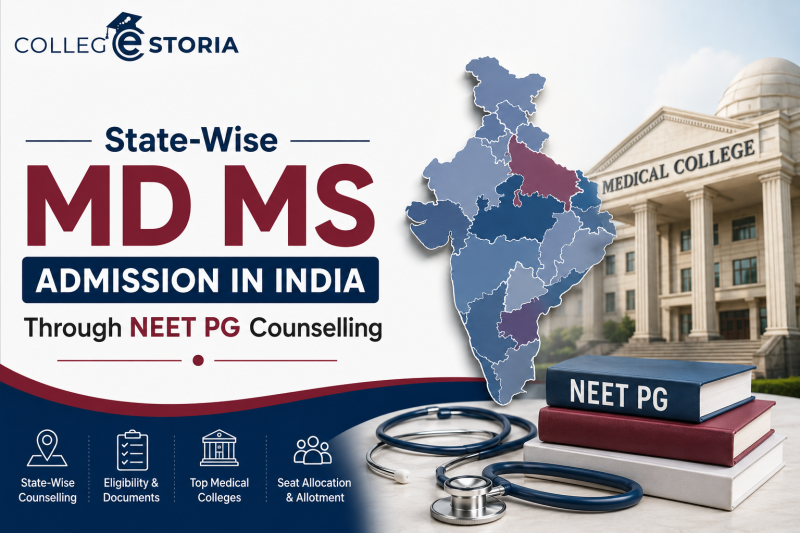
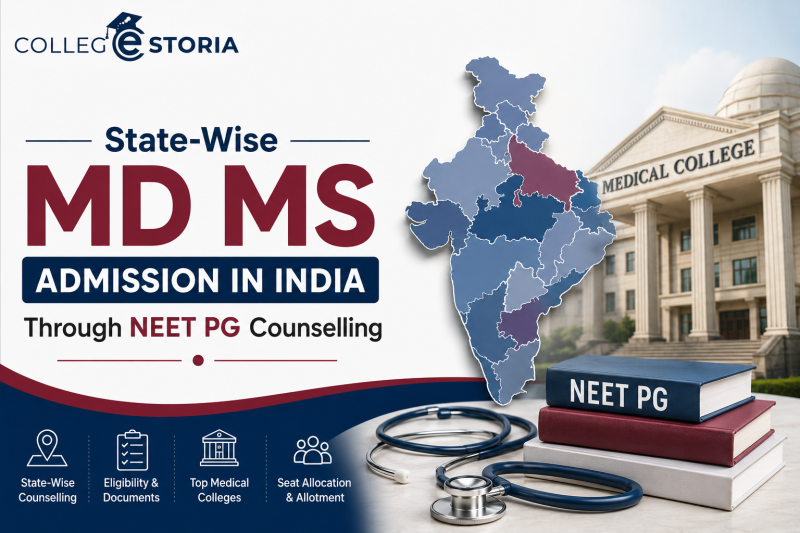
State-Wise MD MS Admission in India Through NEET PG Counselling
 Sakshi Padiyar
Securing MD/MS admission in India is one of the most important milestones for MBBS graduates aiming to specialise in their chosen medical field. Every year, thousands of candidates qualify for NEET PG, but obtaining a seat depends not only on the entrance score but also on understanding the counselling process conducted at both the national and state levels.
While the Medical Counselling Committee (MCC) manages admissions under the All India Quota, every state has its own counselling authority responsible for filling state quota seats in government and eligible private medical colleges. Since registration schedules, eligibility requirements, and admission procedures vary across states, candidates should stay informed about the counselling process applicable to their preferred colleges.
What is MD MS Admission in India?
MD (Doctor of Medicine) and MS (Master of Surgery) are postgraduate medical courses offered after MBBS. Admission to these programs is based on the NEET PG entrance examination conducted by the National Board of Examinations in Medical Sciences (NBEMS). After the results, candidates participate in NEET PG Counselling, where seats are allotted according to rank, category, eligibility, reservation rules, and seat availability. The Medical Counselling Committee (MCC) conducts counselling for 50% All India Quota PG seats, while individual states conduct counselling for their respective state quota seats.
Why State-Wise Counselling is Important
Many students focus only on MCC counselling and overlook state counselling opportunities. However, state counselling often provides additional chances to secure admission in:
- Government Medical Colleges
- State Private Medical Colleges
- Minority Institutions
- State Quota Seats
- Management Quota Seats (where applicable)
- NRI Quota Seats (as per institution and state rules)
Participating in both AIQ and eligible state counselling processes can improve your chances of obtaining your preferred MD/MS seat in India.
Eligibility for MD MS Admission in India Through State Counselling
To participate in MD/MS admission in India, candidates generally need to:
- Qualify the NEET PG examination.
- Complete the compulsory MBBS internship within the prescribed timeline.
- Hold a valid medical registration certificate (or provisional registration, where accepted).
- Meet the eligibility requirements notified by the respective counselling authority.
- Fulfil domicile or other state-specific conditions wherever applicable.
Always verify the latest eligibility rules published by the relevant counselling authority before applying.
Step-by-Step NEET PG Counselling Process
Step 1: NEET PG Result
After the declaration of NEET PG results, candidates receive their rank and become eligible to participate in counselling.
Step 2: Registration
Register separately for:
- MCC AIQ Counselling
- Eligible State Counselling Portals
Missing registration deadlines may prevent participation in that counselling round.
Step 3: Choice Filling
Candidates select:
- Medical Colleges
- MD/MS Specialisations
- Course Preferences
Choice filling should be done carefully, considering previous-year trends, fee structure, clinical exposure, and career goals.
Step 4: Seat Allotment
Seats are allotted based on:
- NEET PG Rank
- Reservation Category
- Seat Availability
- Candidate Preferences
- Applicable eligibility criteria
Step 5: Document Verification
Candidates report with original documents for verification before confirming admission.
Step 6: Reporting to College
Once verification is complete, candidates report to the allotted institution and complete the admission process within the prescribed timeline.
Documents Required
Keep both original documents and photocopies ready before counselling begins.
Typical documents include:
- NEET PG Scorecard
- Admit Card
- MBBS Degree/Provisional Certificate
- Internship Completion Certificate
- Permanent/Provisional Medical Registration
- Class 10 & 12 Certificates
- Identity Proof
- Passport-size Photographs
- Category Certificate (if applicable)
- Domicile Certificate (where required)
- NRI Documents (if applying under NRI quota)
Preparing these documents in advance helps avoid last-minute issues during NEET PG Counselling.
AIQ vs State Quota: Understanding the Difference
During NEET PG Counselling, candidates can participate in two major admission pathways: the All India Quota (AIQ) and the State Quota.
The All India Quota counselling is conducted by the Medical Counselling Committee (MCC). It covers 50% of postgraduate seats in government medical colleges, along with admissions to deemed universities, central universities, and other participating institutions. Candidates from across the country can apply according to the eligibility guidelines issued by MCC.
State Quota counselling is organised by individual state counselling authorities. These authorities manage admissions to the remaining government seats and eligible private medical colleges within their respective states. Each state releases its own counselling schedule, eligibility conditions, registration process, and seat matrix.
Since the counselling process differs from one state to another, candidates should carefully read the official notifications before registering. Participating in both MCC counselling and every eligible state counselling process can improve the chances of securing an MD/MS seat in India.
Management Quota and NRI Quota Admissions
Apart from government quota seats, many private and deemed medical colleges also offer admissions under Management Quota and NRI Quota, subject to the counselling rules applicable in the respective state.
Candidates seeking admission through these quotas are generally required to:
- Qualify NEET PG.
- Register for the applicable counselling process.
- Meet the eligibility criteria notified by the counselling authority and institution.
- Complete document verification and admission formalities within the prescribed timeline.
Since seat availability, fee structures, and counselling schedules vary across colleges and states, candidates should always verify the latest information from the official counselling authority before making admission decisions.
Tips to Improve Your Chances of MD MS Admission in India
A good NEET PG rank certainly improves your chances, but smart counselling decisions are equally important. Here are some practical tips:
Register for Every Eligible Counselling
Do not rely on only one counselling authority. Participate in both MCC counselling and every eligible state counselling process to increase your chances of receiving a seat.
Research Colleges Before Choice Filling
Before locking your preferences, compare colleges based on:
- Clinical exposure
- Faculty
- Infrastructure
- Tuition fees
- Hostel facilities
- Patient load
- Previous year's closing ranks
A well-informed preference list can significantly improve your admission outcome.
Arrange Documents in Advance
Keep all original documents and multiple photocopies ready before counselling begins. Missing or incomplete documents can delay or even affect the admission process.
Track Counselling Notifications
Admission schedules may change due to official announcements. Regularly check the websites of MCC and your respective state counselling authority to avoid missing important deadlines.
Fill Maximum Relevant Choices
Instead of selecting only a few colleges, include a balanced list of ambitious, moderate, and safe options based on your NEET PG rank. This increases the possibility of securing a seat during different counselling rounds.
Common Mistakes to Avoid During NEET PG Counselling
Many candidates miss valuable opportunities because of avoidable mistakes. Staying careful during counselling can make a significant difference.
Some common mistakes include:
- Registering only for MCC counselling and ignoring state counselling.
- Missing registration or reporting deadlines.
- Filling too few college choices.
- Selecting colleges without comparing fees and clinical exposure.
- Uploading incorrect or incomplete documents.
- Ignoring official counselling notifications.
- Not understanding state-specific eligibility requirements.
Avoiding these mistakes can improve your overall counselling experience and help you make better admission decisions.
Final Thoughts
Securing MD/MS admission in India requires more than just a good NEET PG score. A clear understanding of NEET PG Counselling, state-specific admission procedures, eligibility criteria, and college selection strategies can significantly improve your chances of obtaining the right postgraduate medical seat.
Since counselling schedules, seat matrices, and admission guidelines may differ from one state to another, candidates should always rely on official notifications and prepare their documents well in advance. Making informed choices during counselling is often as important as achieving a competitive rank.
If you need personalised guidance for MD/MS admission in India, including NEET PG Counselling, Management Quota Admission, NRI Quota Admission, or selecting the right MD/MS in India college, College Storia offers expert admission counselling to help students navigate every stage of the admission process with confidence.
Frequently Asked Questions (FAQs)
1. Is NEET PG mandatory for MD/MS admission in India?
Yes. NEET PG is the qualifying entrance examination for admission to MD and MS courses in India. Candidates must qualify the examination and participate in the relevant counselling process.
2. Can I participate in both MCC and state counselling?
Yes. Eligible candidates can register for MCC counselling as well as the counselling conducted by the respective state authorities, subject to the applicable eligibility rules.
3. Are private medical colleges included in state counselling?
Yes. Many states include eligible private medical colleges in their counselling process. Seat categories and admission procedures may vary depending on the state.
4. Can I apply for Management Quota through NEET PG Counselling?
Yes. In many states, management quota seats are allotted through the official counselling process. Candidates should follow the guidelines issued by the respective counselling authority.
5. How should I choose colleges during NEET PG Counselling?
Your choice list should consider factors such as NEET PG rank, previous closing ranks, specialisation preference, college reputation, clinical exposure, infrastructure, fee structure, and future career goals.
Source:
Click for the: Full Story
You might like