



 Close Menu
 World
World
 Biography
 Health
 Education
 Business
 Lifestyle
 Sports
 Technology
 Animals
 History
 Food
Food
 Religious
 Startups
 Movies
 Politics
 Fashion
 Covid
Covid
 Diet
Diet
 Fitness
 Marketing
 Travel
 Science
 Reviews
 Social media
 Stories
 Facts
Facts
 Art
Art
 Entertainment
Advancells Stem Cell Research & Development

Health
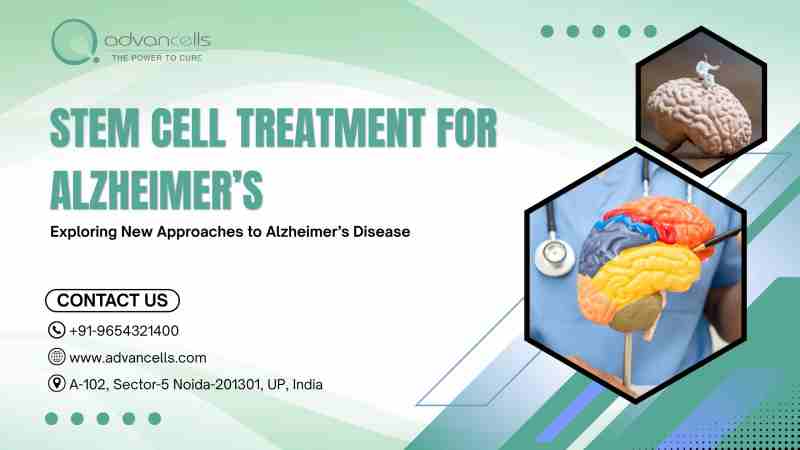
Stem Cell Treatment for Alzheimer’s: Exploring New Approaches to Alzheimer’s Disease
 Advancells Stem Cell Research & Development
Introduction
Alzheimer's disease changes the behavioural pattern of individuals. The individual affected with Alzheimer's experiences changes in the way they remember, think, communicate, and manage everyday life. For families, watching these changes can be difficult, especially because there is still no treatment that can completely reverse the disease.
This has motivated researchers to explore beyond conventional therapies. For instance, growth in regenerative medicine such as Stem Cell Treatment for Alzheimer's seems promising. Stem cell research focuses on ways to protect nerve cells, regulate inflammation, and create a healthier neural microenvironment within the brain.
Alzheimer's Disease Causes and Risk Factors
There is no single cause of Alzheimer's disease. The key risk factors include:
- Age, one of the strongest risk factors, although Alzheimer's is not a normal part of aging.
- Genetics, individuals carrying genetic variants associated with increased risk
- The key changes include accumulation of amyloid-beta plaques and abnormal tau protein tangling
- Change in communication pattern between nerve cells, leading to neuronal damage
- Other co-morbid factors include cardiovascular health, diabetes, physical inactivity, poor sleep, and chronic inflammation
Alzheimer's Disease Symptoms: More Than Memory Loss
Memory problems are often among the first noticeable Alzheimer's disease symptoms, but the condition can affect many other aspects of thinking and behaviour.
For some individuals, forgetting whole recent conversations might occur, while others can struggle to find familiar words, have difficulty planning or solving problems, or become confused in places they previously knew well. Changes in mood, personality, judgment, and social behaviour may also develop.
As Alzheimer's progresses, these difficulties can begin to interfere with everyday activities. The symptoms and their rate of progression are not exactly the same for everyone, making proper medical evaluation important.
Current Alzheimer's Disease Treatment
The current treatment regimen mainly focuses on symptom management and supporting independence. The common treatment includes:
- Medications depending on the individual's condition, disease severity and other co-morbid conditions
- Introduction of lifestyle changes including regular physical activities, adequate sleep, dietary intervention, etc.
- Cognitive stimulation including Deep Brain Stimulation (DBS), a surgical procedure for neuronal signalling
However, existing treatments cannot replace neurons that have already been lost. This is where regenerative medicine has generated interest.
What Is Stem Cell Treatment for Alzheimer's?
Stem cells are being investigated because of their ability to interact with surrounding cells and release biological signals that may influence tissue repair and inflammation.
Among the approaches being studied, mesenchymal stem/stromal cells (MSCs) have received considerable attention. Rather than simply becoming new brain cells, these cells may potentially influence the local environment through the release of signalling molecules.
Researchers are particularly interested in whether these effects could help protect neurons and support brain function.
It is important, however, to separate scientific research from clinical claims. Stem cell treatment for Alzheimer's is still an emerging field, and researchers have not yet established a standard stem cell treatment that can reliably reverse the disease.
How Could Stem Cell Therapy Help in Alzheimer's?
Scientists are investigating several possible mechanisms.
One major area of interest is neuroinflammation. In Alzheimer's disease, prolonged inflammatory activity in the brain may contribute to neuronal damage. Certain stem-cell-based approaches may be able to influence inflammatory pathways and potentially create a more supportive environment for nerve cells.
Stem cells release growth factors and other signalling molecules that could support neuronal survival and cellular communication. Their potential effects on oxidative stress and the brain's microenvironment are also being investigated.
The important point is that these are proposed mechanisms based on ongoing research. They do not yet mean that stem cell therapy can repair all Alzheimer's-related brain damage or restore lost memory.
What Does Research Say About Stem Cell Therapy for Alzheimer's?
Research into Stem Cell Therapy for Alzheimer's has progressed from laboratory experiments and animal studies toward early human investigations.
Preclinical studies suggested the ability of the stem cells to reduce inflammation, improve neuronal survival, immunomodulation, and cognitive performance in experimental models. Early clinical research has mainly focused on questions such as safety, feasibility, and whether treatment produces measurable biological or cognitive changes.
There are still significant limitations. Studies may differ in the type and source of stem cells used, treatment protocols, patient characteristics, and outcome measures. Many clinical studies have also involved relatively small numbers of participants.
For this reason, larger and longer clinical trials are needed before researchers can determine whether stem cell treatment provides meaningful and consistent benefits for people with Alzheimer's disease.
The Future of Stem Cell Treatment for Alzheimer's
The future of stem cell treatment will depend on better evidence and a clearer understanding of how these cells interact with the aging and diseased brain.
For patients and families, this also means being careful with claims of a "cure" or guaranteed recovery. A treatment being investigated in clinical research is not the same as a treatment that has been proven to work.
Conclusion
Alzheimer's is a complicated health condition caused due to a combination of genetic, biological, and age-related factors. Current treatment regimens enable managing symptoms, but none addresses the underlying cause. Stem cell treatments for Alzheimer's are explored for their potential in influencing inflammation, supporting neuronal health, and modifying the brain's cellular environment. Simultaneously, more rigorous clinical research is needed to establish safety and efficacy of the treatment.
Source:
Click for the: Full Story
You might like







You Might Like this