



 Close Menu
 World
World
 Biography
 Health
 Education
 Business
 Lifestyle
 Sports
 Technology
 Animals
 History
 Food
Food
 Religious
 Startups
 Movies
 Politics
 Fashion
 Covid
Covid
 Diet
Diet
 Fitness
 Marketing
 Travel
 Science
 Reviews
 Social media
 Stories
 Facts
Facts
 Art
Art
 Entertainment
Fareed AcoBloom

Business
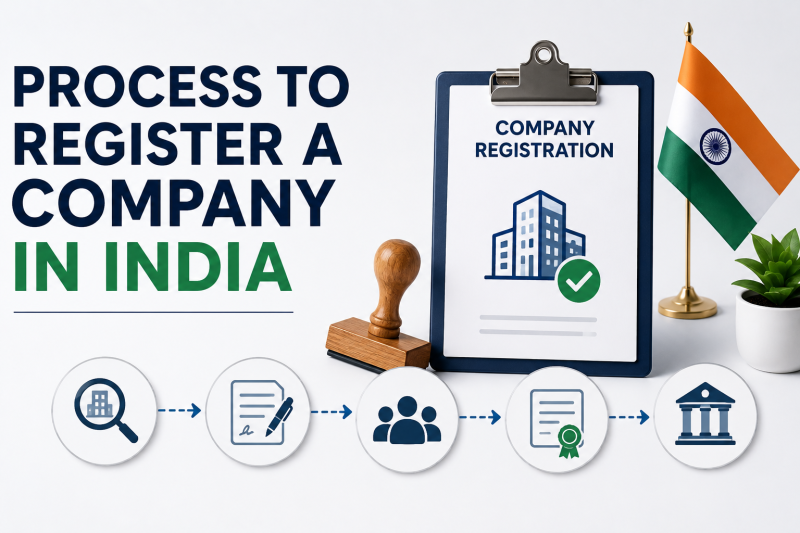
Step-by-step guide to company registration process in India.
 Fareed AcoBloom
Understanding the process to register a company in India is essential for entrepreneurs, startups and foreign businesses planning to establish a formal presence in the Indian market. Company registration is now largely digital through the Ministry of Corporate Affairs (MCA), with the SPICe+ system integrating several incorporation-related services.
However, successful registration involves more than submitting an online application. Businesses need to select the appropriate structure, prepare accurate documentation, reserve a suitable name, obtain digital signatures and complete the required linked filings.
For UK and European businesses entering India, understanding each stage in advance can help reduce delays and avoid costly documentation errors.
Step 1: Choose the Right Company Structure
The first stage in the process to register a company in India is deciding what type of legal entity is appropriate.
Common options include:
- Private limited company
- Public limited company
- One Person Company
- Section 8 company, where applicable
For many startups and businesses intending to raise investment, a private limited company is a practical structure because it provides limited liability and a separate legal identity.
The decision should also consider ownership, funding plans, compliance obligations, taxation and long-term expansion.
Step 2: Decide the Directors and Shareholding
The proposed company must determine its directors, shareholders and ownership structure before incorporation documents are prepared.
For a private limited company, the founders should establish:
- Proposed directors
- Shareholders
- Shareholding percentage
- Authorised and subscribed capital
- Registered office
- Main business activities
Foreign-owned businesses should additionally review applicable foreign investment rules before finalising the ownership structure.
This is particularly important where a foreign parent intends to establish an Indian subsidiary or wholly owned subsidiary.
Step 3: Obtain Digital Signature Certificates
The next stage in the process to register a company in India involves obtaining Digital Signature Certificates (DSCs) for individuals who need to digitally sign incorporation documents.
Because incorporation applications are submitted electronically, the relevant signatories must be able to authenticate documents digitally.
MCA also advises new directors to register as Business Users and associate their DSC with the V3 system before filing forms.
Step 4: Select and Reserve the Company Name
Choosing a compliant name is one of the most important early stages.
The proposed name should:
- Be distinctive
- Not closely resemble an existing company or LLP
- Avoid prohibited or regulated expressions unless the necessary requirements are met
- Reflect the proposed business activity
- Avoid unnecessary trademark conflicts
Under the MCA incorporation framework, SPICe+ Part A is used for name reservation. The application captures information such as the proposed name, company type and business activity/NIC codes.
A poorly selected name can result in resubmission or rejection, making name research an important part of the registration strategy.
Step 5: Prepare the Incorporation Documents
Once the name and proposed structure are established, the business needs to prepare its supporting documentation.
Typical documents may include:
- Identity and address proof of directors
- Identity and address proof of shareholders
- Registered office documentation
- Proof of ownership or authorised use of the premises
- Digital signatures
- Constitutional documents
- Declarations and consent documents, where applicable
Foreign shareholders and directors may have additional documentation and authentication requirements.
Therefore, international applicants should verify document requirements before starting the filing rather than waiting for a resubmission request.
Step 6: File SPICe+ Part B
SPICe+ Part B is the core incorporation application.
The form captures important information relating to the proposed company, including:
- Registered office
- Directors
- Subscribers
- Share capital
- Business activities
- PAN and TAN-related information
- Other incorporation details
MCA's incorporation FAQ explains that SPICe+ Part B forms part of the online incorporation process and is followed by relevant linked forms.
This is one of the most critical stages in the process to register a company in India, because inconsistencies between the application and supporting documents can lead to queries or resubmission.
Step 7: Complete the Linked Forms
Company incorporation is not limited to SPICe+ Part B.
Depending on the company and circumstances, linked filings can include:
- e-MOA
- e-AOA
- AGILE-PRO-S
- INC-9
- URC-1, where applicable
MCA specifies the sequence for linked incorporation forms, with AGILE-PRO-S forming part of the incorporation filing process.
AGILE-PRO-S also connects incorporation with services such as EPFO and ESIC registration, profession tax registration in applicable states, bank-account opening and certain other registrations. GST registration can be applied for through the form where applicable.
Step 8: Sign and Submit the Application
After completing the forms, the required documents must be digitally signed and submitted through the MCA portal.
The MCA V3 process allows applicants to work with online forms and track application status through the portal.
Before submission, businesses should carefully check:
- Names and spellings
- Residential addresses
- Shareholding information
- Capital details
- Business activity
- Registered office information
- Supporting documents
- Digital signatures
A small inconsistency can create unnecessary delays.
Step 9: Pay Government Fees and Stamp Duty
The applicable incorporation costs depend on factors such as authorised share capital and the state in which the registered office is situated.
Stamp duty can vary by state, so businesses should calculate the expected government charges based on their specific incorporation details.
Professional fees, documentation costs and other advisory expenses may be additional.
Step 10: MCA Review and Resubmission, If Required
After submission, the Registrar of Companies reviews the incorporation application.
If the application satisfies the applicable requirements, the incorporation process proceeds toward approval. If clarification or correction is required, the applicant may receive a resubmission request.
This is why document preparation is just as important as completing the online form.
Step 11: Receive the Certificate of Incorporation
Once the application is approved, the company receives its Certificate of Incorporation.
The incorporation process also provides PAN and TAN as part of the integrated registration framework.
The newly incorporated company now has its formal corporate identity and can proceed with operational activities subject to the registrations, licences and compliance requirements applicable to its business.
Step 12: Complete Post-Incorporation Requirements
Registration is not the end of the process to register a company in India.
After incorporation, the company may need to complete additional steps depending on its activities, including:
- Activating and operating the company bank account
- Capital subscription
- GST registration, where applicable
- Import Export Code, where required
- Sector-specific licences
- Accounting and tax setup
- Employment registrations
- Statutory books and records
- Ongoing MCA compliance
The exact requirements depend on the company's business model, location, employees, turnover and industry.
A Practical Example
Consider a UK technology company planning to establish an Indian subsidiary.
Instead of immediately filing incorporation forms, the company could first determine its ownership structure, verify whether its proposed activity falls under applicable foreign investment rules, identify directors and shareholders, prepare authenticated documents, select an Indian registered office and then proceed with SPICe+ incorporation.
This approach connects company registration in India with the broader business objective rather than treating incorporation as an isolated administrative task.
Company Registration Process at a Glance
StageMain activityKey outcome1Select company structureAppropriate legal entity2Decide directors/shareholdersOwnership framework3Obtain DSCsDigital filing capability4Reserve nameApproved company name5Prepare documentsComplete incorporation package6File SPICe+ Part BMain incorporation application7Submit linked formsIntegrated registrations8Pay applicable feesApplication submitted9MCA reviewApproval or resubmission10Receive incorporation certificateCompany legally incorporated11Complete post-incorporation workOperational readiness
How Stratrich Consulting Can Help
For international businesses, the process to register a company in India can involve additional considerations around foreign ownership, documentation, regulatory permissions, registered-office requirements and post-incorporation compliance.
Stratrich Consulting can support UK and European businesses evaluating and establishing an Indian presence by helping them understand incorporation requirements, structure their entry approach and coordinate the practical steps involved in setting up operations.
The value of professional support is particularly relevant when incorporation is part of a larger India market-entry plan rather than simply the registration of a domestic startup.
Conclusion
The process to register a company in India follows a structured pathway: choose the appropriate entity, determine ownership and directors, obtain DSCs, reserve the name, prepare documentation, complete SPICe+ and linked forms, submit the application, respond to any MCA queries and obtain the Certificate of Incorporation.
For foreign businesses, however, successful incorporation should be viewed as the beginning of the India business journey rather than the final objective. Proper planning before filing can make the registration process smoother while ensuring that the new company is prepared for its subsequent tax, regulatory and operational obligations.
Source:
Click for the: Full Story
You might like









You Might Like this