Close Menu
 World
World
 Biography
 Health
 Education
 Business
 Lifestyle
 Sports
 Technology
 Animals
 History
 Food
Food
 Religious
 Startups
 Movies
 Politics
 Fashion
 Covid
Covid
 Diet
Diet
 Fitness
 Marketing
 Travel
 Science
 Reviews
 Social media
 Stories
 Facts
Facts
 Art
Art
 Entertainment
Yatin Samra

Technology
Technology Stack for Fitness App Development Explained
 Yatin Samra
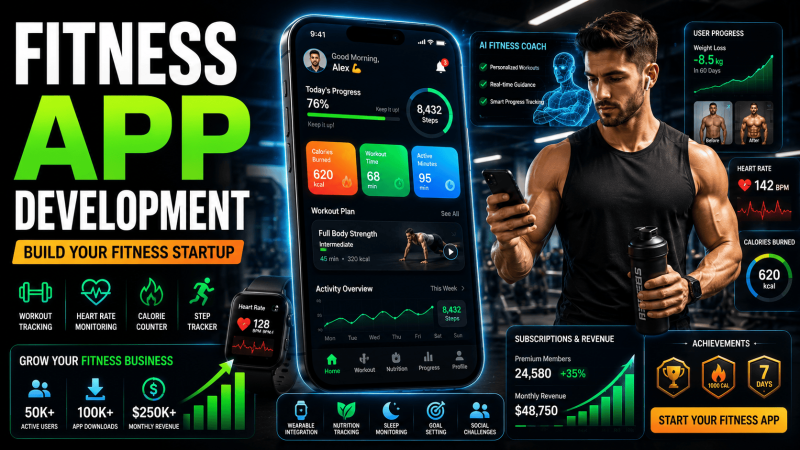
Selecting the right tech stack is the key step to develop a fitness app. Technologies that will be used for developing an application have a direct effect on performance, scalability, user experience, cost of maintenance, and opportunities for further growth.
With the ever-growing popularity of digital fitness applications in markets like the US and the UAE, companies that specialize in developing fitness applications require advanced and scalable technologies to keep up with the competition. This applies to any type of application, from a workout tracker to a nutrition application and personal coach.
What Is a Technology Stack?
A technology stack refers to the collection of programming languages, frameworks, databases, cloud services, and third-party integrations used to build and operate an application.
For fitness applications, the stack generally consists of:
- Frontend technologies
- Backend technologies
- Databases
- Cloud infrastructure
- APIs and integrations
- Security solutions
Selecting the right combination ensures long-term success.
Frontend Technologies for Fitness Apps
The frontend determines what users see and interact with.
Flutter
Flutter has become one of the most popular choices for cross-platform development because it offers:
- Fast performance
- Native-like experiences
- Faster development cycles
- Single codebase for Android and iOS
Many businesses choose Flutter when they want to build a fitness app efficiently.
React Native
React Native is another popular framework for cross-platform development.
Advantages include:
- Reduced development costs
- Large developer community
- Strong third-party support
Native Development Options
Some companies prefer native applications for maximum performance.
Swift for iOS
Swift is widely used for building high-performance iPhone applications.
Kotlin for Android
Kotlin provides modern Android development capabilities and excellent stability.
Native development is often preferred for advanced fitness tracking applications.
Backend Technologies
The backend handles business logic, user management, analytics, and data processing.
Node.js
Node.js offers:
- High scalability
- Real-time capabilities
- Fast API performance
It remains one of the most common backend technologies.
Python
Python is particularly useful for applications using:
- Artificial intelligence
- Machine learning
- Recommendation engines
AI-powered personalization is becoming increasingly important in fitness app development.
Java
Java remains a reliable choice for enterprise-grade applications requiring high stability.
Database Technologies
Fitness applications generate significant amounts of user data.
PostgreSQL
PostgreSQL is ideal for:
- Structured data
- User profiles
- Subscription information
MongoDB
MongoDB works well for:
- Flexible schemas
- Large datasets
- Rapid scaling
Choosing the right database depends on application requirements.
Cloud Infrastructure
Cloud services provide scalability and reliability.
Amazon Web Services (AWS)
AWS offers:
- Global scalability
- Storage solutions
- Analytics services
- Machine learning capabilities
Google Cloud Platform
Google Cloud provides strong AI and analytics capabilities.
Microsoft Azure
Azure is often preferred by enterprises and healthcare organizations.
Entrepreneurs looking to understand the complete architecture behind modern fitness applications may find the video below particularly useful for exploring technology choices and implementation strategies.
https://youtu.be/Q1W0s_3pKUU?si=k5LjzXjmQiiYLQ65
APIs and Third-Party Integrations
Modern fitness applications rely heavily on integrations.
Common examples include:
- Payment gateways
- Notification services
- Mapping services
- Video streaming platforms
These integrations improve functionality while reducing development time.
Wearable Device Integrations
Many users expect compatibility with wearables.
Popular integrations include:
- Smartwatches
- Fitness trackers
- Heart rate monitors
- Smart scales
Wearable support has become a competitive necessity for businesses that develop a fitness app.
Health Data Integrations
Two major health platforms dominate the market:
Apple HealthKit
HealthKit allows fitness apps to access:
- Activity data
- Heart rate information
- Sleep tracking
Google Health Connect
Google's ecosystem enables Android health integrations.
These platforms improve personalization and user engagement.
AI and Machine Learning Technologies
Artificial intelligence is transforming fitness experiences.
Common AI use cases include:
- Personalized workouts
- Nutrition recommendations
- Progress predictions
- Virtual coaching
Popular technologies include:
- TensorFlow
- PyTorch
- OpenAI APIs
Security Technologies
Fitness apps often process sensitive user information.
Important security measures include:
- End-to-end encryption
- Secure authentication
- GDPR compliance
- HIPAA compliance where applicable
Security should be considered from the beginning of development.
Additional Information: Why Scalability Matters
Many startups underestimate future growth requirements.
Scalable infrastructure allows businesses to:
- Handle increased users
- Reduce downtime
- Improve performance
- Expand internationally
Planning for growth early reduces long-term costs.
Additional Information: Cross-Platform Development Is Growing
Cross-platform technologies continue gaining popularity because they offer:
- Lower development costs
- Faster launch times
- Easier maintenance
- Consistent user experiences
This makes them attractive for startups and growing businesses.
How to Choose the Right Stack
The ideal technology stack depends on:
- Budget
- Timeline
- Feature complexity
- Target audience
- Growth expectations
There is no universal solution for every project.
Conclusion
The selection of technologies is a critical factor in developing any digital product. Companies that want to develop a fitness application need to consider several technologies before starting the development process.
No matter what kind of fitness application you want to develop, be it a local one or a global one, proper selection of technologies will help you to achieve greater scalability, reduce costs, and provide a better experience for users. With increasing demands for digital health products, there is no better time than now to invest in your fitness application.
Frequently Asked Questions
Which technology is best for fitness app development?
Flutter, React Native, Node.js, and AWS are among the most popular choices.
Should fitness apps support wearable devices?
Yes. Wearable integrations significantly improve personalization and engagement.
Is Flutter suitable for fitness apps?
Absolutely. Flutter provides fast development and strong cross-platform performance.
Why is cloud infrastructure important?
Cloud services provide scalability, reliability, and improved performance.
How important is AI in modern fitness apps?
AI is becoming increasingly valuable for personalization, coaching, and user engagement.
Source:
Click for the: Full Story
You might like