Close Menu
 World
World
 Biography
 Health
 Education
 Business
 Lifestyle
 Sports
 Technology
 Animals
 History
 Food
Food
 Religious
 Startups
 Movies
 Politics
 Fashion
 Covid
Covid
 Diet
Diet
 Fitness
 Marketing
 Travel
 Science
 Reviews
 Social media
 Stories
 Facts
Facts
 Art
Art
 Entertainment
Raaiha Jannat

Business
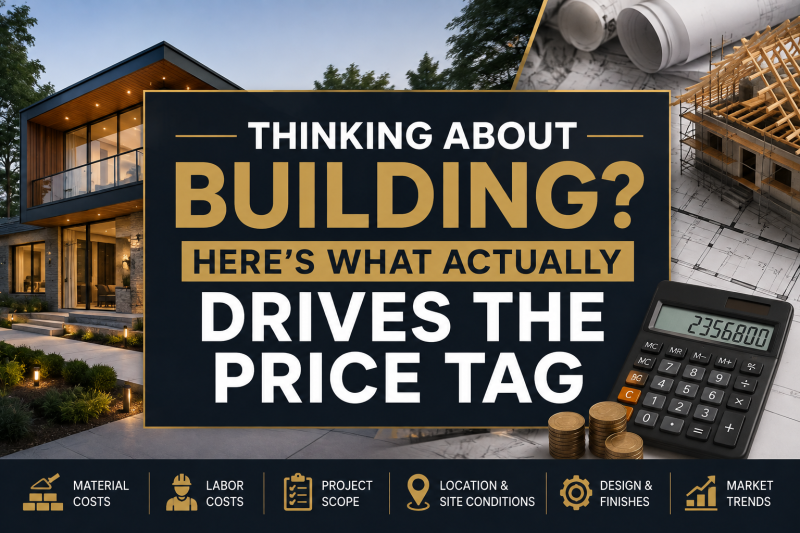
Thinking About Building? Here's What Actually Drives the Price Tag
 Raaiha Jannat
Every year, a fresh wave of homeowners sit down with a napkin, a rough floor plan, and a number they've heard from a friend or a contractor down the street and then reality shows up somewhere around the foundation pour. Building a house from the ground up is one of the biggest financial decisions most people ever make, and yet the pricing conversation around it is often frustratingly vague. "It depends" is technically true, but it's not very helpful when you're trying to figure out if your budget is realistic.
So let's actually unpack what "it depends" means, what the real cost drivers are, why two houses of the same size can cost wildly different amounts, and how to think about your own numbers before you commit to anything.
Why Square Footage Alone Doesn't Tell the Whole Story
It's tempting to reduce home construction to a single number dollars per square foot and use that to size up any project. The problem is that the figure hides more than it reveals. A cost-per-square-foot number depends heavily on the finish level, the region, the complexity of the design, and even the shape of the house itself. Two homes with identical square footage can differ by hundreds of thousands of dollars once you factor in whether one has a simple rectangular footprint and the other has multiple rooflines, custom windows, and high-end finishes throughout.
The Three Tiers Most Builds Fall Into
Most residential builds land somewhere in one of three general categories: a basic builder-grade home focused on function over flair, a mid-range custom home with some upgraded finishes and a more personalized layout, and a luxury custom build where high-end materials and architectural detail drive the price well above standard ranges. Knowing which category your vision actually falls into honestly, not aspirationally is the first step toward a realistic budget.
Location Changes the Math More Than People Expect
Regional Cost Swings
This is where a lot of first-time builders get caught off guard. The exact same house, same square footage, same layout, same finish level can cost dramatically different amounts depending on where it's built. Coastal and high-demand metro areas routinely run far above the national average, while parts of the Midwest and South tend to be considerably more affordable. It's not unusual to see a swing of $100,000 or more on an otherwise identical home just based on zip code.
What's Actually Driving That Gap
A few forces are usually behind these regional differences. Labor costs vary significantly by market skilled tradespeople in high-cost-of-living areas simply command higher wages. Material transportation adds up differently depending on how far supplies have to travel to reach the job site. Local building codes and permitting fees differ from one jurisdiction to the next, sometimes substantially. And in fast-growing markets, sheer demand outpacing available labor and land can push prices up independent of any of the above.
Breaking Down Where the Money Actually Goes
Before Ground Is Even Broken
A meaningful chunk of a home's total cost is spent before construction visibly begins. Land acquisition, architectural plans, permits, and site preparation all happen up front, and together they set the foundation literally and financially for everything that follows. Skipping careful planning at this stage is one of the most common ways budgets go sideways later.
The Big-Ticket Structural Items
Framing and foundation work represent some of the largest single line items in a build, simply because of the volume of material and labor involved. These aren't areas where cutting corners tends to pay off problems here are expensive and disruptive to fix later.
Mechanical Systems Add Up Fast
Plumbing, electrical, and HVAC systems are often underestimated by people building for the first time, but together they represent a substantial share of the budget. These are also systems where quality matters, cheap materials or rushed installation here tend to surface as costly problems years down the road.
Interior Finishes: Where Personal Choices Really Show Up
This is the category with the widest cost range, because it's where personal taste has the most room to play. Flooring, cabinetry, and fixtures can be sourced at a dozen different price points, and this is usually the easiest place to adjust a budget up or down without touching the structural bones of the house.
Smart Ways to Manage the Budget Without Cutting Corners Where It Counts
A few strategies consistently help homeowners keep costs in check without compromising on quality where it actually matters. Simpler rooflines and layouts are almost always more cost-efficient than highly custom designs. Prioritizing splurges in high-use spaces kitchens and primary bathrooms while keeping other rooms more modest tends to deliver better value than spreading a premium finish level evenly across the whole house. Prefabricated components can also help sidestep some labor shortages and material inflation, though they still require standard site prep, permits, and utility connections. And timing material purchases around seasonal price fluctuations, when possible, can shave meaningful dollars off a build.
Getting a Number You Can Actually Trust
All of this is useful context, but general ranges only get you so far. Every lot, design, and region is different, and the gap between a rough estimate and an accurate one can be the difference between a project that stays on budget and one that doesn't. For anyone planning a build in the 2,000 square foot range specifically, this detailed cost to build a 2,000 sq ft house breakdown walks through the full cost picture, regional comparisons, system-by-system pricing, and practical ways to manage the budget and is a solid next step before finalizing any numbers with a builder.
Building a home is one of those projects where a little upfront diligence pays for itself many times over. Understand your real cost drivers before you break ground, and the rest of the process gets a lot less stressful.
Source:
Click for the: Full Story
You might like