Close Menu
 World
 Biography
 Health
 Education
 Business
 Lifestyle
 Sports
 Technology
 Animals
 History
 Food
 Religious
 Startups
 Movies
 Politics
 Fashion
 Covid
 Diet
 Fitness
 Marketing
 Travel
 Science
 Reviews
 Social media
 Stories
 Facts
 Art
 Entertainment
Avery

Technology
Trust Wallet Clone Script: Integrating Smart Accounts With Digital Asset Storage
 Avery
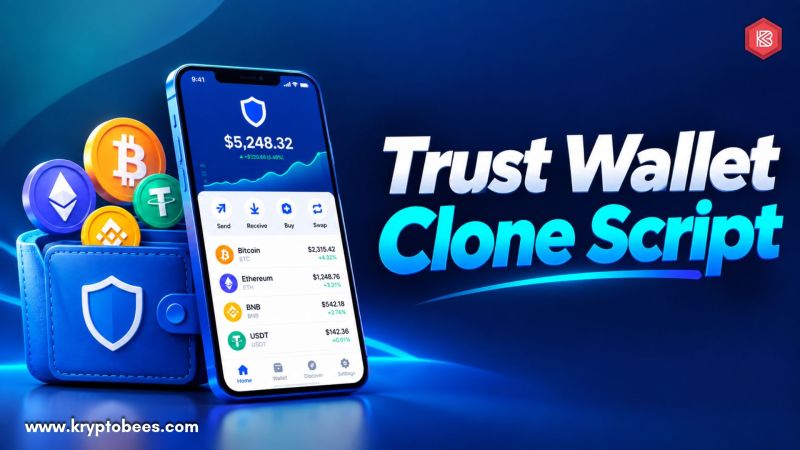
The present-day cryptocurrencies have extended the features of their wallet applications, including not only the storage of tokens and display of their balances. Users need to transfer assets, use different blockchain networks, interact with dApps, and verify their actions. The smart wallet offers another layer of capabilities that will allow wallets to meet some rules concerning transaction verification, spending limits, and restoring accounts. Trust Wallet Clone Script can help businesses plan their wallets' capabilities according to their audiences and blockchain networks.
How Smart Accounts Change Wallet Operations
Conventional crypto wallets use private keys to sign off on transactions. In contrast, smart accounts provide programmability to set rules on how a transaction is authorized and executed, such as adding authorization for any big transfers or limiting the wallet balance within a certain limit.
In Ethereum-based networks, the ERC-4337 standard allows for account abstraction without any modifications to the Ethereum architecture itself. It involves components related to handling user operations, sending out transactions, and executing accounts.
The choice needs to be made in terms of the kind of accounts to be used, either conventional or smart contracts accounts or both. This depends on factors like transaction costs, contract deployment, recoverability, and network compatibility. The account design needs to be decided prior to development as it impacts transaction processing.
Managing Digital Assets Across Multiple Blockchains
The support of several blockchain networks means that apart from just listing all their names in the wallet application, other things like their address format, rules for transactions, confirmation time, token standard must be considered.
For instance, when a person has ETH in Ethereum and a token in BNB Smart Chain, he needs the balances in both of them to appear. The application should get the corresponding blockchain information, determine the tokens that are supported and give transaction history information without mixing everything up in chains.
A Trust Wallet Clone App will allow you to do that within a single interface. Network connections, token determination, transaction history, and transaction confirmations will have to be configured for every single blockchain that the application supports. The status of the transaction being pending, confirmed or failed must be shown.
Private Key Storage and Account Recovery
Management of the private key impacts directly the control over cryptocurrency users have. Non-custodial wallets mean that the users themselves hold their keys and do not depend on any company which has to verify each transaction.
The development process will have to specify the way of keys generation, encryption, storage, and recovery. The sensitive information cannot be logged into application logs or sent over insecure connections. Appropriate device and data protection and encryption techniques can help minimize the risks of the unauthorized access.
The recovery process is also important. Conventional wallet can use a recovery phrase, while the smart account can offer recovery addresses or authorized signers. Each of these methods should have the clear rules of authorization as otherwise, somebody could end up with full control over the account.
All the cases of loss of device, loss of credentials, recovery, and the transactions initiated by the unauthorized person will have to be tested.
Connecting Smart Accounts With Blockchain Services
Wallets consist of many parts, including their user interfaces, key management systems, blockchain node services, and transactions-processing services. If a user initiates a payment of cryptocurrencies, the application will need to verify transaction data, receive the necessary signature or permission, send out the transaction, and monitor its confirmation.
Smart account implementations can use other components like bundlers, paymasters, and account factory contracts. They can facilitate user operation processing, sponsored transactions fees, and smart accounts creation depending on the specific network and implementation.
Trust Wallet Clone Software development must identify the networks and accounts types that the app supports. In addition, developers have to test transaction failure, connection interruption, wrong recipient addresses, and fee changes.
Security review of the implemented smart contracts is also a necessity. As for integration testing, it is crucial because the wallet can show all the proper data but have problems when sending or confirming the transaction.
Conclusion
Smarts accounts affect how transaction signing, recovery, and asset management functions in cryptocurrency wallets operate. Designing a wallet that uses these features involves making informed choices regarding the design of accounts, private key storage, blockchain connections, and transactions signing. Organizations need to establish network needs and security policies before testing the transaction process.
Kryptobees provides Trust Wallet Clone Script development services for businesses planning cryptocurrency wallets with multi-chain support and digital asset management. Visit www.kryptobees.com to discuss your project requirements.
Contact us for more information:
Link: https://www.kryptobees.com/blog/trust-wallet-clone
Mail: business@kryptobees.com
Telegram: https://telegram.me/kryptobees1
Source:
Click for the: Full Story
You might like