Close Menu
 World
World
 Biography
 Health
 Education
 Business
 Lifestyle
 Sports
 Technology
 Animals
 History
 Food
Food
 Religious
 Startups
 Movies
 Politics
 Fashion
 Covid
Covid
 Diet
Diet
 Fitness
 Marketing
 Travel
 Science
 Reviews
 Social media
 Stories
 Facts
Facts
 Art
Art
 Entertainment
Prozentech Social

Technology
Uber Clone App Development for Building a Modern Ride-Hailing Business
 Prozentech Social
The transportation industry has changed significantly with the growth of mobile-based ride booking platforms. Customers now expect fast booking, transparent fares, real-time tracking, secure payments, and convenient access to transportation services from their smartphones. For entrepreneurs and transportation companies, this creates a strong opportunity to launch their own digital mobility platform.
A professionally developed Uber Clone provides the essential technology required to build a ride-hailing business without starting every feature from the beginning. The platform can be customized according to your branding, pricing model, vehicle categories, service locations, driver operations, and business requirements.
Instead of simply copying an existing application, businesses can use the core ride-hailing model as a foundation and create a unique platform designed around their target market.
What Is an Uber Clone App?
An Uber Clone App is a customizable ride-booking platform that connects passengers with nearby drivers.
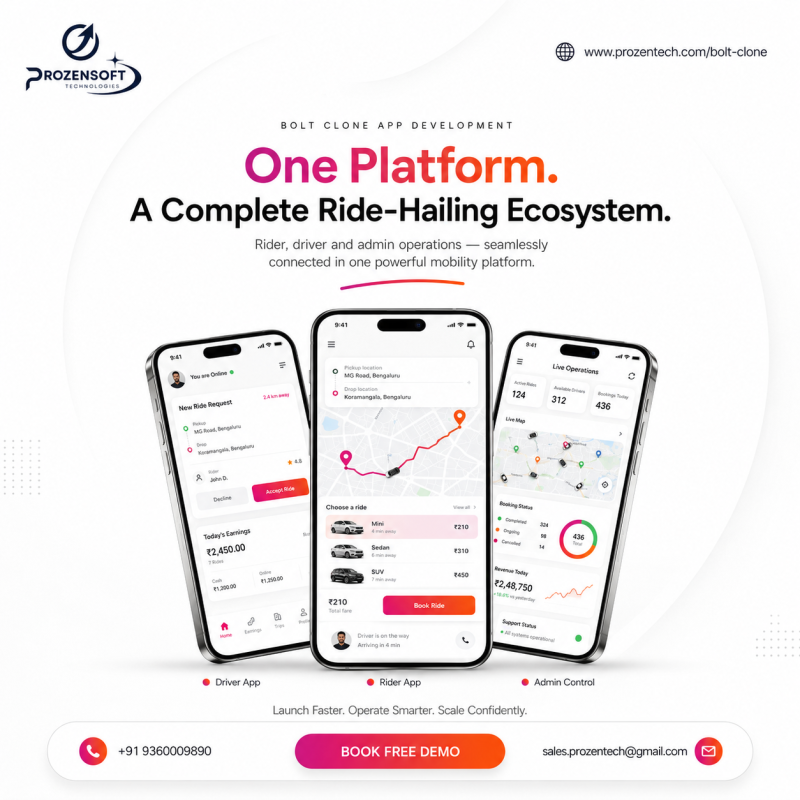
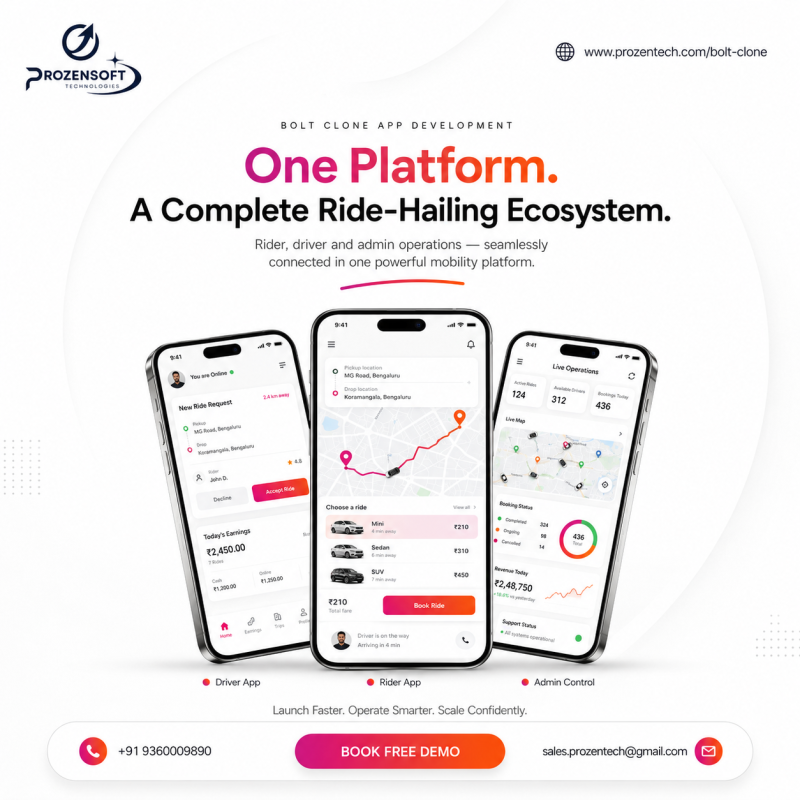
A complete system usually includes three major components:
- Rider Application
- Driver Application
- Admin Dashboard
The rider application allows customers to book transportation services, while the driver application helps drivers manage ride requests and completed trips. The admin panel gives business owners complete control over the platform.
All three modules work together through a centralized backend system.
How the Rider App Works
The rider application should provide a smooth booking experience from the moment the customer opens the app.
Users can register or log in, choose their pickup location, enter their destination, select a preferred vehicle category, view the estimated fare, and confirm the booking.
Once a driver accepts the request, customers can track the driver's location in real time.
Important rider features can include:
- Pickup and destination selection
- Real-time driver tracking
- Fare estimation
- Multiple vehicle categories
- Instant ride booking
- Scheduled ride booking
- Online and cash payments
- Ride history
- Driver ratings
- Promo codes
- Wallet
- Notifications
The simpler the booking flow is, the easier it becomes for customers to use the platform regularly.
Driver App for Efficient Ride Management
Drivers need a dedicated application that helps them manage their daily operations.
Once approved by the administrator, drivers can go online and start receiving nearby ride requests.
The driver can review pickup information, estimated distance, and other ride details before accepting a booking.
After accepting the ride, navigation support helps the driver reach the customer. Once the passenger is picked up, the trip can be started and tracked until the destination is reached.
The driver application can include:
- Online and offline availability
- Incoming ride requests
- Navigation
- Trip management
- OTP ride verification
- Daily earnings
- Weekly earnings
- Wallet balance
- Withdrawal requests
- Trip history
- Ratings and reviews
- Driver notifications
Providing drivers with clear information improves the overall reliability of the platform.
Centralized Admin Dashboard
The admin dashboard is one of the most important parts of an Uber Clone platform.
Business owners can use the dashboard to monitor customers, drivers, rides, transactions, commissions, pricing, and overall platform activity.
Administrators can manage:
- Riders
- Drivers
- Vehicle categories
- Driver documents
- Live and completed rides
- Service locations
- Pricing rules
- Commissions
- Payments
- Coupons
- Reports
- Notifications
Different vehicle categories can also have separate pricing structures.
For example, economy cars, premium cars, bikes, autos, SUVs, vans, or other vehicle types can each have different base fares and distance charges.
Real-Time Location Tracking
Location technology plays an important role in any ride-hailing application.
The platform needs accurate pickup location detection, driver tracking, route information, and destination mapping.
Real-time location updates allow customers to see the driver's movement and expected arrival time.
Drivers can also use route information to reach customers and complete trips efficiently.
For administrators, location information helps monitor active rides and manage operations more effectively.
Flexible Payment Options
Customers expect convenient payment choices when booking transportation services.
An Uber Clone platform can support:
- Cash payments
- Credit cards
- Debit cards
- Digital wallets
- Online payment gateways
Payment records can be automatically stored within the system.
Businesses can also implement commission-based revenue models where the platform receives a percentage from every completed ride.
Drivers can view their earnings and request withdrawals based on the configured payment workflow.
Custom Pricing and Revenue Models
Every transportation market is different.
A business operating in one city may require a completely different pricing structure from a company operating in another region.
The platform can support pricing rules such as:
- Base fare
- Per-kilometer pricing
- Per-minute charges
- Waiting charges
- Minimum fares
- Cancellation fees
- Peak pricing
- Driver commissions
Businesses can configure these values based on their local market and operating costs.
Additional revenue can also come from driver subscriptions, corporate transportation, promotional placements, and premium ride categories.
Customize Your Ride-Hailing Platform
One of the biggest advantages of Uber Clone development is customization.
Your platform does not need to look or operate exactly like another ride-hailing company.
You can customize:
- Brand name
- Logo
- Application colors
- Vehicle categories
- Pricing
- Service areas
- Commission percentages
- Payment methods
- Driver requirements
- Promotional offers
Businesses can also introduce unique features based on their market.
For example, the platform can later expand into airport transportation, employee transport, women-focused transportation, parcel delivery, bike taxi services, or corporate ride management.
Why Scalability Is Important
A new ride-hailing business may begin with only a small number of drivers and customers.
However, as marketing efforts increase and the platform expands into additional locations, the number of bookings can grow quickly.
A scalable architecture helps the system handle increasing numbers of:
- Users
- Drivers
- Ride requests
- Transactions
- Service locations
- Notifications
Scalability makes it easier to expand the business without rebuilding the entire platform.
Launch Your Own Ride-Hailing Brand
Launching a successful ride-hailing business requires more than an attractive mobile application.
The rider app, driver app, admin dashboard, real-time tracking, payments, pricing, driver management, and backend infrastructure all need to work together seamlessly.
At Prozensoft Technologies, we provide customizable Uber Clone development solutions for startups, entrepreneurs, and transportation businesses. The platform can be tailored according to your brand, service locations, pricing model, vehicle categories, and long-term business strategy.
With a scalable Uber Clone, businesses can create a strong foundation for launching and growing their own ride-hailing platform.
Frequently Asked Questions
What is included in an Uber Clone App?
A complete solution can include rider and driver mobile apps, an admin dashboard, ride booking, tracking, payments, fare management, ratings, notifications, and reports.
Can I customize the app with my own brand?
Yes. The application can be customized with your logo, colors, app name, pricing model, service locations, and business requirements.
Can multiple vehicle categories be added?
Yes. Cars, bikes, autos, SUVs, vans, premium vehicles, and other categories can be configured.
Can customers schedule rides?
Yes. The platform can support both immediate and scheduled ride bookings.
Can the platform support multiple cities?
Yes. The application can be developed with multi-city support so the business can expand into additional locations over time.
Source:
Click for the: Full Story
You might like