



 Close Menu
 World
World
 Biography
 Health
 Education
 Business
 Lifestyle
 Sports
 Technology
 Animals
 History
 Food
Food
 Religious
 Startups
 Movies
 Politics
 Fashion
 Covid
Covid
 Diet
Diet
 Fitness
 Marketing
 Travel
 Science
 Reviews
 Social media
 Stories
 Facts
Facts
 Art
Art
 Entertainment
Ditstek Innovations

Technology
What Are the Benefits of Custom Application Development for Enterprises
 Ditstek Innovations
Modern enterprises operate in increasingly complex environments. They manage large volumes of data, coordinate multiple departments, serve diverse customer groups, and adapt to rapidly changing market demands. While off-the-shelf software can address common business needs, it often falls short when organizations require solutions tailored to their unique workflows and goals.
This is where custom application development becomes valuable. Instead of forcing a business to adjust its operations around software limitations, custom applications are designed specifically to support existing processes, business objectives, and future growth plans.
For enterprises looking to improve efficiency, enhance customer experiences, and gain a competitive advantage, custom application development offers several long-term benefits.
Understanding Custom Application Development
Custom application development refers to the process of designing, building, deploying, and maintaining software specifically for a particular organization or business requirement.
Unlike commercial software products that serve a broad audience, custom applications are built with a clear understanding of the organization's workflows, challenges, and operational goals.
These solutions can include:
- Enterprise resource planning systems
- Customer relationship management platforms
- Supply chain management applications
- Internal workflow automation tools
- Mobile applications
- Data analytics platforms
- Industry-specific software solutions
The primary objective is to create software that aligns perfectly with business requirements rather than relying on generalized functionality.
Improved Operational Efficiency
One of the most significant benefits of custom application development is the ability to streamline operations.
Many enterprises use multiple software systems that may not communicate effectively with one another. Employees often spend valuable time transferring information manually between platforms, leading to inefficiencies and errors.
Custom applications can integrate business functions into a unified system, allowing teams to work more efficiently. Automated workflows reduce repetitive tasks, eliminate bottlenecks, and improve productivity across departments.
According to a report by McKinsey, organizations that successfully implement automation technologies can significantly improve operational performance and reduce administrative workloads.
By aligning software with business processes, enterprises can optimize day-to-day operations and focus resources on strategic initiatives.
Scalability to Support Business Growth
As organizations expand, their software requirements evolve. Many off-the-shelf solutions become restrictive when businesses need additional functionality, increased user capacity, or support for new markets.
Custom applications are built with scalability in mind. Features can be added as business requirements change without requiring a complete system replacement.
This flexibility allows enterprises to:
- Support growing customer bases
- Expand into new regions
- Add new products or services
- Accommodate larger teams
- Integrate emerging technologies
Instead of being constrained by software limitations, businesses gain a technology foundation capable of evolving alongside organizational growth.
Enhanced Data Security and Compliance
Data security remains a top concern for enterprises across all industries.
Cybersecurity threats continue to increase, and businesses must also comply with regulations such as GDPR, HIPAA, PCI DSS, and other industry-specific standards.
Commercial software solutions often become attractive targets for cybercriminals because they are widely used across multiple organizations.
Custom applications provide greater control over security architecture. Enterprises can implement security measures tailored to their specific risk profiles, including:
- Multi-factor authentication
- Role-based access controls
- Data encryption
- Secure APIs
- Audit logging
- Compliance monitoring
Because security features are designed around business requirements, organizations can strengthen their protection strategies while meeting regulatory obligations more effectively.
Better Integration with Existing Systems
Enterprises rarely operate with a single software platform. Instead, they rely on various systems for finance, human resources, customer service, inventory management, marketing, and analytics.
A common challenge is ensuring these systems work together efficiently.
Custom application development enables seamless integration across existing technologies. Rather than replacing functioning systems, organizations can build solutions that connect them into a cohesive digital ecosystem.
This integration improves:
- Data accuracy
- Information sharing
- Decision-making speed
- Reporting capabilities
- User productivity
When employees have access to consistent and centralized information, collaboration becomes significantly more effective.
Superior User Experience
User experience plays a crucial role in software adoption and overall productivity.
Generic software often includes features that users never need while lacking functionality essential to their daily tasks. This can create confusion and reduce efficiency.
Custom applications are designed around specific user roles and workflows. The result is a cleaner, more intuitive experience that aligns with actual business needs.
Employees can complete tasks faster, customers enjoy smoother interactions, and organizations benefit from higher software adoption rates.
A well-designed user experience can also reduce training requirements and improve overall satisfaction among both internal and external users.
Greater Competitive Advantage
Technology has become a key differentiator across industries.
Organizations that leverage technology effectively can respond faster to market changes, improve customer service, and operate more efficiently than competitors.
Custom applications provide capabilities that competitors may not have access to through standard software products.
For example, enterprises can create:
- Unique customer engagement tools
- Industry-specific workflows
- Proprietary reporting systems
- Specialized automation processes
- Advanced analytics dashboards
These tailored capabilities help businesses strengthen their market position and create value that is difficult for competitors to replicate.
Long-Term Cost Efficiency
Custom software development typically requires a larger upfront investment compared to purchasing ready-made solutions. However, many enterprises find that the long-term financial benefits outweigh the initial costs.
Recurring licensing fees, subscription costs, feature limitations, and expensive third-party integrations can accumulate over time when using commercial software.
A custom application provides ownership and control over the solution. Enterprises can prioritize future enhancements based on business needs rather than vendor roadmaps.
In many cases, organizations achieve lower total ownership costs over the software's lifecycle while gaining greater operational value.
Better Access to Business Intelligence
Data-driven decision-making has become essential for modern enterprises.
Custom applications can be designed to capture, organize, and analyze business data in ways that directly support organizational goals.
Instead of relying on generic reports, enterprises can develop dashboards and analytics tools tailored to specific performance indicators.
This enables leaders to:
- Monitor operational performance
- Identify emerging trends
- Improve forecasting accuracy
- Optimize resource allocation
- Make faster strategic decisions
Access to meaningful and actionable insights helps organizations remain agile in competitive markets.
Future-Proofing Through Technology Flexibility
Technology continues to evolve rapidly. Enterprises must be prepared to adopt innovations that improve efficiency and customer experiences.
Custom applications provide the flexibility needed to integrate emerging technologies such as:
- Artificial intelligence
- Machine learning
- Internet of Things (IoT)
- Cloud computing
- Predictive analytics
- Automation platforms
Because the software architecture is tailored to business objectives, organizations can adapt more easily as new opportunities and challenges emerge.
This flexibility reduces the risk of technological obsolescence and supports long-term digital transformation strategies.
Conclusion
Custom application development allows enterprises to move beyond the limitations of generic software and build solutions that directly support their business objectives. From improving operational efficiency and security to enhancing scalability and customer experiences, the benefits extend across every area of an organization.
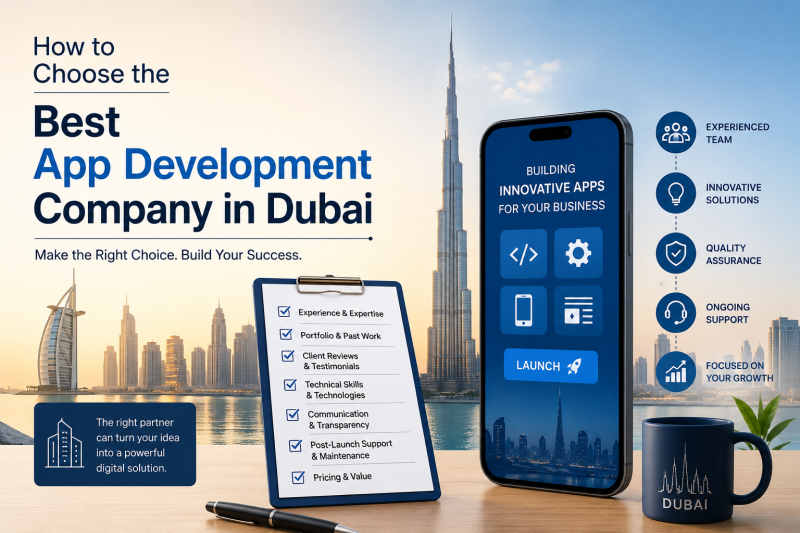
As enterprises continue to invest in digital transformation, tailored software solutions provide the flexibility and control needed to remain competitive in a rapidly evolving marketplace. Organizations seeking long-term value often partner with an experienced mobile application development company in dubai to develop scalable applications that align with their unique operational and growth requirements.
Source:
Click for the: Full Story
You might like








You Might Like this