Close Menu
 World
 Biography
 Health
 Education
 Business
 Lifestyle
 Sports
 Technology
 Animals
 History
 Food
 Religious
 Startups
 Movies
 Politics
 Fashion
 Covid
 Diet
 Fitness
 Marketing
 Travel
 Science
 Reviews
 Social media
 Stories
 Facts
 Art
 Entertainment
Alok Pandey

Technology
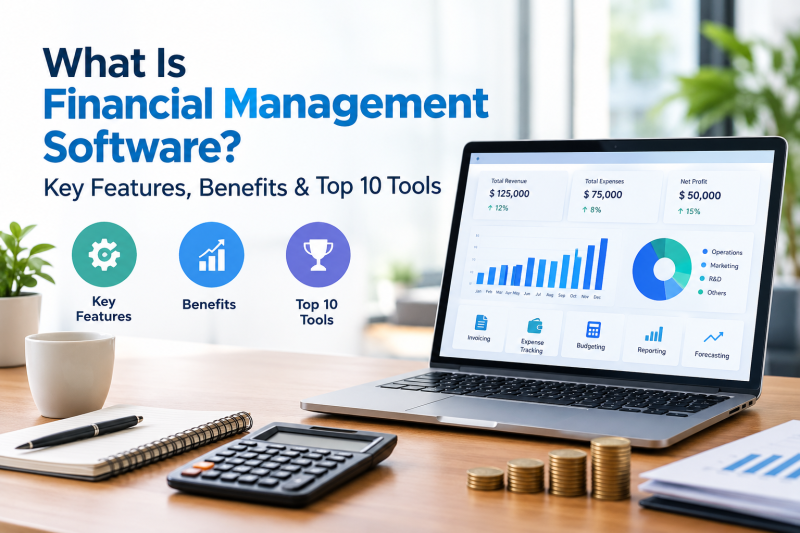
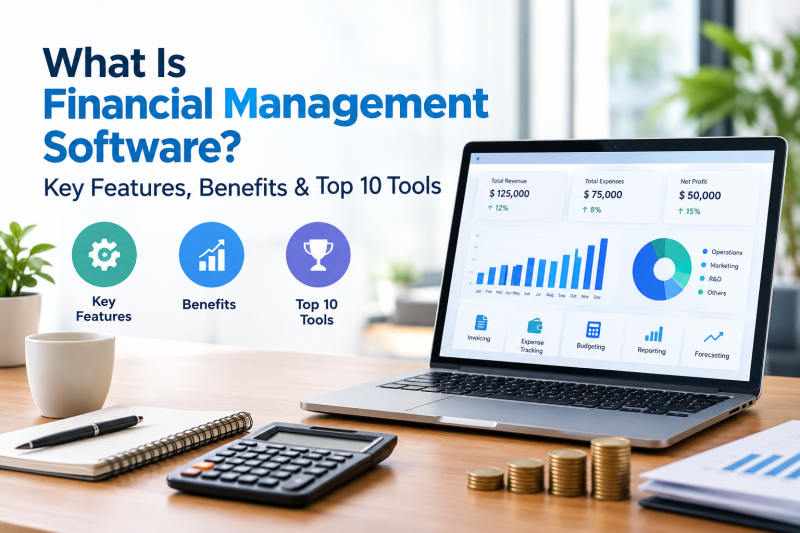
What Is Financial Management Software? Key Features, Benefits & Top 10 Tools
 Alok Pandey
Financial management software is a digital solution that helps businesses manage their financial activities, including accounting, budgeting, cash flow, expenses, and financial reporting. It brings important financial information together in one place, making it easier to track transactions and understand business performance. By reducing manual work and improving accuracy, software helps businesses make informed financial decisions and manage their resources more effectively.
Challenges Faced Without Financial Management Software
Manual financial management can create several challenges, especially as a business grows. Common problems include:
- Manual errors: Spreadsheet-based calculations and data entry can lead to inaccurate financial records.
- Limited visibility: Scattered financial data makes it difficult to understand cash flow and overall performance.
- Time-consuming processes: Preparing reports, reconciling accounts, and tracking expenses can take significant time.
- Budgeting difficulties: Without reliable data, businesses may struggle to plan budgets and control spending.
- Compliance risks: Maintaining accurate records and meeting financial reporting requirements becomes more challenging.
- Delayed decisions: Outdated financial information can slow down business planning and decision-making.
Key Features of Financial Management Software
Financial management software offers features to simplify financial operations:
- Accounting and bookkeeping: Records transactions, manages ledgers, and maintains financial records.
- Budgeting and forecasting: Helps businesses create budgets, estimate future expenses, and plan revenue.
- Cash flow management: Tracks money coming in and going out to support liquidity planning.
- Financial reporting: Generates reports such as profit and loss statements, balance sheets, and cash flow statements.
- Accounts payable and receivable: Helps manage supplier payments, customer invoices, and outstanding balances.
- Automation and integration: Automates repetitive tasks and connects financial data with other business systems.
- Security and access controls: Protects sensitive financial information and limits access based on user roles.
Benefits of Financial Management Software
Financial management software improves efficiency and financial control across the organisation.
- Improved accuracy: Automated calculations and standardised processes help reduce errors.
- Time savings: Routine tasks become faster, allowing teams to focus on more important activities.
- Better decision-making: Updated reports provide useful insights into business performance.
- Stronger cash flow control: Businesses can monitor payments, receivables, and available funds more effectively.
- Cost management: Expense tracking helps identify unnecessary spending and opportunities to save.
- Scalability: Suitable solutions can support changing business needs as operations expand.
Top 10 Financial Management Software Tools
Here are ten popular financial management tools that businesses can consider based on their size, needs, and budget.
- Sage X3: Sage X3 is an enterprise solution for managing finance, inventory, purchasing, manufacturing, and other business operations.
- Sage Intacct: Sage Intacct is a Cloud-based financial management software designed for accounting automation, reporting, and multi-entity financial management.
- Oracle NetSuite: Combines financial management with enterprise resource planning and other business functions.
- SAP S/4HANA Finance: Supports enterprise financial processes, reporting, and financial analysis.
- Microsoft Dynamics 365 Finance: Helps organisations manage financial operations, budgeting, and reporting.
- QuickBooks: Offers accounting, invoicing, expense tracking, and reporting features, particularly for small businesses.
- Xero: Cloud-based accounting software for managing invoices, bank transactions, and financial records.
- Zoho Books: Provides invoicing, expense management, tax support, and accounting tools.
- FreshBooks: Focuses on invoicing, expense tracking, and accounting for freelancers and service-based businesses.
- Acumatica: Offers cloud-based financial management integrated with broader business management capabilities.
Conclusion
Financial management software helps businesses organise financial data, automate routine tasks, improve reporting, and maintain better control over their finances. The right solution depends on factors such as business size, operational complexity, budget, and integration requirements.
Source:
Click for the: Full Story
You might like