



 Close Menu
 World
World
 Biography
 Health
 Education
 Business
 Lifestyle
 Sports
 Technology
 Animals
 History
 Food
Food
 Religious
 Startups
 Movies
 Politics
 Fashion
 Covid
Covid
 Diet
Diet
 Fitness
 Marketing
 Travel
 Science
 Reviews
 Social media
 Stories
 Facts
Facts
 Art
Art
 Entertainment
Yatin Samra

Technology
10 Essential Features of a Fleet Route Optimization App for Modern Businesses
 Yatin Samra
In today's world, the development of fleet application solutions is assisting firms in making their transportation easier, managing drivers, and improving the performance of deliveries. Due to growing logistics and delivery systems throughout the USA, companies are striving hard to find out intelligent ways of lowering fuel costs, optimizing their routes, and meeting customer requirements. A fleet application solution for route optimization provides an organization with fleet management solutions.
Nevertheless, it takes much more than simple GPS tracking to develop a perfect fleet application.
Here are 10 essential features to consider when developing a fleet route optimization app.
1. Real-Time GPS Vehicle Tracking
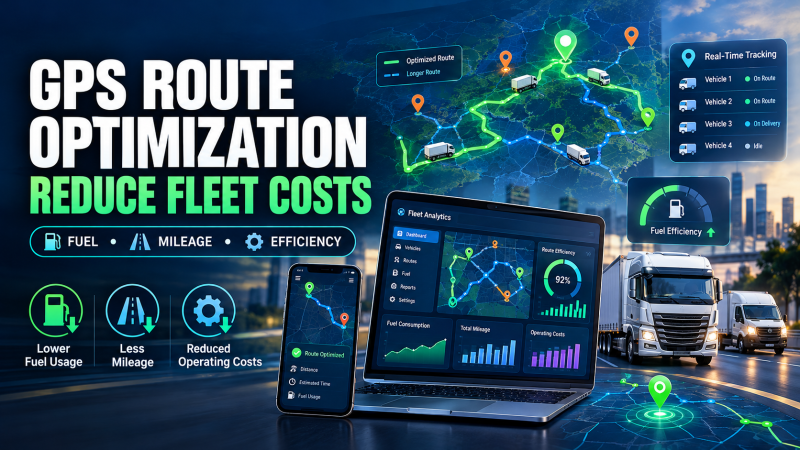
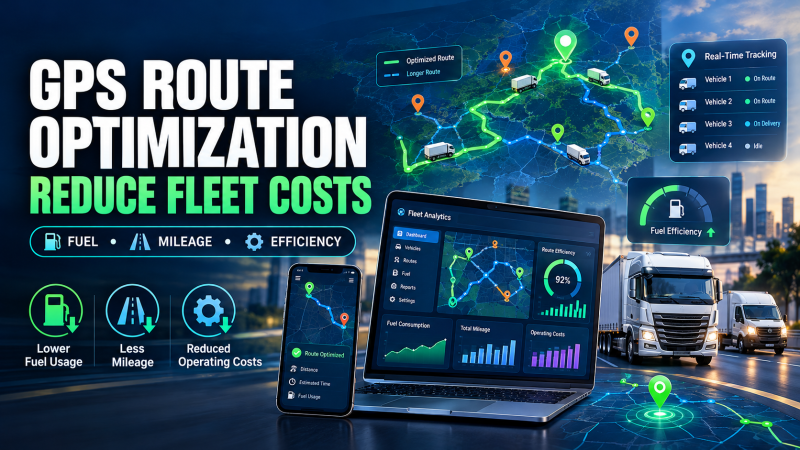
Real-time GPS tracking is a fundamental feature of a modern fleet management application. It enables fleet managers to monitor vehicle locations, understand route progress, and identify unexpected delays.
With a centralized dashboard, dispatchers can view available vehicles and determine which drivers are best positioned to handle new delivery requests.
Key benefits include:
- Improved visibility into fleet operations.
- Faster responses to delivery delays.
- Better coordination between drivers and dispatchers.
- More accurate delivery status updates.
- Greater accountability for assigned routes.
For businesses managing multiple vehicles across different locations, GPS tracking provides the visibility needed to coordinate daily activities efficiently.
2. Intelligent Route Planning and Optimization
Route optimization helps determine efficient travel sequences for multiple delivery stops. Instead of assigning routes manually, the application can evaluate factors such as distance, traffic, delivery deadlines, vehicle capacity, and driver availability.
For example, a delivery company handling dozens of orders can use optimization software to organize stops in a logical sequence and reduce unnecessary backtracking.
An effective route planning module should support:
- Multiple stops per route.
- Delivery time windows.
- Vehicle capacity restrictions.
- Priority-based delivery assignments.
- Route recalculation when conditions change.
The objective is not always to find the shortest route. A practical optimization system balances travel distance, delivery commitments, operating costs, and real-world constraints.
3. Live Traffic Updates and Dynamic Rerouting
Traffic congestion, road closures, accidents, and weather conditions can disrupt planned routes. A route optimization app that incorporates updated traffic information can help drivers and dispatchers respond to changing circumstances.
When a significant disruption occurs, the system may recommend an alternative route or adjust the delivery sequence to minimize the impact.
Important capabilities include:
- Traffic-aware estimated travel times.
- Alternative route suggestions.
- Updated estimated arrival times.
- Notifications about major route changes.
- Recalculation of delivery sequences when necessary.
For fleet operators serving busy metropolitan areas across the USA, these capabilities can help improve schedule reliability. The effectiveness of this feature depends on the accuracy and availability of traffic data from the selected mapping provider.
4. Driver Management and Mobile Access
Drivers are central to fleet operations, so a dedicated mobile application can help them access their assignments and complete daily tasks without relying on constant communication with dispatchers.
A driver app can display assigned routes, delivery instructions, customer details, and updated schedules.
Useful features include:
- Driver login and profile management.
- Assigned routes and delivery lists.
- Turn-by-turn navigation integration.
- Job acceptance and status updates.
- Digital proof of delivery.
- In-app communication with dispatchers.
The interface should be simple enough to use during routine work, with safety taking priority. Drivers should interact with the app only when it is safe and lawful to do so.
5. Delivery Scheduling and Order Management
Route optimization becomes more effective when it works alongside delivery scheduling and order management. These capabilities help businesses coordinate incoming orders, assign delivery windows, and organize workloads before vehicles leave the depot.
For example, an e-commerce business may receive orders throughout the day. An integrated application can help dispatchers group suitable orders by location, account for promised delivery times, and assign them to available vehicles.
A delivery scheduling module may include:
- Order creation and assignment.
- Delivery time-slot management.
- Priority shipment handling.
- Pickup and drop-off scheduling.
- Order status monitoring.
- Cancellation and rescheduling options.
Connecting order management with route planning reduces manual work and helps prevent scheduling conflicts.
6. Fuel and Operating Cost Monitoring
Transportation expenses can significantly affect fleet profitability. Monitoring fuel consumption, mileage, tolls, and other operating costs helps businesses understand where money is being spent.
A fleet route optimization app can provide reports that compare route performance and highlight opportunities to reduce avoidable expenses.
Useful measurements include:
- Fuel cost per mile.
- Total distance traveled.
- Cost per completed delivery.
- Idle time and unnecessary mileage.
- Route-level operating expenses.
- Fuel efficiency by vehicle.
When fuel cards, telematics devices, or vehicle data systems are integrated, the application may provide a more detailed view of fuel performance.
Businesses should evaluate these metrics over time rather than assuming that shorter routes automatically produce lower total costs.
7. Fleet Maintenance and Vehicle Availability
Route planning depends on knowing which vehicles are available and suitable for each assignment. Maintenance management helps fleet operators keep track of service schedules and reduce disruptions caused by preventable vehicle problems.
A maintenance module can track service dates, mileage, inspection reminders, repair history, and vehicle downtime.
Key capabilities may include:
- Preventive maintenance reminders.
- Vehicle service history.
- Inspection and repair records.
- Vehicle availability status.
- Maintenance-related alerts.
- Integration with route assignment tools.
For example, if a vehicle is scheduled for maintenance, the system can mark it unavailable and help dispatchers assign its deliveries to other suitable vehicles.
This feature helps businesses coordinate vehicle maintenance with operational demand instead of treating them as separate activities.
8. Customer Notifications and Delivery Tracking
Customers value transparency throughout the delivery process. An application that provides timely updates can reduce uncertainty and limit the number of calls customers make to ask about shipment status.
Depending on the business model, customer-facing features may include:
- Delivery confirmation messages.
- Estimated arrival windows.
- Shipment status updates.
- Notifications about delays.
- Live tracking links.
- Electronic proof of delivery.
For businesses serving consumers, these features can improve the post-purchase experience. For business-to-business deliveries, they can help receiving teams prepare for incoming shipments.
The system should provide realistic arrival estimates and communicate changes promptly. Location sharing should also be designed with appropriate privacy protections and access controls.
9. Analytics, Reports, and Performance Dashboards
Data analytics helps fleet managers understand whether their optimization strategies are producing measurable results. A dashboard can bring together information about vehicles, drivers, routes, deliveries, and operating expenses.
Rather than relying on assumptions, managers can use performance data to identify recurring problems and make informed operational decisions.
Important indicators include:
- On-time delivery percentage.
- Average delivery time.
- Vehicle utilization rate.
- Fuel expenditure.
- Cost per delivery.
- Route completion rate.
- Vehicle downtime.
- Driver idle time.
For example, if one delivery zone consistently experiences delays, managers can investigate traffic patterns, delivery time windows, staffing levels, or route assignments.
Clear reporting also helps businesses compare performance before and after implementing route optimization.
10. AI-Powered Predictions and Smart Recommendations
Artificial intelligence can extend route optimization by helping businesses analyze historical data, identify patterns, and predict certain operational conditions.
Depending on the available data and system design, AI-powered features may help estimate delivery times, forecast demand, identify recurring bottlenecks, and recommend alternative delivery schedules.
Potential applications include:
- Predictive travel-time estimates.
- Demand forecasting for staffing and vehicle planning.
- Identification of frequently delayed routes.
- Recommendations for delivery grouping.
- Detection of unusual operational patterns.
For example, a logistics company may use historical delivery records to identify locations that frequently experience delays at particular times. This information can help planners adjust schedules in advance.
AI recommendations should be evaluated against real-world results. Accurate data, ongoing monitoring, and human oversight remain important for making safe and practical decisions.
Bonus: Security and Third-Party Integrations
Beyond the 10 core features, businesses should prioritize data security and integration capabilities when planning a fleet application.
Security measures may include role-based access, secure authentication, encryption, audit logs, and appropriate data retention policies. These controls help protect business information, driver details, customer records, and vehicle location data.
Third-party integrations can connect the application with mapping providers, accounting software, warehouse management systems, enterprise resource planning platforms, and customer relationship management tools.
Selecting compatible technologies early can reduce integration difficulties and support future expansion.
How to Choose the Right Features for Your Fleet App
Not every business needs every feature from the beginning. The ideal feature set depends on fleet size, industry requirements, delivery volume, operational complexity, and available budget.
Consider the following approach:
- Identify operational challenges: Determine whether the biggest problems involve fuel costs, delivery delays, vehicle utilization, or manual dispatching.
- Define measurable goals: Set targets for metrics such as on-time delivery, cost per delivery, or average route distance.
- Prioritize essential capabilities: Start with GPS tracking, route optimization, driver assignments, and delivery status management where relevant.
- Plan integrations: Identify which existing business systems and data sources the application must support.
- Test with a pilot fleet: Evaluate usability and operational results before expanding the rollout.
- Improve using performance data: Review results regularly and add advanced features when they address demonstrated needs.
This phased approach helps businesses control development costs while ensuring that the application solves practical operational problems.
Conclusion
Fleet routing software may be used by companies to optimize the transportation process, manage drivers, decrease unnecessary mileage, and create an enhanced user experience for their clients. Such features as GPS navigation, smart routing, dynamic re-routing, fuel consumption control, maintenance, performance analytics, etc., create a backbone for the well-organized fleet management system.
For businesses operating in the USA, it may be helpful to select a proper application to support their development in terms of making optimal use of the available cars and assets. The crucial thing in it is the ability to choose the right features and data sources and to measure the outcomes correctly.
Interested in learning how to develop a fleet app? Click the link below and watch the video for additional information on fleet app development and routing optimization.
Link.
Source:
Click for the: Full Story
You might like





You Might Like this