



 Close Menu
 World
World
 Biography
 Health
 Education
 Business
 Lifestyle
 Sports
 Technology
 Animals
 History
 Food
Food
 Religious
 Startups
 Movies
 Politics
 Fashion
 Covid
Covid
 Diet
Diet
 Fitness
 Marketing
 Travel
 Science
 Reviews
 Social media
 Stories
 Facts
Facts
 Art
Art
 Entertainment
Enterprise Dji

Technology
Regional Drone Response: How Agencies Share Programs and Coverage
 Enterprise Dji
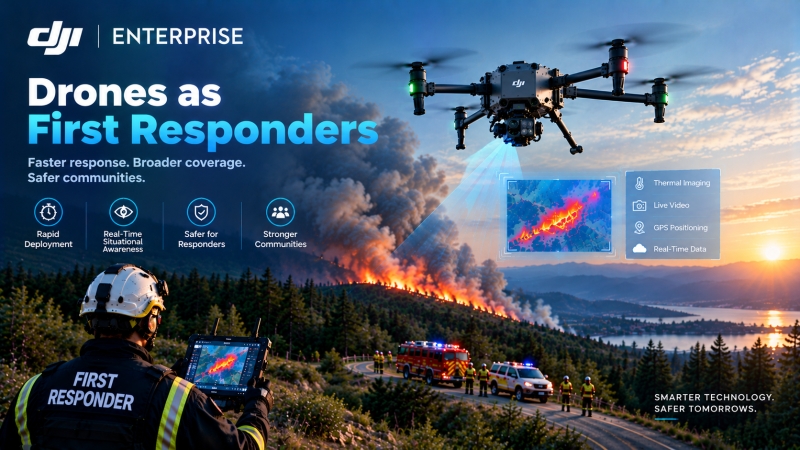
Few agencies have the budget, staff or geography to run a drone program alone. Neighboring towns, counties and districts often face the same calls and the same constraints, and pooling resources can make an otherwise unreachable program practical. A shared drone as first responder program spreads cost and coverage, but it also needs agreements that single-agency programs can skip.
This article explains how regional programs are structured, what to put in writing, how sites and staff are shared and how to keep the arrangement fair and accountable.
Quick Answer
A regional program shares aircraft, sites, pilots or software across neighboring agencies, usually under written agreements covering approval, priority, cost, data and liability. It can extend coverage and spread costs, but it works only if roles are clear, equipment is compatible and every partner trusts the rules.
Why Do Agencies Share Drone Programs?
Agencies share programs because cost and coverage do not follow jurisdiction lines. A small department may not afford multiple sites, and a single aircraft may reach areas that belong to several agencies. Incidents also cross boundaries: a pursuit, a search or a fire may start in one jurisdiction and move into another.
Sharing can spread infrastructure costs, make pilot staffing more resilient and let agencies pool training and maintenance. It can also create broader coverage than any single partner could build, with overlapping sites that back each other up.
Sharing carries costs of its own: more coordination, more agreements and more people with a say. Agencies should weigh the trade-off honestly.
What Models Do Regional Programs Use?
Regional programs take several forms, and the right one depends on the partners.
- Host and partner: One agency owns and operates the program and provides service to neighbors under agreement.
- Joint ownership: Several agencies fund and own equipment together, with shared governance.
- Shared infrastructure, separate operations: Partners share docks, networks or software, but each flies its own aircraft or missions.
- Mutual aid only: Each agency runs its own program and agrees to assist others on request.
Each model has trade-offs. Host models are simple but concentrate responsibility. Joint ownership spreads control but needs governance. Shared infrastructure saves money but requires technical compatibility. Mutual aid is flexible but can leave gaps when everyone is busy.
What Should the Agreement Cover?
The agreement should answer the questions that cause arguments in an emergency. At a minimum, it should state:
- Scope: Which agencies, areas and call types are covered
- Approval: Who may request and approve flights, and how quickly
- Priority: What happens when two partners want the same aircraft
- Costs: Who pays for equipment, sites, software, training and maintenance
- Staffing: Who provides pilots, supervisors and backup
- Data: Who owns, stores, accesses and releases footage and records
- Liability and insurance: Who is responsible if something goes wrong
- Review and exit: How the arrangement is audited, changed or ended
Legal counsel from each partner should review the agreement, since liability, records and procurement rules differ by jurisdiction.
How Do Partners Share Sites and Infrastructure?
Sites should be chosen for shared coverage, not for the convenience of whichever agency owns the building. A drone docking station stores, charges and launches an aircraft without anyone present, which makes it well suited to sharing, because partners can use the same base without sending staff to it.
Placement should follow combined call data. Plot calls across all partner areas, then look for sites that reach the most calls and create overlapping coverage between partners. A dock at a station near a boundary might serve two jurisdictions better than separate docks deep inside each.
Practicalities still apply. Each site needs power, network strength, security, airspace clearance and building approval, and someone must be responsible for inspections, software updates and battery care. If the host building belongs to one partner, the agreement should say who maintains the site and who may access it.
Technical compatibility matters when partners already own equipment. Aircraft, software and video systems should work together, and partners should confirm what integrations with each agency’s dispatch system are possible before committing.
Finally, plan for failure. If a shared dock goes offline, which partner’s calls lose coverage first? Overlapping coverage and fallback procedures should be agreed in advance.
How Does Dispatch Work Across Boundaries?
Dispatch is where shared programs succeed or fail. Calls arrive in different centers with different software, and requests must reach the same pilots quickly.
Some regions use a single dispatch or a shared pilot station that receives requests from all partners. Others use a request process between dispatch centers, with agreed phone lines, forms or software links. Whatever the structure, requests should be fast, simple and recorded.
Priority rules need to be written down. If two partners request the same aircraft, who decides, and on what basis? Threats to life usually come first, but the rule should be clear. Dispatchers in each center should train on the same process and practice it together.
How Do Pilots and Training Work?
Pilots should meet the same standards regardless of employer. Agree on qualifications, training, recurrent practice and authorization requirements, and recognize that rules differ by country and region.
Shared training helps. Joint exercises build familiarity between pilots and dispatchers from different agencies, and they reveal gaps in handoffs. Scenarios might include a call that crosses a boundary, a request from a partner while the aircraft is already out and a lost video link.
Backup coverage is one of the strongest arguments for sharing: a pool of pilots across agencies can cover nights, weekends and absences more reliably than one small team.
How Is the Workflow Managed Across Agencies?
The workflow remains the same, with more handoffs. It runs from alert to dispatch, then to the dock, launch, aerial intelligence, live video, response decision and documentation.
A call arrives at one agency, which requests a flight through the agreed process. The pilot approves it, and the aircraft launches from the nearest available dock, whichever partner owns it. Video reaches the requesting agency’s command center, and perhaps the host’s as well. The requesting supervisor makes the response decision. Afterward, footage and logs are stored according to the agreement, with clear rules for who holds the originals.
Each handoff is a place where something can be lost, so agencies should test the whole chain with practice calls before relying on it.
How Should Costs Be Shared?
Cost sharing should be transparent and defensible. Common approaches include splitting costs by share of population, call volume, area covered or a fixed formula, and many include a contribution from the host for site and staff time.
Include recurring costs, such as software, network service, maintenance, battery replacement and training, not just the initial purchase. Plan for replacement cycles, so nobody is surprised when equipment ages. Grants may be available for regional collaboration, and funding rules differ by country, so agencies should check current programs with their finance offices.
Review the formula periodically. If one partner’s use grows much faster than others, the arrangement may need adjustment.
How Do You Keep a Regional Program Accountable?
Accountability needs shared standards and shared reporting. Agree on a single policy for call types, recording, retention, access and oversight, or on minimum standards each partner must meet. Publish the policy so residents in every jurisdiction can read it.
Set up joint audits and regular reports that cover flights by partner, availability, flights declined and why, and complaints received. Governance, such as a board or committee with representatives from each agency, gives partners a voice and a way to resolve disagreements before they harden.
Community trust can be harder across several jurisdictions, where residents may not know which agency is flying. Clear communication, with each partner explaining the program to its own community, helps.
How Do Regional Programs Expand Drones as First Responders?
Sharing is one of the main ways drones as first responders reach smaller agencies and rural areas that could not build programs alone. A county-wide network might give every town access to an early aerial look, with the benefits and limits that come with it: weather, battery life, airspace and the need for human judgment.
Regional programs also change how agencies grow. Instead of each department buying and learning separately, partners can adopt common standards, compare results and expand in step. A shared dashboard of availability and coverage helps everyone see where the gaps are.
The same caution applies: results depend on geography, call mix and staffing, so each region should measure its own outcomes and avoid borrowed claims.
Where Does DJI Enterprise Fit?
DJI Dock 3 supports remote deployment of Matrice 4D series aircraft, and DJI FlightHub 2 is a cloud platform for managing fleets, viewing live video, planning routes and reviewing mission data, which can help partners see the same information. Agencies should check current DJI Enterprise product pages for compatibility, access controls, regional availability and specifications, and confirm details with DJI Enterprise or an authorized partner.
What Mistakes Hurt Regional Programs?
Common mistakes include starting without a written agreement, leaving priority rules vague, ignoring technical compatibility, underestimating coordination work and failing to plan for a partner leaving. Another is assuming that shared means equal, when partners may have very different call volumes and resources.
Agencies that settle governance early, test the process and review results regularly tend to avoid these problems.
Frequently Asked Questions
How can neighboring agencies start a shared drone program?They can begin by comparing call data, agreeing on a model such as host-and-partner or joint ownership and drafting a written agreement covering approval, priority, costs, data and liability. Legal counsel from each partner should review it before launch.
How can partners decide who gets the aircraft first?They can write a priority order into the agreement, usually putting threats to life first, and name a single approver, such as a pilot or supervisor. Overlapping coverage and quick notification of unserved requests keep ground response moving.
How can shared programs handle footage ownership?The agreement can state who owns originals, who may access copies, how long footage is kept and how release requests are handled. Matching retention and access rules across partners avoids confusion, and legal counsel should confirm requirements.
How can costs be divided fairly?Partners can split costs by population, call volume, coverage area or a fixed formula, including recurring charges as well as purchases. Reviewing the formula periodically helps if use changes.
Do shared programs replace local responders?No. Drones supply information and a better vantage point, while officers, firefighters and paramedics make decisions and take action. A regional program extends access to aerial views, not the need for people.
Source:
Click for the: Full Story
You might like







You Might Like this