Close Menu
 World
World
 Biography
 Health
 Education
 Business
 Lifestyle
 Sports
 Technology
 Animals
 History
 Food
Food
 Religious
 Startups
 Movies
 Politics
 Fashion
 Covid
Covid
 Diet
Diet
 Fitness
 Marketing
 Travel
 Science
 Reviews
 Social media
 Stories
 Facts
Facts
 Art
Art
 Entertainment
Yatin Samra

Technology
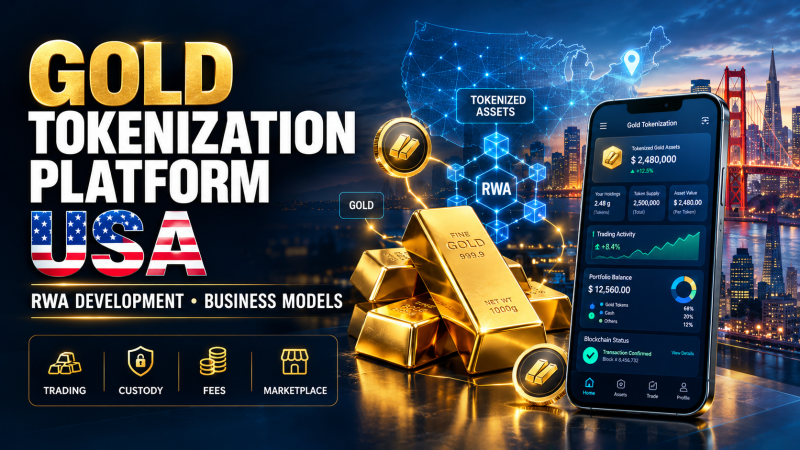
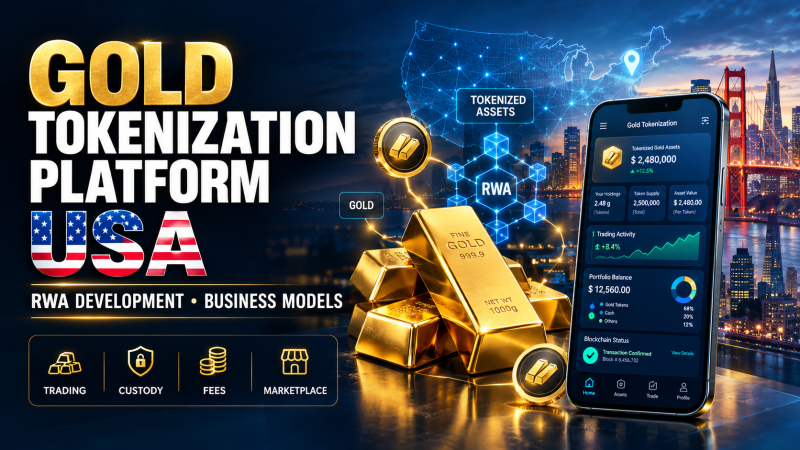
10 Gold Tokenization Business Models and Platform Features for the USA RWA Market
 Yatin Samra
Gold has remained one of the significant physical assets for investors, financial institutions, commodity companies, and wealth managers. With blockchain technology, the creation of new options for digitizing physical gold is possible, giving companies a chance to explore token ownership, fractional access, programmability, and asset management.
When it comes to entering the real-world asset (RWA) industry, the possibility of tokenization of gold does not mean creating a blockchain token. The business needs to have integration between physical gold, its custody, verification, legal ownership, token infrastructure, user accounts, payments, regulation, and asset management.
The USA is an important location for this innovation due to the developed financial services and technology ecosystem. Nevertheless, companies need to consider the regulatory and operational challenges of their specific token.
Below are 10 business models and platform features that can shape a modern gold tokenization solution.
1. Fractional Gold Ownership Model
One of the primary concepts behind gold tokenization is fractional representation.
Instead of requiring a user to purchase a large quantity of physical gold, a platform can structure digital units representing smaller interests in an underlying gold pool or asset.
For example, a token could represent a defined quantity of gold according to the platform's legal and operational structure.
A fractional model can provide:
- Smaller participation amounts
- Digital ownership records
- Simplified portfolio management
- Online transaction workflows
- Potentially broader accessibility
The exact rights associated with each token must be clearly defined before the product is introduced to users.
2. Gold-Backed Digital Asset Marketplace
A marketplace can provide an online environment where eligible customers interact with tokenized gold.
Depending on the platform model, users may be able to:
- View available assets
- Purchase tokens
- Transfer tokens
- Monitor prices
- Track holdings
- Review transaction history
- Request redemption
The marketplace can also provide information about the underlying gold, including relevant asset records, custody arrangements, fees, and verification information.
If secondary trading is offered, businesses need to assess the regulatory requirements associated with operating such a marketplace in the USA.
3. Gold Token Issuance Services
Not every business interested in tokenization wants to build its own consumer marketplace.
A technology provider can instead offer token issuance infrastructure to businesses that hold or manage gold.
Such a service can include:
- Token creation
- Smart contract deployment
- Token supply management
- Wallet integration
- Asset records
- Administrative controls
- Compliance workflows
- APIs
This creates a B2B opportunity where the technology provider supplies infrastructure while the asset-owning organization manages the underlying gold and related operations.
4. White-Label Gold Tokenization Platforms
A white-label model allows businesses to launch a branded tokenization platform without developing every component from scratch.
A white-label solution may include:
- Custom branding
- User management
- Token infrastructure
- Wallet functionality
- Gold asset management
- Payment integration
- KYC workflows
- Admin dashboard
- Reporting tools
This approach can be useful for organizations that already have relationships within the gold, financial services, or investment sectors but require blockchain infrastructure to support a digital product.
5. Gold Custody and Verification Integration
A tokenized asset platform needs a reliable method for connecting digital records with physical gold.
The platform can integrate with appropriate custody and verification processes to track:
- Gold quantities
- Asset identification
- Storage information
- Custody status
- Inventory changes
- Audit records
- Redemption activity
Independent verification can also provide additional transparency.
It is important to recognize that blockchain records alone cannot establish the existence of physical gold. Off-chain custody and verification mechanisms remain an essential part of the overall RWA structure.
6. Smart Contract-Based Asset Management
Smart contracts can automate specific rules governing the digital asset.
Depending on the product, smart contracts can support:
- Token issuance
- Transfers
- Token burning
- Supply restrictions
- Whitelisted addresses
- Redemption workflows
- Fee mechanisms
- Administrative permissions
For a gold tokenization project, smart contracts should be designed according to the legal rights and operational processes established for the underlying asset.
Before deployment, contracts should be tested and independently reviewed for potential vulnerabilities.
7. Tokenized Gold Investment and Portfolio Management
Another potential business model is to provide users with a portfolio management interface for their tokenized gold holdings.
A dashboard can display:
- Token balances
- Asset information
- Transaction history
- Portfolio value
- Purchase history
- Applicable fees
- Redemption status
Businesses can also add analytical features that help users understand their holdings.
For institutional or professional users, the platform could provide more advanced reporting and account-management functionality, depending on the intended market.
8. RWA Infrastructure-as-a-Service
Businesses with blockchain expertise can develop infrastructure that other companies use to tokenize physical assets.
Gold can become one asset category within a broader RWA technology platform.
The infrastructure could support:
- Asset onboarding
- Token issuance
- Smart contracts
- Custody integrations
- Compliance tools
- Wallet services
- Asset tracking
- APIs
- Reporting
The same architecture could potentially be adapted for other asset classes, subject to their specific legal, operational, and technical requirements.
This model shifts the business from operating a single gold product toward providing infrastructure for multiple tokenized asset projects.
9. Redemption and Settlement Infrastructure
A gold-backed tokenization platform may provide a mechanism for eligible token holders to redeem their holdings according to the terms of the product.
A redemption workflow can involve:
Token Request → Eligibility Verification → Token Lock/Burn → Asset Allocation → Custody Processing → Physical Delivery or Applicable Settlement
The exact process depends on the product's legal structure and operational arrangements.
The platform should clearly communicate:
- Minimum redemption amounts
- Applicable fees
- Processing timelines
- Eligibility requirements
- Delivery conditions
- Settlement procedures
Transparent redemption rules can be important for establishing user confidence in an asset-backed product.
10. Compliance-Driven RWA Platform
Compliance technology can become a core component of a gold tokenization business rather than a separate administrative function.
Depending on the business model and applicable requirements, the platform may integrate:
- Identity verification
- KYC
- AML controls
- Sanctions screening
- Transaction monitoring
- Wallet screening
- Geographic restrictions
- Recordkeeping
- Reporting
For businesses operating in the USA, the applicable requirements depend on factors such as the token's structure, the services provided, customer type, and jurisdictions involved.
Professional legal and compliance guidance should therefore be part of the project planning process.
Revenue Models for Gold Tokenization Platforms
A gold tokenization business can potentially generate revenue through several channels.
Transaction Fees
Fees can be charged for purchases, sales, transfers, or redemptions.
Custody or Storage Fees
Where applicable, businesses may charge fees related to storage, administration, or custody services.
Marketplace Fees
A marketplace may charge fees on eligible transactions conducted through the platform.
Issuance Fees
Businesses can charge organizations for tokenizing their gold assets and deploying the required infrastructure.
Subscription Model
B2B customers may pay recurring fees to access tokenization APIs, administrative tools, analytics, or other infrastructure.
White-Label Licensing
Technology providers can charge businesses for access to branded tokenization infrastructure and ongoing platform services.
The appropriate revenue model depends on the platform's customers, asset structure, services, and regulatory framework.
Technology Architecture Behind a Gold Tokenization Platform
A comprehensive platform typically includes several interconnected layers.
Frontend
The frontend provides interfaces for customers, asset managers, administrators, and other authorized users.
Backend
The backend manages accounts, transactions, asset records, notifications, permissions, pricing data, and business logic.
Blockchain
The blockchain layer manages token balances, transfers, smart contracts, and transaction records.
Asset Management
This layer connects digital tokens with physical gold records, custody information, reserve data, and verification processes.
Compliance
KYC, AML, screening, transaction monitoring, and access controls can be incorporated into platform workflows.
Payment Infrastructure
Payment services can support applicable fiat or digital-asset funding methods.
Analytics
Analytics tools can monitor platform activity, user behavior, transaction volumes, and operational performance.
Important Security Features
Because gold tokenization combines physical assets with digital infrastructure, security needs to cover multiple layers.
A platform may implement:
- Multi-factor authentication
- Encryption
- Secure API architecture
- Smart contract audits
- Wallet security
- Role-based access
- Transaction monitoring
- Key-management controls
- Infrastructure monitoring
- Backup and recovery systems
Administrative operations should also have appropriate approval and audit mechanisms, particularly for sensitive actions such as token issuance or supply changes.
Gold Tokenization Development Roadmap
A practical development process can be divided into several stages.
Stage 1: Market and Business Analysis
Define the target customer, asset model, market opportunity, and revenue strategy.
Stage 2: Legal and Compliance Assessment
Determine the applicable legal framework, customer requirements, licensing considerations, and operational obligations.
Stage 3: Asset and Custody Design
Establish how physical gold will be sourced, stored, verified, reconciled, and potentially redeemed.
Stage 4: Token Design
Define token supply, denomination, ownership rights, transfer restrictions, and redemption rules.
Stage 5: Technical Architecture
Select the blockchain, backend infrastructure, database, wallet system, APIs, and security architecture.
Stage 6: Platform Development
Build the customer application, marketplace, administrative dashboard, smart contracts, and integrations.
Stage 7: Testing and Security Review
Test application functionality, smart contracts, APIs, payments, user workflows, and infrastructure.
Stage 8: Launch and Operations
Introduce the platform within the appropriate market scope and establish ongoing monitoring, reporting, reserve verification, and security processes.
Challenges to Consider Before Launch
Businesses should also evaluate several challenges before entering the gold RWA market.
Regulatory requirements: Tokenized products can raise different legal considerations depending on their structure and distribution model.
Physical asset verification: Digital records need reliable processes connecting them to the underlying gold.
Liquidity: A tokenized asset does not automatically have a liquid secondary market.
Custody: Physical gold requires secure storage and clearly documented ownership arrangements.
Technology security: Smart contracts, wallets, APIs, and backend infrastructure all require appropriate security controls.
User trust: Transparency around reserves, custody, fees, ownership rights, and redemption can influence adoption.
Final Thoughts
Tokenizing gold is building the bridge between classical physical assets and blockchain infrastructure. Companies may consider several different approaches, ranging from fractional gold, gold marketplaces, B2B token issuance, and more general RWA infrastructure.
For companies operating in the USA, the successful tokenization process will require the coordination of technological, asset custody, verification, compliance, security, and business aspects. A token itself is just one piece of a much larger puzzle.
A good platform should specify the nature of the asset, custody of the underlying physical gold, transaction processing, user authentication and the way how business makes money from it.
As the field of RWA evolves, gold may become one of the asset classes that businesses might consider while building their blockchain-based financial infrastructure. The best ways of development will combine innovation in technology with clear definition of asset rights and business needs.
Source:
Click for the: Full Story
You might like