Close Menu
 World
World
 Biography
 Health
 Education
 Business
 Lifestyle
 Sports
 Technology
 Animals
 History
 Food
Food
 Religious
 Startups
 Movies
 Politics
 Fashion
 Covid
Covid
 Diet
Diet
 Fitness
 Marketing
 Travel
 Science
 Reviews
 Social media
 Stories
 Facts
Facts
 Art
Art
 Entertainment
Codezeros

Technology
How Wallet Development Services Can Support AI-Driven Web3 Applications
 Codezeros
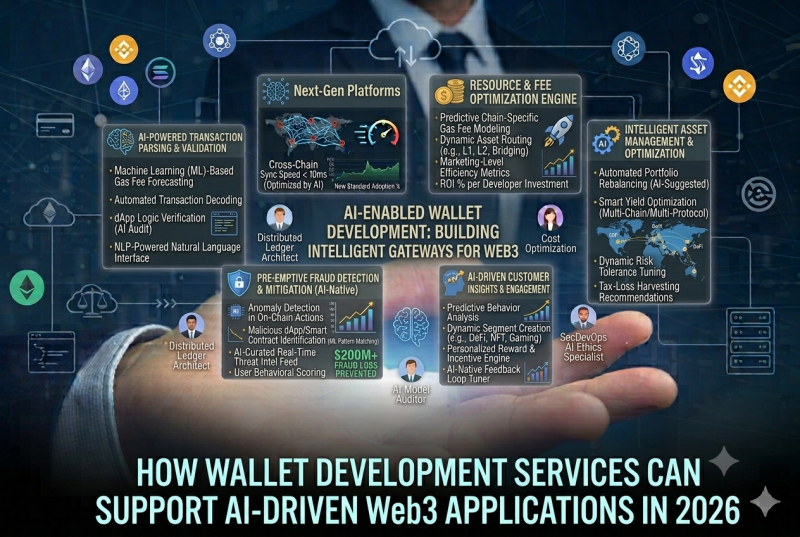
Artificial intelligence and Web3 are increasingly converging across financial applications, decentralized platforms, digital assets, and enterprise infrastructure. As AI-driven applications become more capable, they also need secure ways to authenticate users, sign blockchain transactions, manage assets, and interact with decentralized protocols.
This is where modern Wallet Development Services become important. A crypto wallet can act as more than an asset-management interface. With the right architecture, it can become an identity, authentication, transaction, and Web3 interaction layer for AI-powered applications.
In 2026, automation, agentic AI, multi-chain ecosystems, and enterprise adoption are creating new requirements for wallet infrastructure. Businesses developing AI-driven Web3 products therefore need to consider wallet capabilities early in their technical planning.
How Can Wallet Development Services Support AI-Driven Web3 Applications?
Wallet development services can provide the blockchain connectivity required for AI applications to interact with decentralized ecosystems. Depending on the architecture, wallets can support identity, transaction signing, asset management, smart contract interactions, and controlled automated workflows.
The most important capabilities include:
- Secure transaction signing
- Blockchain identity and authentication
- Multi-chain asset management
- Smart contract interaction
- API and SDK connectivity
- Transaction monitoring
- Automated workflows
- AI-assisted portfolio and transaction analysis
The specific implementation depends on the application's security model and the level of autonomy given to AI systems.
1. Wallets Can Act as a Web3 Identity Layer
Traditional AI applications commonly rely on usernames, passwords, OAuth, or API credentials. Web3 applications can use cryptographic wallet identities instead.
A wallet can allow users to authenticate without sharing traditional login credentials. Users can connect their wallet and sign a message to demonstrate control of an address.
For AI-driven Web3 applications, this can provide a foundation for connecting user identity with blockchain-based permissions and assets.
However, businesses should carefully separate authentication from transaction authorization. Signing in to an application should not automatically grant permission to transfer assets.
2. Secure Transaction Signing for AI Workflows
AI agents can perform defined tasks based on instructions, but blockchain transactions require authorization.
A well-designed Wallet Development architecture can create controlled signing workflows where AI systems prepare or recommend transactions while users retain appropriate control over final authorization.
For example, an AI assistant could identify a potential transaction, explain the associated network fee and contract interaction, and prepare the transaction for user review.
This approach allows automation without giving unrestricted control over private keys.
3. Agentic AI Needs Permission-Based Wallet Infrastructure
Agentic AI is an important technology trend in 2026. Unlike simple chatbots, AI agents can execute multi-step workflows within defined boundaries.
In Web3, these workflows could involve portfolio monitoring, transaction preparation, DeFi interactions, or recurring operational tasks.
However, wallet infrastructure needs to establish clear permissions.
A secure architecture may define:
- Which assets an agent can access
- Maximum transaction limits
- Approved contract addresses
- Transaction frequency
- Required user approvals
- Expiration periods for permissions
- Activity logging
A Wallet Consulting Service can help businesses determine how these permission models should interact with their broader application architecture.
4. Multi-Chain Wallets Support Broader AI Applications
AI-driven Web3 applications may interact with multiple blockchain ecosystems. A wallet that supports several networks can simplify asset management and application connectivity.
Multi-chain Crypto Wallet App Development may involve different address formats, transaction structures, token standards, signing methods, and network APIs.
Businesses should not automatically add every available chain. Instead, networks should be selected according to the application's users, assets, liquidity requirements, and supported protocols.
A phased multi-chain roadmap can reduce unnecessary complexity during the initial development stage.
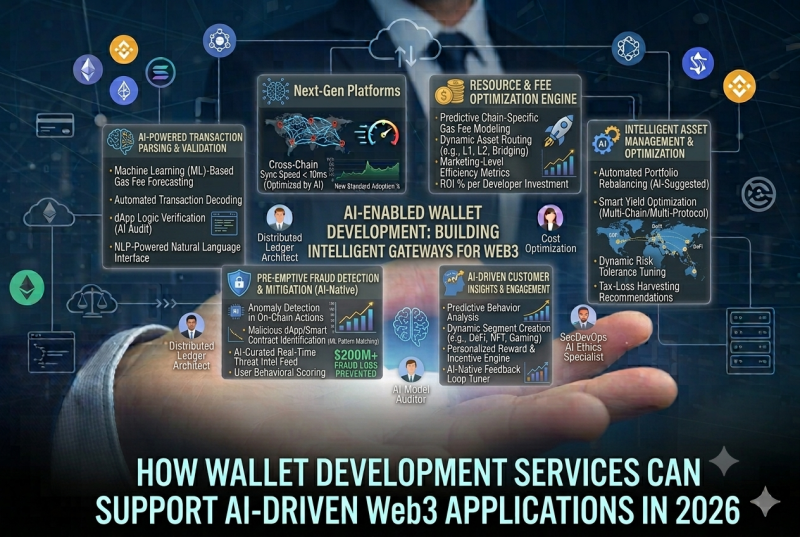
5. AI Can Improve Wallet Analytics
Wallet applications generate significant amounts of transaction and asset information. AI can help organize this data into useful insights.
Potential applications include:
- Transaction categorization
- Portfolio summaries
- Spending pattern analysis
- Gas fee analysis
- Asset allocation insights
- Suspicious activity alerts
- Natural-language transaction search
These features can make blockchain information easier to understand for users who may not have extensive Web3 experience.
AI outputs should still be presented as informational assistance rather than guaranteed financial recommendations.
6. Automation Can Simplify Routine Wallet Operations
Automation can reduce repetitive tasks within wallet applications. Businesses can automate notifications, transaction tracking, portfolio updates, reporting, and operational monitoring.
For enterprise applications, automation can also support administrative workflows such as account management, reporting, and permission monitoring.
A Cryptocurrency Wallet Development Company should therefore consider both user-facing automation and backend operational workflows when designing wallet infrastructure.
7. Enterprise Web3 Adoption Requires Strong Controls
Enterprise adoption of AI and Web3 introduces additional requirements around governance, security, access management, reporting, and auditability.
Enterprise wallet infrastructure may require:
- Role-based access
- Approval workflows
- Transaction limits
- Detailed audit logs
- API access
- Policy controls
- Monitoring dashboards
- Recovery procedures
These capabilities can help organizations integrate wallet infrastructure into existing operational systems.
For businesses planning advanced Wallet App Development solutions, enterprise requirements should be defined before selecting the underlying architecture.
How to Plan Wallet Development for AI-Driven Web3
Businesses should begin by defining the role the wallet will play within the application.
Ask:
- Is the wallet custodial or non-custodial?
- Which blockchain networks are required?
- Will AI only provide recommendations or execute defined workflows?
- Which transactions require user approval?
- What permission limits should AI agents have?
- How will activity be monitored?
- What enterprise governance requirements apply?
Answering these questions can help establish the technical scope before development begins.
FAQ’s
1. How can wallets support AI-driven Web3 applications?
Wallets provide authentication, transaction signing, asset management, blockchain connectivity, and permission controls that AI-powered Web3 applications can use to interact with decentralized ecosystems.
2. Can AI agents control crypto wallets?
AI agents can be designed to perform defined wallet-related workflows, but unrestricted access to user assets creates significant security concerns. Permission limits, transaction controls, audit logs, and appropriate user approval mechanisms are important.
3. Why are multi-chain wallets useful for AI applications?
Multi-chain wallets can allow AI-driven applications to interact with assets and protocols across multiple blockchain networks through a connected wallet architecture.
4. What role does AI play in crypto wallet development?
AI can support transaction categorization, portfolio analysis, anomaly detection, natural-language interfaces, notifications, and selected automated workflows.
Conclusion
Wallet infrastructure is becoming an important connection point between AI applications and decentralized ecosystems. As agentic AI, automation, multi-chain Web3, and enterprise adoption develop in 2026, wallet architecture needs to address both usability and controlled blockchain interaction.
Businesses should define wallet permissions, supported networks, security requirements, AI workflows, and enterprise controls before beginning development. Codezeros can be considered when evaluating blockchain wallet infrastructure for AI-enabled Web3 applications. For technical discussions and project requirements, contact us today.
Source:
Click for the: Full Story
You might like