Close Menu
 World
World
 Biography
 Health
 Education
 Business
 Lifestyle
 Sports
 Technology
 Animals
 History
 Food
Food
 Religious
 Startups
 Movies
 Politics
 Fashion
 Covid
Covid
 Diet
Diet
 Fitness
 Marketing
 Travel
 Science
 Reviews
 Social media
 Stories
 Facts
Facts
 Art
Art
 Entertainment
Yatin Samra

Technology
11 Key Strategies for Streaming App Development in the USA
 Yatin Samra
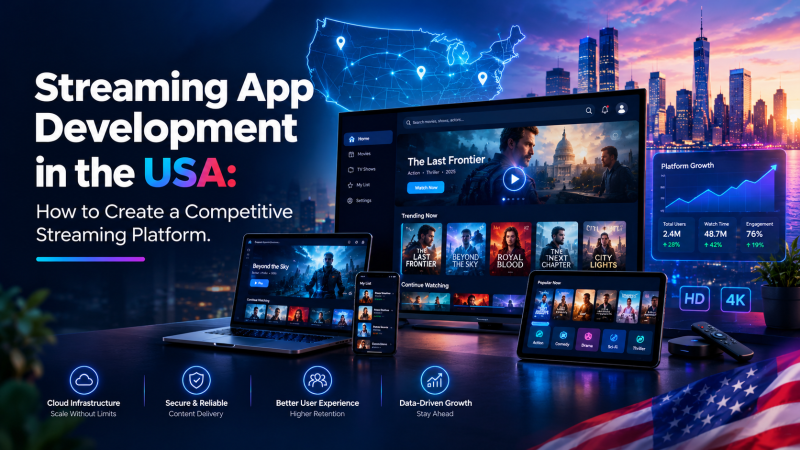
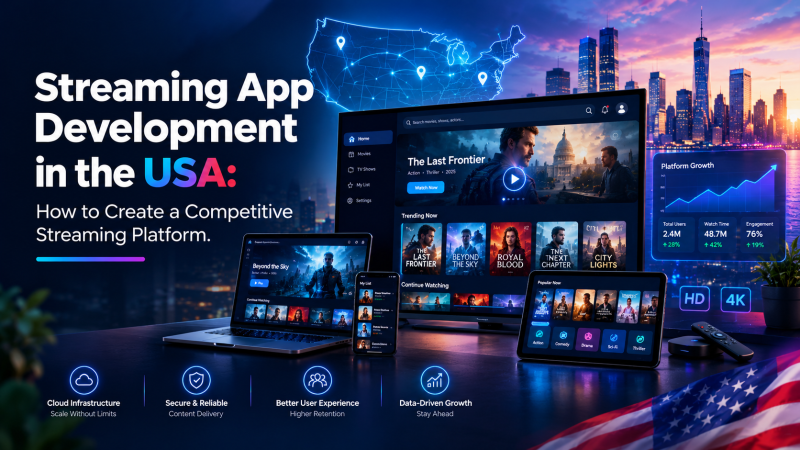
Streaming business has become a significant part of the digital entertainment world, where customers demand convenient access to quality content through different devices. While developing a streaming application in a highly competitive field, streaming app development is not about developing just an application that can play videos; a good platform should be equipped with robust technology, compelling experience, smart features, proper infrastructure, and right business model targeted at the right audience.
Knowledge of the essential components of a competitive streaming platform may help companies willing to penetrate the American market turn their ideas into scalable digital products.
1. Identify a Specific Streaming Opportunity
The first step is deciding what makes the platform different.
Instead of trying to compete with every major streaming service, businesses can focus on a particular audience or content category, such as:
- Live sports
- Independent entertainment
- Educational content
- Fitness and wellness
- Music and podcasts
- Creator communities
- Professional events
- Regional or niche content
A focused market position can make it easier to attract the right users and build a recognizable brand.
2. Design a Simple Content Discovery Experience
A large content library is not enough if users cannot find something interesting quickly.
The platform should make content discovery intuitive through features such as:
- Smart search
- Categories
- Trending content
- Personalized recommendations
- Recently watched content
- Watchlists
- Curated collections
- Genre-based browsing
A clean discovery experience can improve engagement while reducing the time users spend searching for something to watch.
3. Deliver Consistent Video Quality
Video performance directly affects user satisfaction.
A streaming platform should be capable of delivering smooth playback across different network conditions and devices. Technologies such as adaptive bitrate streaming, video compression, CDN integration, and cloud-based media processing can help maintain consistent performance.
For a platform targeting viewers across the USA, infrastructure should also be capable of handling regional traffic variations and sudden increases in demand.
4. Support Multiple Devices
Users may begin watching content on a smartphone and later move to a laptop, tablet, smart TV, or connected TV device.
A competitive platform can support multiple environments, including:
- Android
- iOS
- Web
- Tablets
- Smart TVs
- Connected TV platforms
Cross-device synchronization can allow users to maintain profiles, watchlists, subscriptions, and viewing progress across supported devices.
5. Introduce AI-Powered Personalization
Personalization can help platforms deliver more relevant content to individual viewers.
AI can analyze viewing behavior and other permitted signals to improve:
- Content recommendations
- Search results
- Personalized home screens
- Playlist creation
- Viewer segmentation
- Engagement predictions
- Content discovery
The objective is not simply to add AI as a feature, but to use it where it can improve the viewer experience or operational efficiency.
6. Explore AI Live Streaming Capabilities
Live streaming creates additional opportunities for real-time interaction and intelligent automation.
With AI live streaming app development, businesses can introduce capabilities such as:
- Automated captions
- Real-time content moderation
- Intelligent audience analytics
- Automated highlights
- Live translation
- Viewer engagement analysis
- AI-assisted content recommendations
These capabilities can make live broadcasts more accessible and interactive while reducing certain manual processes for platform operators.
7. Select the Right Monetization Model
A streaming platform needs a business model that fits its content and audience.
Popular approaches include:
Subscription
Users pay a recurring fee for access to premium content and features.
Advertising
Users receive free or lower-cost access while the platform generates revenue through advertisements.
Pay-Per-View
Users pay for individual events, programs, or premium content.
Hybrid
The platform combines subscriptions, advertising, transactions, or premium features.
Testing different pricing structures can help businesses understand what works best for their audience.
8. Build Interactive Features for Engagement
Modern streaming experiences can go beyond passive viewing.
Depending on the platform type, interactive functionality can include:
- Live chat
- Reactions
- Polls
- Comments
- Q&A
- Social sharing
- Virtual events
- Creator interactions
These features can be particularly valuable for live events, community-driven platforms, and creator-focused services.
9. Protect Content and User Data
Security should be incorporated into the platform from the beginning rather than treated as a final development step.
Important areas can include:
- Secure authentication
- Encrypted communication
- Access controls
- Payment security
- Content protection
- Digital rights management
- Fraud detection
- Account security
- Privacy management
Businesses operating in the USA should also evaluate applicable legal, privacy, payment, and licensing requirements according to their platform and business model.
10. Create an Intelligent Admin Dashboard
The viewer-facing application is only one part of a streaming ecosystem. Administrators need tools to manage the platform efficiently.
An advanced dashboard can provide:
- User management
- Content management
- Subscription controls
- Revenue tracking
- Advertisement management
- Moderation tools
- Performance monitoring
- Viewer analytics
- Reports
Centralized administration allows businesses to make faster decisions and manage a growing platform more efficiently.
11. Prepare the Platform for Long-Term Growth
A streaming application may begin with a limited audience but eventually experience significant increases in users and content consumption.
The technology architecture should therefore support:
- Cloud scalability
- CDN expansion
- Automated deployment
- Database optimization
- Load balancing
- Real-time monitoring
- API scalability
- Media processing at scale
Building for future growth can prevent performance problems when traffic increases unexpectedly.
A Competitive Streaming Platform Needs More Than Features
Adding a long list of features does not automatically create a successful streaming service. Businesses need to prioritize the capabilities that solve real user problems.
A strong platform typically brings together:
Unique Content + Smooth UX + Reliable Streaming + Personalization + Monetization + Security + Scalable Infrastructure
This combination can help a new streaming business establish a stronger position in the competitive USA market.
How to Approach Streaming App Development
A practical development journey can begin with market research and product definition before moving into UX/UI design, MVP development, streaming infrastructure, integrations, testing, and deployment.
After launch, analytics and customer feedback can guide improvements. AI capabilities, interactive features, new monetization options, and additional device support can then be introduced as the platform grows.
This phased approach helps businesses avoid unnecessary complexity while creating a product that can evolve with its audience.
Final Takeaway
It is necessary to understand that a competitive streaming application development in the USA is based on the use of such aspects as technology, content approach, design, security, and business strategy. Every element should add value to the platform itself.
However, the purpose of developing such platform is not limited to the creation of just another streaming application. This application has to give users some reason to prefer the platform, use it and recommend it.
Source:
Click for the: Full Story
You might like