Close Menu
 World
World
 Biography
 Health
 Education
 Business
 Lifestyle
 Sports
 Technology
 Animals
 History
 Food
Food
 Religious
 Startups
 Movies
 Politics
 Fashion
 Covid
Covid
 Diet
Diet
 Fitness
 Marketing
 Travel
 Science
 Reviews
 Social media
 Stories
 Facts
Facts
 Art
Art
 Entertainment
Deepak

Health
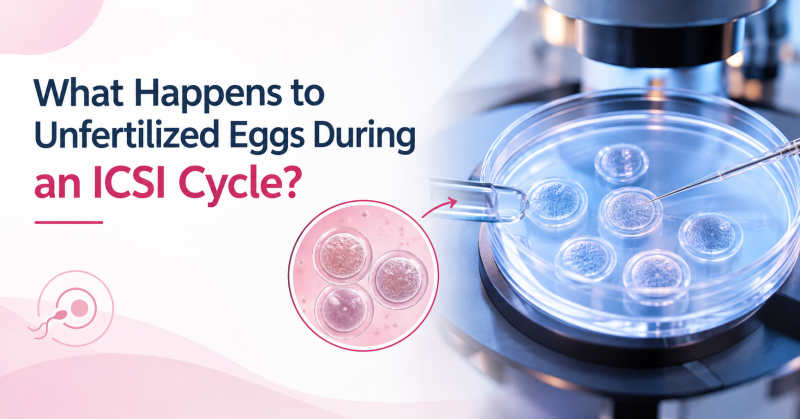
What Happens to Unfertilized Eggs During an ICSI Cycle?
 Deepak
If you are preparing for ICSI, or have just completed an egg retrieval, you may be wondering about the eggs that did not fertilize. It is a common worry, and a reasonable one. Knowing what happens to these eggs can ease anxiety and help you set realistic expectations.
This guide explains what unfertilized eggs are, why they occur, how the laboratory handles them, and when to seek specialist advice. It is written for anyone looking for the best ICSI treatment in Delhi and wanting clear, honest answers before making a decision.
A Quick Look at the ICSI Process
ICSI (intracytoplasmic sperm injection) is a form of IVF in which an embryologist selects a single sperm and injects it directly into a mature egg. It is often recommended when sperm count, motility, or shape is a concern, or when fertilization has been poor in an earlier cycle.
A typical cycle includes:
- Ovarian stimulation with medication
- Egg retrieval under sedation
- Sperm preparation and injection into mature eggs
- Embryo culture in the laboratory
- Embryo transfer, either fresh or frozen
Not every egg retrieved will become an embryo. That is expected, even in well-run cycles.
Why Some Eggs Do Not Fertilize
Several factors can play a role:
- Egg maturity: Only mature eggs (called MII eggs) can be injected. Immature eggs are usually not suitable for ICSI.
- Egg quality: Age, ovarian reserve, and other biological factors can affect how an egg responds.
- Sperm factors: Even with direct injection, sperm quality can influence fertilization.
- Activation problems: Occasionally the egg does not activate properly after the sperm is injected.
- Laboratory conditions: Culture conditions matter, which is why an experienced embryology team is important when choosing ICSI treatment in Delhi.
Sometimes no clear reason is found. This does not mean anything was done wrong.
What Happens to Unfertilized Eggs?
Eggs that fail to fertilize cannot develop into embryos, so they are not used for transfer or freezing.
After retrieval, the embryologist checks and sorts the eggs:
- Mature eggs are injected with sperm.
- Immature eggs are generally set aside, as they are usually not suitable for ICSI.
- Injected eggs are checked the next day, typically 16 to 18 hours later, for signs of normal fertilization.
- Eggs showing no sign of fertilization are recorded and not cultured further.
These eggs are then discarded according to the clinic’s laboratory protocols and applicable regulations, as is routine for biological material. They cannot be stored for later use, because an unfertilized egg is not an embryo.
Some eggs show abnormal fertilization, with an unusual number of pronuclei. These are typically not used for transfer, as they are unlikely to develop normally.
Can Unfertilized Eggs Be Reused or Re-Injected?
In routine practice, an egg that shows no fertilization after injection is not re-injected, as its chance of developing into a healthy embryo is considered very low. If fertilization failed in a previous cycle, a specialist may discuss options such as assisted egg activation or changes to the laboratory approach in a future attempt. These decisions are individual and depend on your history.
Is It Normal to Have Unfertilized Eggs?
Yes. Not all retrieved eggs are mature, and not all mature eggs fertilize after injection. Outcomes vary from person to person, so a clinic should review your own numbers rather than quote a general figure.
What matters is the overall pattern: how many eggs were retrieved, how many were mature, how many fertilized, and how those embryos developed in the following days.
What a Low Fertilization Result Can Tell Your Doctor
A cycle with fewer fertilized eggs than expected still gives useful information. Your specialist may review:
- Whether the stimulation protocol suited your ovarian response
- The timing of the trigger injection
- Egg maturity rates at retrieval
- Semen parameters and any need for further male-factor testing
- Whether treatment should be modified in the next cycle
This review helps your doctor adjust the plan rather than repeat it unchanged.
Emotional Support Matters Too
Hearing that several eggs did not fertilize can feel disappointing, even when the cycle is otherwise progressing. Many patients find the daily lab updates the hardest part of treatment.
Ask your care team to explain the numbers in plain language. A good fertility team will tell you what was expected, what happened, and what the next step could be, without false promises.
Choosing the Best ICSI Treatment in Delhi
When comparing options for the best ICSI treatment in Delhi, a few practical questions can help:
- Does the doctor explain your egg and fertilization numbers clearly?
- Is the plan personalized to your age, hormone profile, and history?
- Does the clinic have an experienced embryology team?
- Are risks, costs, and realistic outcomes discussed openly?
Dr. Poonam Goyal is a Gynecologist and Fertility Specialist in Delhi who supports couples from the first fertility evaluation through assisted reproduction. Many patients also search for the best obstetrics and gynecology in Delhi because they prefer one team that can guide them from diagnosis and treatment to pregnancy care. A consultation allows your reports and history to be reviewed together before any plan is made.
When to Seek Medical Guidance
Consider speaking with a fertility specialist if:
- You have had very low or no fertilization in a previous IVF or ICSI cycle
- You are unsure whether ICSI is the right treatment for you
- You have been trying to conceive for a year without success (or six months if you are over 35)
- Semen analysis has shown abnormal results
- You want a second opinion on a recent cycle
Final Thoughts
Unfertilized eggs are a normal part of many ICSI cycles. They cannot develop into embryos and are discarded under standard laboratory practice, but their number does not define your chances. What counts is the overall picture and a plan built around your situation.
If you would like personalized guidance on ICSI treatment in Delhi, consider booking a consultation to discuss the options that may suit you.
This article is for general education and does not replace individual medical advice.
FAQs
Q1. What happens to eggs that do not fertilize after ICSI?
They cannot develop into embryos, so they are not transferred or frozen. The embryology lab records them and discards them according to its protocols.
Q2. Is it normal for some eggs not to fertilize in ICSI treatment in Delhi or elsewhere?
Yes. Not every retrieved egg is mature, and not every mature egg fertilizes after injection. Your doctor can explain whether your numbers fit what is expected for your age and profile.
Q3. Can unfertilized eggs be frozen or used later?
No. Only fertilized eggs that develop into embryos can be cultured and frozen. An unfertilized egg cannot be stored for future use.
Q4. Does poor fertilization mean ICSI will not work for me?
Not necessarily. One result is only one piece of information. Your specialist may adjust the stimulation protocol, review sperm factors, or consider additional steps in a later cycle.
Q5. When should I consult a fertility specialist about failed fertilization?
If fertilization was low or absent, or you want to understand your options before another cycle, a consultation can help review your reports and plan the next steps.
Source:
Click for the: Full Story
You might like