Close Menu
 World
World
 Biography
 Health
 Education
 Business
 Lifestyle
 Sports
 Technology
 Animals
 History
 Food
Food
 Religious
 Startups
 Movies
 Politics
 Fashion
 Covid
Covid
 Diet
Diet
 Fitness
 Marketing
 Travel
 Science
 Reviews
 Social media
 Stories
 Facts
Facts
 Art
Art
 Entertainment
Deepak

Health
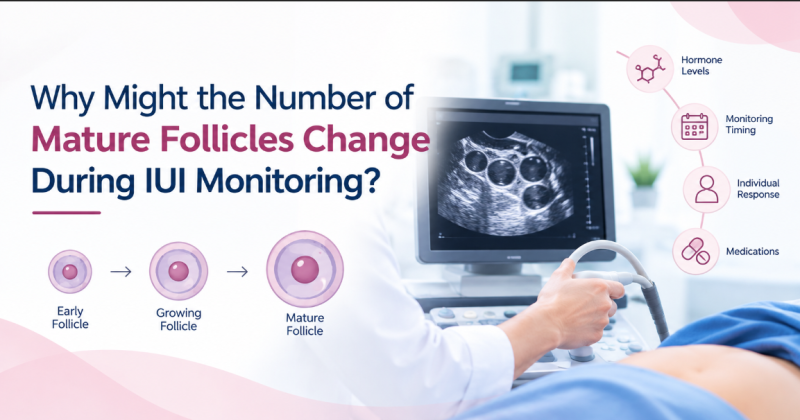
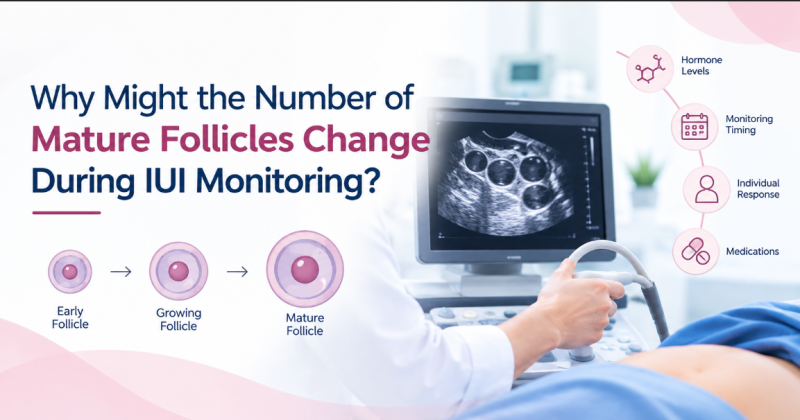
Why Might the Number of Mature Follicles Change During IUI Monitoring?
 Deepak
You may have been told at one scan that you had three growing follicles, and at the next that only two looked ready. It can feel confusing, and sometimes worrying. In most cases, though, a change in follicle count during monitoring is part of how the ovaries respond, not a sign that something has gone wrong.
This guide explains why the number of mature follicles can change, what your doctor looks for, and when to ask questions. It is meant for anyone going through IUI treatment in Delhi who wants a clear, calm explanation of their scan reports.
What Is Follicle Monitoring in IUI?
A follicle is a small fluid-filled sac in the ovary that contains an egg. During an IUI cycle, your doctor tracks follicle growth with transvaginal ultrasound, and sometimes blood tests, to decide when ovulation is likely and when to schedule the insemination.
Scans are usually done at a few points in the cycle. Each one gives a snapshot of follicle size and number at that moment. Because follicles grow at their own pace, that snapshot can look different from one visit to the next.
What Counts as a “Mature” Follicle?
Doctors generally look at follicle size, measured in millimetres. As a follicle grows toward ovulation, it reaches a size at which it is considered ready to release an egg. The exact size range your doctor uses can depend on the medication used, your cycle, and your individual response.
Size is a guide, not a guarantee. A follicle that measures in the expected range does not always contain a mature egg, and the scan cannot show egg quality directly.
Why the Number of Mature Follicles May Change
Here are the most common reasons, explained simply.
1. Follicles Grow at Different Speeds
Several follicles may start together, but they rarely grow at the same rate. One may race ahead while others lag behind. At the first scan they may all look similar, and a few days later only one or two may have reached the expected size.
2. Some Follicles Stop Growing
In every cycle, a group of follicles begins developing, but only some continue. Others stop growing and regress naturally. This is a normal part of how the body selects follicles, and it can lower the count between scans.
3. Response to Medication
If ovulation-inducing tablets or injections are used, the number of follicles can vary with the type of medicine, the dose, and how your ovaries respond. Some women respond with one follicle, others with a few. A change in count may lead your doctor to adjust the plan.
4. Measurement and Timing Differences
Ultrasound reading involves some judgment. Follicles are not perfectly round, and the scan angle, the machine, and the person performing it can lead to small differences in measurements. A follicle sitting on the edge of the “mature” range may be counted at one scan and not at another.
5. Natural Cycle Variation
Even in the same woman, no two cycles behave exactly alike. Age, ovarian reserve, stress, weight changes, thyroid or hormonal conditions, and conditions such as PCOS can all influence how many follicles develop in a given month.
6. Early or Unexpected Ovulation
Sometimes a follicle ruptures earlier than expected, between scans. When that happens, the next scan may show fewer mature follicles than before, because the egg has already been released.
Does a Lower Number Mean the Cycle Will Fail?
Not necessarily. For IUI, one well-developed follicle is often enough, and having more follicles does not automatically improve the outcome. A higher number can also raise the chance of a multiple pregnancy, which is why doctors monitor closely and sometimes advise cancelling or modifying a cycle if too many follicles develop.
What matters is the full picture: follicle size, uterine lining thickness, hormone levels where tested, sperm parameters, and your history.
What Your Doctor May Do When the Count Changes
Depending on your scan, your fertility specialist may:
- Repeat the scan after a day or two to track progress
- Adjust the medication dose
- Choose the best timing for the trigger injection
- Plan the IUI for the right window
- Discuss modifying or postponing the cycle if the response is unexpected
These decisions are made case by case, so it helps to ask your doctor what the scan means for your cycle.
Questions Worth Asking at Your Scan
- How many follicles are in the expected range today?
- Is the pace of growth as expected for my cycle?
- Is my uterine lining suitable?
- Should the timing of the trigger or insemination change?
Clear answers help you feel more involved and less anxious.
Choosing the Right Centre for IUI
When comparing options for the best IUI centre in Delhi, look beyond the name. Consider whether the team explains your scans clearly, personalizes monitoring to your response, and talks openly about realistic outcomes. Many families look for the best IUI doctor in Yamuna Vihar, Delhi because accessible, regular monitoring visits matter during a cycle.
Dr. Poonam Goyal is a Gynecologist and Fertility Specialist in Delhi who guides couples through fertility evaluation and treatment, including IUI. A consultation allows your reports, history, and scan findings to be reviewed together so that treatment can be planned around your needs.
When to Seek Medical Advice
Consider speaking with a fertility specialist if:
- Your follicle count keeps changing and you are unsure what it means
- Cycles show poor or no follicle development
- You have irregular periods or suspected PCOS
- You have been trying to conceive for a year (or six months if you are over 35)
- You want a second opinion on your monitoring reports
Final Thoughts
A change in the number of mature follicles during IUI monitoring is common and often has a simple explanation. It reflects how the ovaries respond in that particular cycle, not a verdict on your chances. With careful monitoring and open communication, your doctor can adjust the plan as needed.
If you would like personalized guidance on IUI treatment in Delhi, consider booking a consultation to discuss your reports and options.
This article is for general education and does not replace individual medical advice.
FAQs
Q1. Why did my follicle count drop between two scans during IUI?
Follicles grow at different speeds, and some stop developing naturally. Early ovulation or small measurement differences can also change the count between scans.
Q2. Is one mature follicle enough for IUI?
Often, yes. IUI generally aims for one or a few well-developed follicles. More follicles do not automatically improve the outcome and can raise the risk of multiple pregnancy.
Q3. What size is a follicle considered mature?
Doctors look at follicle size in millimetres, and the range considered ready for ovulation can vary with your cycle and medication. Your specialist will tell you what applies to you.
Q4. Can the IUI cycle still go ahead if the number of follicles changes?
That depends on your scan findings, lining, and hormone response. Your doctor may repeat the scan, adjust medication, or time the insemination differently.
Q5. When should I talk to a fertility specialist about my monitoring results?
If your scans keep showing unexpected changes, or follicles are not developing as planned, a consultation can help clarify the cause and the next steps.
Source:
Click for the: Full Story
You might like