Close Menu
 World
World
 Biography
 Health
 Education
 Business
 Lifestyle
 Sports
 Technology
 Animals
 History
 Food
Food
 Religious
 Startups
 Movies
 Politics
 Fashion
 Covid
Covid
 Diet
Diet
 Fitness
 Marketing
 Travel
 Science
 Reviews
 Social media
 Stories
 Facts
Facts
 Art
Art
 Entertainment
Badal

Health
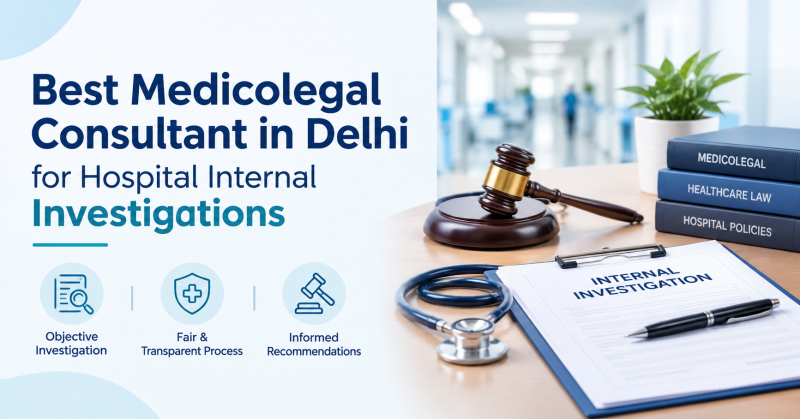
Best Medicolegal Consultant in Delhi for Hospital Internal Investigations
 Badal
Badal
When a hospital starts an internal investigation into a patient outcome, management and clinicians often ask the same question: who should we involve, and when? The short answer is this: involve a suitably experienced professional early, define the scope in writing, and keep the investigation factual and well documented. Many hospitals look for the best medicolegal consultant in Delhi at this point, but the right choice depends on experience, clarity of scope and sound judgement, not on labels or rankings.
An internal investigation can protect patients and improve systems, but it can also create records that are later read by insurers, regulators or a court. A medico legal consultant in Delhi can help a hospital run the process in an orderly way, without taking over clinical decisions or the institution’s own governance duties.
This article is general information, not legal advice. Laws and regulatory guidance change, so confirm the current position with the National Medical Commission (NMC), your state medical council, the relevant regulators and a qualified lawyer.
Why Internal Investigations Carry Medico-Legal Weight
Hospitals investigate after adverse events, near-misses, patient complaints, unexpected deaths and legal notices. The purpose is usually to learn what happened and what should change.
The medico-legal weight comes from three points:
- Medical negligence is generally assessed by asking whether a duty of care existed, whether care fell below an accepted professional standard, and whether harm resulted. An internal report may touch on each question.
- Statements, minutes and findings may be requested in later proceedings. Whether internal material is protected from disclosure depends on the law and the facts, so avoid assuming it is confidential.
- Outcomes may affect doctors’ privileges, employment and reputation even where no external case follows.
Those affected include the treating doctors, nursing and support staff, department heads, administrators and the patient’s family.
What a Medico Legal Consultant in Delhi Can and Cannot Do
A consultant brings a legal and risk perspective to a clinical and administrative process. In practice, useful support may include:
- Advising on how to structure the inquiry, including terms of reference and timelines.
- Reviewing whether records and policies are complete and consistent.
- Guiding how findings are written, so they are factual and free of speculation.
- Advising on communication with the patient’s family and on disclosure.
- Helping the hospital respond to any complaint or notice that follows.
A consultant cannot decide clinical questions, guarantee outcomes or protect anyone from complaints or claims. Treat any promise of that kind as a warning sign.
Choosing the Best Medicolegal Consultant in Delhi
Hospitals searching for the best medicolegal consultant in Delhi should treat superlatives with caution. Practical points to check include:
- Relevant experience with hospitals, doctors and investigations, not only general legal work.
- Verifiable credentials, which you should confirm directly.
- A clear scope of work covering what will be reviewed, delivered and charged.
- Independence, so that advice is not shaped by who is paying or who is under review.
- Confidentiality arrangements for sensitive material.
- Cautious, honest advice that sets out risks and uncertainties without fear-based language.
Many hospitals also value a medico legal expert in Delhi who understands both clinical practice and the legal process, because investigations sit between the two. Ask for a short written outline of how the work will be carried out before you agree.
A Practical Process for Running an Internal Investigation
- Define scope and purpose. Decide whether the review is for learning, fact-finding or disciplinary purposes. Mixing them causes confusion.
- Appoint an appropriate panel. Include people with relevant expertise who were not involved in the care.
- Secure the records. Preserve case sheets, charts, results, messages, system logs and handover notes. Do not alter, add to or back-date any entry.
- Gather facts before opinions. Review records first, then interview staff.
- Interview fairly. Explain the purpose, allow staff to respond and keep a factual note of each interview.
- Record findings objectively. Separate what the record shows from what people recall, and avoid blame.
- Recommend corrective actions with owners and deadlines.
- Inform insurers and leadership at the right stage, and check policy terms for notice requirements.
- Follow up to confirm changes were made.
A realistic example: After a post-operative complication, a hospital reviews the case. The notes record the procedure but not the consent discussion. The panel records this factually, without assuming what was or was not said, interviews the surgeon and the nursing staff, and then revises the consent process so the operating surgeon documents the discussion in future. The report shows an orderly review and a specific corrective step.
Documentation That Matters in an Investigation
Clear documentation helps the hospital, the doctors and the patient. Aim to keep:
- The investigation order, scope, panel members and dates.
- The clinical records reviewed, with a list of what was examined.
- Informed consent records, including notes of the discussion about risks and alternatives, not only a signed form.
- Notes of interviews, signed or acknowledged where appropriate.
- For online consultations, identity checks, consent, history, advice and follow-up, with prescribing consistent with the Telemedicine Practice Guidelines of 2020. Read the current text directly rather than relying on summaries.
- Findings, recommendations and corrective actions.
- Communications with the patient’s family and insurers.
Protect patient information with reference to the Digital Personal Data Protection Act, 2023, and limit access to those who need it. Corrections to clinical records should appear as dated addenda, never as overwriting.
Mistakes to avoid
- Starting the investigation without a defined purpose or scope.
- Altering or adding to records after the event.
- Allowing people involved in the care to judge their own case.
- Recording opinions, speculation or blame in reports.
- Discussing the case informally or on social media.
- Delaying notice to the insurer.
- Seeking guidance only after a legal notice arrives.
Quick checklist
- Purpose and scope defined in writing
- Records secured and unaltered
- Independent panel appointed
- Interviews fairly documented
- Findings factual and objective
- Corrective actions assigned
- Insurer informed
- Follow-up scheduled
When to Seek Professional Medico-Legal Guidance
Consider advice when serious harm or death is involved, when the inquiry could lead to disciplinary action, when a complaint or legal notice is already pending, or when you are unsure how to handle disclosure to the family. If a notice arrives, do not ignore it, do not alter records, preserve all documents, inform your insurer and seek guidance before replying.
Conclusion
A well-run internal investigation is fair, factual and well recorded. Define the scope, secure the records, use an independent panel, document findings objectively and follow up on corrective action. Choosing the best medicolegal consultant in Delhi means looking for experience, clarity and honest advice, not promises. Consistent documentation, open communication and a steady focus on patient safety remain the strongest foundation for any hospital review.
Frequently Asked Questions
1. Does every hospital investigation need an outside consultant?No. Many are handled by internal quality or risk teams. An outside view can help where the matter is serious, contested or likely to lead to a complaint or claim.
2. Can investigation findings be used in later proceedings?They may be requested, depending on the law and the circumstances. Write findings factually and take advice before assuming they are protected.
3. How do I choose the best medicolegal consultant in Delhi?Look at relevant experience, credentials you can verify, a clear scope of work and transparent communication. Avoid anyone who guarantees outcomes or protection from claims.
4. When should a hospital contact a medico legal consultant in Delhi?Ideally at the start, when the scope is set and records are secured. Early advice usually gives more options than advice sought after statements have been written.
5. Should doctors under review get their own advice?Often it is sensible, particularly where serious harm or disciplinary action is possible. The hospital’s interests and an individual doctor’s interests may differ, so independent advice can help.
Source:
Click for the: Full Story
You might like