Close Menu
 World
World
 Biography
 Health
 Education
 Business
 Lifestyle
 Sports
 Technology
 Animals
 History
 Food
Food
 Religious
 Startups
 Movies
 Politics
 Fashion
 Covid
Covid
 Diet
Diet
 Fitness
 Marketing
 Travel
 Science
 Reviews
 Social media
 Stories
 Facts
Facts
 Art
Art
 Entertainment
Rajan

Health
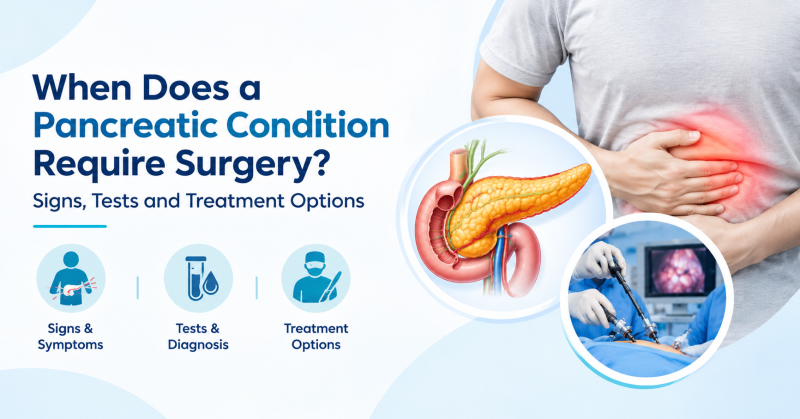
When Does a Pancreatic Condition Require Surgery? Signs, Tests and Treatment Options
 Rajan
Rajan
The pancreas sits deep in the upper abdomen, behind the stomach, and quietly handles two vital jobs: producing digestive enzymes and regulating blood sugar through insulin. Because of its location, problems here are often detected late. Many pancreatic conditions are managed with medicines, diet, and monitoring, but some do need an operation. Knowing the difference helps you act early and choose the right care, whether you are searching for the best pancreatic surgery in Delhi or simply trying to understand a diagnosis.
Common Signs of a Pancreatic Problem
Pancreatic symptoms can be vague at first. Seek medical advice if you notice:
- Persistent upper abdominal pain that may radiate to the back
- Unexplained weight loss or loss of appetite
- Yellowing of the skin and eyes (jaundice)
- Dark urine and pale, greasy stools
- Nausea, vomiting, or bloating after meals
- New-onset diabetes, especially in older adults
- Repeated episodes of severe abdominal pain after eating or drinking alcohol
None of these confirms a pancreatic disease on its own, but a combination, or symptoms that persist beyond a couple of weeks, deserve proper evaluation.
Conditions That May Need Surgery
Pancreatic Tumours and Cancer
Surgery is the main potentially curative treatment for pancreatic cancer when the tumour is confined and can be removed safely. Benign and low-grade growths, such as neuroendocrine tumours and certain cysts, may also need removal.
Pancreatic Cysts
Many cysts are harmless and only need periodic scans. However, cysts with worrying features, such as a solid component, a dilated pancreatic duct, rapid growth, or large size, may carry a risk of turning cancerous and are often removed.
Chronic Pancreatitis
Long-standing inflammation, often linked to alcohol, gallstones, or genetic factors, can cause relentless pain, duct blockages, and stones. When pain does not respond to medicines and endoscopic treatment, surgery can drain the duct or remove the diseased portion.
Complications of Acute Pancreatitis
Most acute pancreatitis settles with hospital care. Surgery or an intervention may be needed for infected dead tissue (necrosis), persistent fluid collections such as pseudocysts, bleeding, or complications involving the bile duct. Gallstones that caused the attack are usually removed later to prevent recurrence.
Pancreatic Injury
Severe abdominal trauma can damage the pancreas and may require emergency surgery.
Tests Used to Diagnose Pancreatic Conditions
Doctors usually combine several investigations to reach a diagnosis:
- Blood tests: Amylase, lipase, liver function tests, blood sugar, and tumour markers such as CA 19-9.
- Ultrasound: A first-line scan, useful for gallstones and bile duct dilation.
- CT scan (pancreas protocol): The most common test to assess tumours and whether blood vessels are involved.
- MRI/MRCP: Gives detailed images of the pancreatic and bile ducts, and is especially helpful for cysts.
- Endoscopic ultrasound (EUS): A close-up view of the pancreas that also allows a biopsy.
- PET scan: Occasionally used to check whether disease has spread.
Treatment Options: Not Every Case Needs an Operation
Treatment depends on the diagnosis, its stage, and your overall health.
- Medical management: Pain control, enzyme supplements, diabetes treatment, and diet changes.
- Endoscopic procedures: Stent placement or stone removal through the mouth, without cuts.
- Surveillance: Regular scans for low-risk cysts.
- Chemotherapy or radiotherapy: Often used before or after surgery for cancers.
- Surgery: For tumours, high-risk cysts, uncontrolled chronic pancreatitis, and certain complications.
Types of Pancreatic Surgery
- Whipple procedure (pancreaticoduodenectomy): Removes the head of the pancreas, part of the small intestine, the bile duct, and the gallbladder. It is used for tumours in the pancreatic head.
- Distal pancreatectomy: Removes the body and tail, sometimes with the spleen.
- Total pancreatectomy: Removal of the entire pancreas, used selectively.
- Duct drainage procedures: Such as the Frey or Puestow procedure for chronic pancreatitis.
- Necrosectomy or cyst drainage: For infected tissue or pseudocysts.
Many of these can now be performed using minimally invasive laparoscopic or robotic methods in suitable patients, which may mean smaller incisions and quicker recovery.
What to Look for When Choosing Pancreatic Surgery
Pancreatic surgery is technically demanding, and outcomes are strongly linked to surgeon and hospital experience. Research consistently shows that high-volume centres tend to have lower complication rates. When searching for the best pancreatic surgery in Delhi, consider:
- Experience with Whipple and other complex pancreatic procedures
- Availability of advanced imaging, endoscopy, and intensive care
- A multidisciplinary team including oncologists, gastroenterologists, radiologists, and dietitians
- Transparent discussion of risks, expected recovery, and alternatives
- Willingness to support a second opinion
Patients in the capital often look for options such as the best pancreatic surgery in Central Delhi or the best pancreatic surgery in Rajinder Nagar, mainly for convenient access to large teaching hospitals and specialist teams. Surgeons such as Dr. Tarun Mittal, a GI and pancreatic surgeon in Delhi, are among the specialists patients commonly consult, although the right decision depends on your diagnosis and a face-to-face evaluation.
Recovery After Pancreatic Surgery
Hospital stay usually ranges from one to two weeks. You can expect:
- Gradual return to oral feeding, starting with liquids
- Pain control and early walking
- Enzyme supplements if digestion is affected
- Blood sugar monitoring, as the pancreas also controls insulin
- Regular follow-up visits and scans
Full recovery can take several weeks to a few months, depending on the procedure.
Conclusion
A pancreatic condition requires surgery when there is a tumour, a high-risk cyst, complications of pancreatitis, or pain that no longer responds to other treatment. Early evaluation matters, because many conditions are easier to treat when caught in time. If surgery is advised, take time to find the best pancreatic surgery in Delhi for your needs, understand each option, and choose a team that will support you before, during, and after the operation.
Visit Dr. Tarun Mittal
If you would like to discuss pancreatic conditions or surgical options in person, you can consult Dr. Tarun Mittal at:
Sir Ganga Ram Hospital, Old Rajendra Nagar, New Delhi-110060
Please book an appointment in advance and carry your previous scans, blood reports, and prescriptions to make the consultation more useful.
Disclaimer: This article is for general information only and is not a substitute for personal medical advice. Please consult a qualified specialist before making any treatment decision.
Frequently Asked Questions
1. Does every pancreatic cyst need surgery?
No. Many are small and harmless and are simply monitored. Surgery is considered when a cyst shows high-risk features or causes symptoms.
2. Can pancreatitis be cured without surgery?
Most acute cases recover with hospital care. Chronic pancreatitis is often managed with medicines and endoscopy first, with surgery reserved for severe or unresponsive pain and complications.
3. Is the Whipple procedure safe?
It is a major operation with real risks, but in experienced centres outcomes have improved considerably. Your surgeon should explain risks specific to your health.
4. Can I live normally without part of my pancreas?
Yes, many people do. Some need enzyme tablets or insulin if enough pancreatic tissue is removed.
5. How do I find the best pancreatic surgery in Delhi?
Look at the surgeon’s pancreatic experience, hospital infrastructure, multidisciplinary support, and clarity of communication. Taking a second opinion is perfectly reasonable.
Source:
Click for the: Full Story
You might like