Close Menu
 World
World
 Biography
 Health
 Education
 Business
 Lifestyle
 Sports
 Technology
 Animals
 History
 Food
Food
 Religious
 Startups
 Movies
 Politics
 Fashion
 Covid
Covid
 Diet
Diet
 Fitness
 Marketing
 Travel
 Science
 Reviews
 Social media
 Stories
 Facts
Facts
 Art
Art
 Entertainment
Deepak

Health
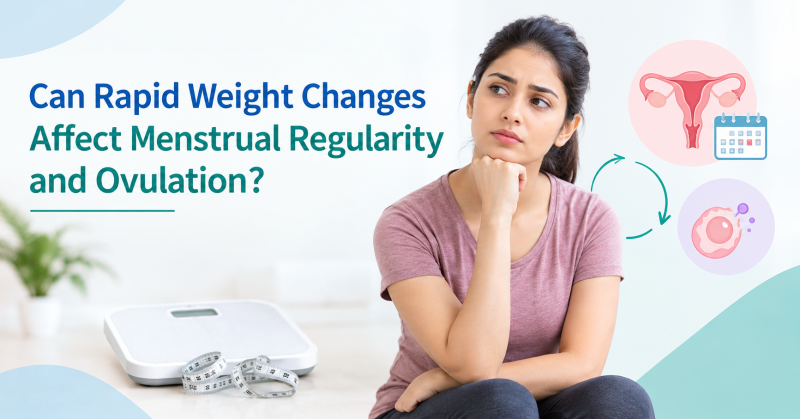
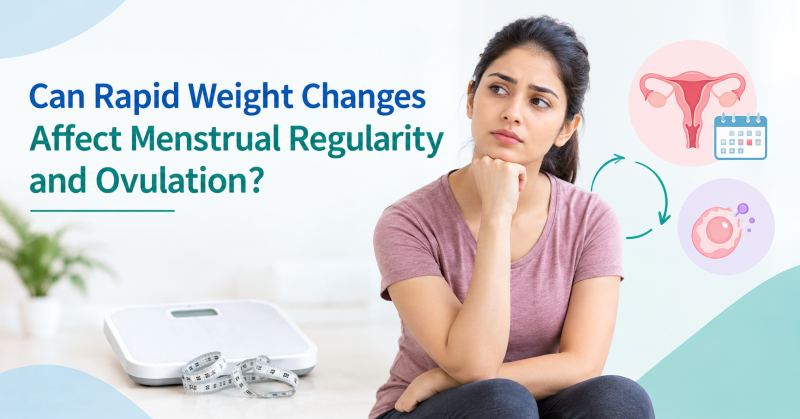
Can Rapid Weight Changes Affect Menstrual Regularity and Ovulation?
 Deepak
Many women notice that their periods change after a sudden shift in weight. A cycle may arrive late, come early, become lighter, or skip a month altogether. If you are also hoping to conceive, these changes can feel worrying.
The short answer is yes. Rapid weight gain or loss can affect menstrual regularity and ovulation in some women. Understanding why can help you decide when to make adjustments and when to seek medical advice. This is an important part of female fertility in Delhi and elsewhere, where busy routines, crash diets and stress often go together.
How Body Weight and Hormones Are Connected
Your menstrual cycle depends on a communication loop between the brain and the ovaries. The hypothalamus and pituitary gland send signals that tell the ovaries when to develop and release an egg.
Body fat is not just stored energy. It also produces and processes hormones, including oestrogen. When weight changes quickly, this delicate system can lose its balance, and ovulation may become irregular or stop temporarily.
The body also reads sudden weight loss as a sign of stress or low energy availability. In response, it may reduce reproductive hormone signals as a protective measure.
What Rapid Weight Loss Can Do
Fast weight loss, especially through severe calorie restriction or very intense exercise, may lead to:
- Irregular or missed periods
- Very light periods
- Absence of periods for several months (sometimes called functional hypothalamic amenorrhoea)
- Anovulation, where no egg is released even if bleeding occurs
- Low energy, hair thinning or feeling cold more often
This does not mean weight loss is always harmful. Gradual, supervised weight loss can be beneficial for some women, particularly those with PCOS or higher body weight. The concern is mainly with rapid or extreme changes.
What Rapid Weight Gain Can Do
A sudden increase in weight can also disturb cycles. Extra body fat can raise oestrogen and insulin levels, which may interfere with ovulation. Women may notice:
- Longer gaps between periods
- Heavier or unpredictable bleeding
- Irregular ovulation
- Worsening of PCOS symptoms such as acne or excess hair growth
Weight gain can also be a symptom rather than the cause. Thyroid problems, PCOS and some medicines may cause weight changes and menstrual irregularity together, which is why a proper evaluation matters.
Can You Still Ovulate With a Period?
Yes. Bleeding does not always confirm ovulation. Some women have regular-looking bleeding without releasing an egg, particularly after weight fluctuations. This is one reason why tracking alone may not give the full picture. Ultrasound follicle monitoring and hormone tests can help clarify what is happening.
Other Reasons Cycles May Change
Weight is only one of several possible causes. It is worth remembering that irregular cycles may also relate to:
- Thyroid disorders
- PCOS
- High prolactin levels
- Chronic stress or poor sleep
- Excessive exercise
- Perimenopause or reduced ovarian reserve
- Recent illness, travel or medication changes
If you assume weight is the only cause, a treatable condition may be missed.
Practical Steps You Can Take
- Avoid crash diets. Steady, moderate changes are gentler on hormones.
- Eat enough. Include adequate protein, healthy fats, iron and calcium.
- Balance exercise with rest. Very intense training without enough fuel can disrupt cycles.
- Track your cycle. Note period dates, flow and any symptoms.
- Manage stress and sleep. Both influence hormone signals.
- Seek guidance before major changes. A doctor can help set realistic, safe goals, especially if you are planning pregnancy.
Will Cycles Return to Normal?
Often, cycles improve once weight stabilises and nutrition and rest are restored. The time this takes varies. Some women recover within a few months, while others need more time or medical support. If periods remain irregular after weight has been stable, further evaluation is reasonable.
When to See a Doctor
Consider speaking with a gynecologist if:
- Your periods have stopped for three months or more
- Cycles are consistently shorter than 21 days or longer than 35 days
- You are trying to conceive and have not succeeded after 12 months (or six months if you are 35 or older)
- You experience severe pain, very heavy bleeding or sudden unexplained weight change
- You have signs of PCOS, thyroid problems or hormonal imbalance
Evaluation may include a clinical examination, blood tests such as thyroid, prolactin and AMH, and a pelvic ultrasound.
Finding the Right Care
When looking for the best female fertility in Delhi, it helps to choose a doctor who looks at the whole person: weight, lifestyle, hormones, cycle pattern and personal goals. A thorough review can separate temporary changes from conditions that need treatment.
Many women also prefer a clinic offering the best obstetrics and gynecology in Delhi, where care can continue seamlessly from cycle concerns to fertility planning and, later, pregnancy.
Dr. Poonam Goyal is a gynecologist and fertility specialist in Delhi who evaluates menstrual and ovulation concerns in this comprehensive way, explaining findings clearly and tailoring advice to each woman’s circumstances. Outcomes vary from person to person, and individual assessment is the best way to understand your own situation.
If you want consultation regarding menstrual irregularity or fertility concerns, you can visit Dr Poonam Goyal at:
- C-3/63A, 64A, opp. Gokulpuri police station, Block C, Panchsheel Hospital, Yamuna Vihar, Shahdara, Delhi, 110053
- HOD IVF & Infertility, Max Superspeciality Hospital, Vaishali
FAQs
1. Can sudden weight loss stop ovulation?
Yes, it can. Rapid weight loss or very low energy intake may reduce the hormone signals that trigger ovulation, leading to irregular or absent periods in some women.
2. Can gaining weight quickly cause irregular periods?
It can. Extra body fat may alter oestrogen and insulin levels, which can affect ovulation and cycle length. Conditions like PCOS or thyroid problems can also be involved, so evaluation is helpful.
3. How long does it take for periods to return to normal after weight changes?
It varies. Some women see improvement within a few months of stabilising weight and nutrition, while others take longer. If cycles remain irregular, see a doctor.
4. Can I still get pregnant if my periods are irregular because of weight changes?
Pregnancy may be possible, but irregular ovulation can make timing unpredictable and conception harder. A doctor can check whether you are ovulating and advise on next steps.
5. When should I see a gynecologist about missed periods?
Seek advice if you miss periods for three months, your cycles are consistently very short or long, or you are trying to conceive and have not succeeded within the recommended time frame.
Source:
Click for the: Full Story
You might like