Close Menu
 World
 Biography
 Health
 Education
 Business
 Lifestyle
 Sports
 Technology
 Animals
 History
 Food
 Religious
 Startups
 Movies
 Politics
 Fashion
 Covid
 Diet
 Fitness
 Marketing
 Travel
 Science
 Reviews
 Social media
 Stories
 Facts
 Art
 Entertainment
Deepak

Health
Can Vitamin D Deficiency Affect Ovulation and Female Reproductive Health?
 Deepak
Vitamin D deficiency is very common in India, even though most of us live in a sunny country. Many women find a low level during a routine health check and begin to wonder whether it could be linked to irregular periods or delayed conception.
The honest answer is that vitamin D plays a role in reproductive health, but it is rarely the only explanation for a fertility problem. This guide explains what is known, what is still being studied, and when to seek advice. For women looking for the Best female fertility in Delhi, understanding this balance is the first step towards the right care.
Why Is Vitamin D Important for the Body?
Vitamin D works more like a hormone than a typical vitamin. It helps the body absorb calcium and supports bones, muscles, and the immune system.
Vitamin D receptors have also been found in reproductive tissues, including the ovaries, the uterus, and the endometrium (the uterine lining). This is why researchers have studied its connection with ovulation, hormone balance, and implantation.
How Common Is Vitamin D Deficiency in Indian Women?
Low vitamin D levels are widely reported among Indian women. Several everyday factors contribute:
- Limited sun exposure due to indoor work and lifestyle
- Sunscreen use or clothing that covers most of the skin
- Air pollution in big cities, which can reduce effective sun exposure
- Diets low in vitamin D-rich foods
- Higher body fat, which can affect how vitamin D is stored and used
Because it is so common, a low level does not automatically explain infertility. Doctors interpret it alongside symptoms, examination, and other tests.
Can Vitamin D Deficiency Affect Ovulation?
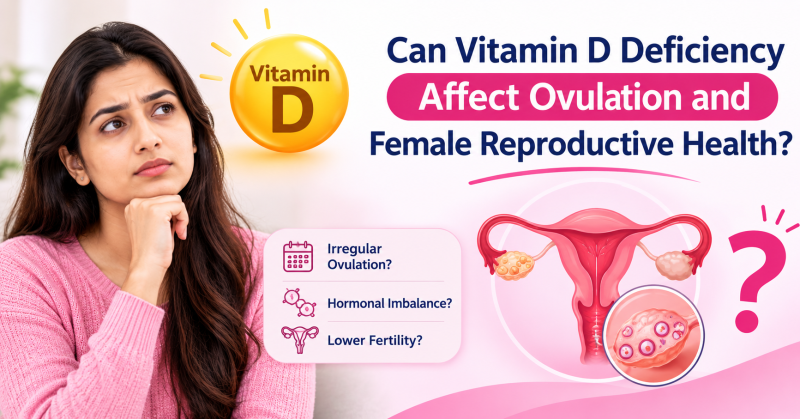
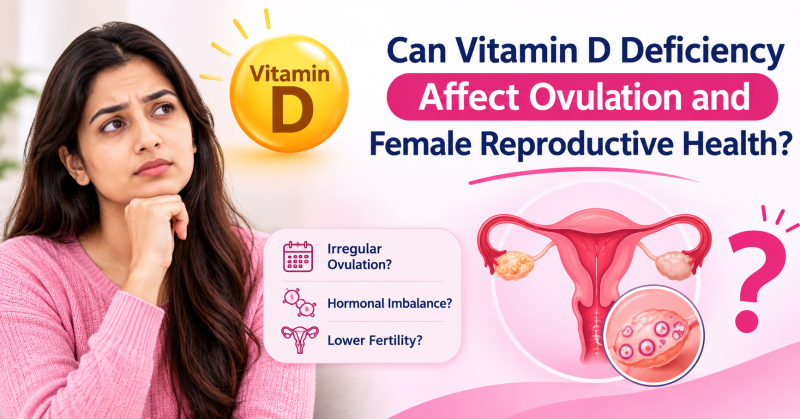
Research suggests there may be a link, but the evidence is not conclusive. Vitamin D appears to influence how follicles develop in the ovary and how certain reproductive hormones behave. Some studies have found lower vitamin D levels in women with ovulation problems, especially those with PCOS.
However, a link in studies does not prove cause and effect. Many women with low vitamin D ovulate normally, and many women with normal levels have ovulation problems. Correcting a deficiency is sensible for overall health, but it is not a guaranteed solution for irregular ovulation.
Vitamin D and PCOS
Women with PCOS are often found to have low vitamin D. Some studies suggest supplementation may help certain features, such as insulin resistance or menstrual regularity, though results are mixed.
PCOS is a complex condition involving hormones, metabolism, and ovulation. It needs proper evaluation and a personalised plan, not just a supplement.
Other Ways Vitamin D May Relate to Female Reproductive Health
Vitamin D is being studied in several other areas:
- Endometrial health: it may influence how receptive the uterine lining is to an embryo.
- Uterine fibroids: some research links low levels with fibroids, but the connection is unclear.
- Pregnancy: adequate vitamin D matters during pregnancy for the mother and the baby’s bone development.
- IVF and IUI outcomes: some studies suggest a relationship with treatment results, but findings are inconsistent, so doctors do not rely on it alone.
In short, vitamin D is one possible contributor among many, and its exact role is still being clarified.
Signs That May Suggest Low Vitamin D
Many women have no symptoms. When symptoms appear, they are often vague and can have other causes:
- Persistent tiredness
- Bone or muscle aches
- Low mood
- Hair thinning
- Frequent illness
These do not confirm a deficiency. A simple blood test (25-hydroxyvitamin D) is the only reliable way to check.
Should You Take Vitamin D Supplements on Your Own?
It is best not to. Vitamin D is generally safe at recommended doses, but very high doses taken for long periods can raise blood calcium and cause problems.
Your doctor can advise the right dose based on your test result, how long you may need it, and whether a repeat test is needed. Supplements work best alongside sensible sun exposure and a balanced diet.
Natural Ways to Support Vitamin D Levels
- Spend time outdoors in daylight, when practical and safe for your skin
- Include foods such as eggs, fortified milk, mushrooms, and fatty fish if they suit your diet
- Maintain a healthy weight through regular activity
- Get tested periodically if you are at risk
These steps support general health. They do not replace medical evaluation if you are facing fertility concerns.
Female Fertility in Delhi: When Should You See a Doctor?
Many women delay seeking help because they assume a vitamin or lifestyle issue will correct itself. If you are concerned about Female fertility in Delhi or elsewhere, consider consulting a specialist if you notice any of the following:
- Irregular, very infrequent, or absent periods
- Difficulty conceiving after 12 months of trying (or 6 months if you are 35 or older)
- Symptoms of PCOS, such as excess facial hair, acne, or weight gain
- A known vitamin D deficiency along with menstrual or conception concerns
- Previous miscarriages or unexplained fertility problems
A thorough assessment usually includes a detailed history, a pelvic ultrasound, and relevant blood tests such as thyroid, prolactin, AMH, and vitamin D. This helps identify the real cause rather than assuming one factor is responsible.
Choosing the Right Doctor
Women searching for the Best Gynaecologist in Delhi usually want a doctor who listens carefully, explains results in simple language, and avoids unnecessary treatment. Dr. Poonam Goyal, a Gynecologist and Fertility Specialist in Delhi, follows this approach, focusing on accurate evaluation and honest counselling suited to each patient.
No clinic can promise a pregnancy, and good care means being open about what medicine can and cannot control.
The Takeaway
Vitamin D matters for overall health, and it may play a supporting role in ovulation and reproductive function. But a low level is rarely the whole story. Correcting a deficiency is worthwhile, yet it should be part of a broader evaluation rather than a standalone fix.
If you are worried about your cycles, ovulation, or the time it is taking to conceive, a timely consultation can bring clarity.
Frequently Asked Questions
1. Can low vitamin D stop ovulation?
Low vitamin D may be associated with ovulation problems in some women, especially those with PCOS, but it is unlikely to be the only cause. Ovulation is influenced by many hormones, so a doctor will check other factors as well.
2. Can vitamin D deficiency cause irregular periods?
Some studies link low vitamin D with menstrual irregularity, but the evidence is not conclusive. Irregular periods are more commonly caused by PCOS, thyroid disorders, stress, or weight changes, so proper evaluation is important.
3. Will taking vitamin D help me get pregnant?
Correcting a deficiency supports general and reproductive health, but there is no guarantee that supplements alone will lead to pregnancy. Fertility depends on ovulation, tubal health, sperm quality, age, and other factors.
4. How do I know if I have vitamin D deficiency?
Symptoms are often absent or vague, so the only reliable method is a blood test measuring 25-hydroxyvitamin D. Your doctor can interpret the result and advise on the right dose if needed.
5. Is it safe to take high-dose vitamin D without a prescription?
Not always. Excessive doses over a long period can raise blood calcium levels and cause side effects. It is safer to take the dose your doctor recommends after testing.
Source:
Click for the: Full Story
You might like