Close Menu
 World
 Biography
 Health
 Education
 Business
 Lifestyle
 Sports
 Technology
 Animals
 History
 Food
 Religious
 Startups
 Movies
 Politics
 Fashion
 Covid
 Diet
 Fitness
 Marketing
 Travel
 Science
 Reviews
 Social media
 Stories
 Facts
 Art
 Entertainment
Badal

Health
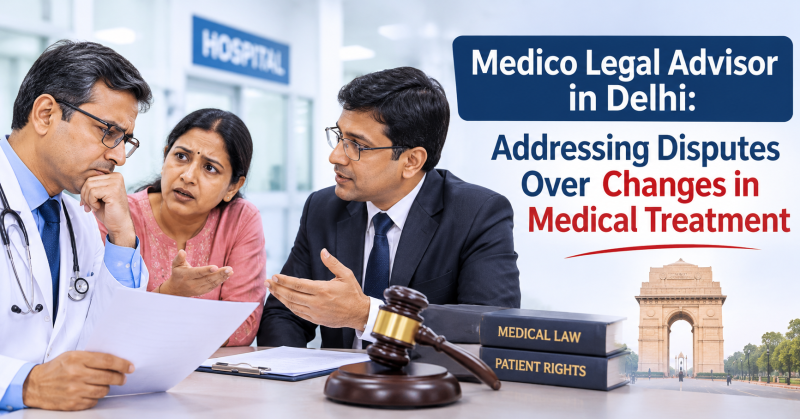
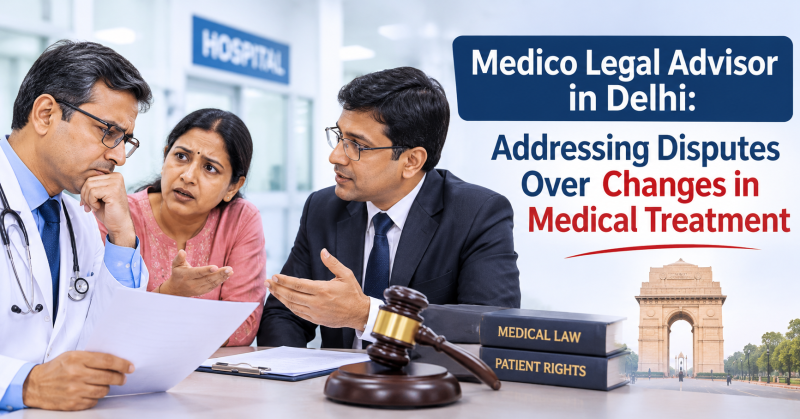
Medico Legal Advisor in Delhi: Addressing Disputes Over Changes in Medical Treatment
 Badal
When a patient or family disputes a change in treatment, a medico legal advisor in Delhi helps the doctor do four things: reconstruct the clinical reasoning, review the consent and records, respond accurately to any notice or complaint, and avoid actions that worsen the dispute, such as altering the file. This article explains why changes in treatment lead to conflict, what doctors are generally expected to show, and when specialist advice becomes useful.
Why Treatment Changes Trigger Disputes
Treatment plans change for sound reasons: a drug reaction, a new test result, a poor response to therapy, or an unexpected finding during a procedure. Patients and families, however, often see only the outcome. If the result is poor, the change itself can be perceived as the cause, especially when no one explained it clearly.
Most disputes of this kind are not really about the clinical decision. They are about communication, consent, and records. A family that was told “we are changing the plan because X, and here are the risks” is less likely to complain than one that heard nothing until after the event.
What the Law Generally Expects
Indian courts judge medical negligence against the standard of a reasonably competent practitioner. In Jacob Mathew v. State of Punjab (2005), the Supreme Court held that criminal liability against doctors requires a high degree of negligence, and that a bad outcome alone does not establish it. On consent, Samira Kohli v. Dr. Prabha Manchanda (2008) stressed that consent must be informed, meaning the patient understands the nature of the procedure, material risks, and alternatives.
Medical services can also be examined under consumer law, a position the Supreme Court recognised in Indian Medical Association v. V.P. Shantha (1995). Doctors may additionally face inquiries before the Delhi Medical Council. Because the legal framework and professional regulations are updated from time to time, confirm the current provisions before relying on any of the above for a specific case.
Common Mistakes Doctors Make
- Changing the plan without recording the reason
- Relying on the original consent form for a materially different intervention
- Explaining the change only verbally, with no note of what was said or to whom
- Updating the file after a complaint arrives, or overwriting earlier entries
- Failing to record that the patient or family declined the new option
- Responding to a legal notice casually, without reviewing the full record
- Discussing the dispute with the family or on social media in a way that can be misread
A Realistic Example
A physician treating a patient with a severe infection switches antibiotics after a culture report shows resistance. The patient’s condition worsens over the next two days, and the family alleges the first medicine was wrong and the second came too late.
If the notes show the initial reasoning, the culture result and its timing, the decision to change, the discussion with the family, and the monitoring that followed, the doctor can present a clear clinical sequence. If the file says only “antibiotic changed,” every question remains open. The treatment was the same in both versions. The record is what differs.
How a Medico Legal Expert Can Help
Doctors searching for a medico legal expert in Delhi are usually dealing with a notice, a council inquiry, or a worried family. A qualified adviser typically helps in these ways:
- Reviewing the record to identify gaps, inconsistencies, and strengths before any reply is drafted
- Assessing consent for the original and the changed plan
- Preparing a factual response to a notice or complaint, based on the file rather than memory
- Advising on communication with the patient’s family so that discussions stay honest and calm
- Guiding systems improvements, such as consent templates and documentation habits, to reduce future disputes
When comparing options, readers often look for the top medicolegal advisor in Delhi. Rankings are subjective, so a better approach is to check an adviser’s experience with medical negligence, consumer, and council matters, their familiarity with clinical practice, and how clearly they explain the limits of what can be promised. Practitioners may also consult Dr. Vimal Kant Goyal, whose medico-legal guidance for doctors and hospitals covers how to approach notices, records, and complaints.
Practical Checklist When a Dispute Arises
- Preserve the complete original record, including charts, orders, and reports
- Do not alter, add to, or rewrite any entry
- If a genuine clarification is needed, make a dated, signed addendum only after taking advice
- Note a timeline of events while details are fresh, as a separate private document
- Inform your hospital administration or indemnity provider if applicable
- Do not ignore a notice; time limits for replying can be short
- Route communication with the family through one calm, consistent channel
- Seek professional advice before sending any written response
Conclusion
Disputes over changed treatment usually turn on three things: whether the reason was sound, whether the patient was informed, and whether the record shows both. Build the habit of documenting each change at the time, review your consent templates regularly, and seek advice before responding to any complaint. A medico legal advisor in Delhi can help you assess your position calmly and respond accurately. This article provides general information and is not legal advice for any specific case. If a dispute arises, consult a qualified professional.
Frequently Asked Questions
1. What does a medico legal advisor do for a doctor?A medico legal advisor reviews records and consent, explains legal and regulatory exposure, helps prepare responses to notices or complaints, and advises on preventing future disputes. They cannot guarantee any outcome.
2. When should I contact an adviser after a patient complains?As early as possible, ideally before you reply to anything in writing and before you discuss the matter in detail with the family or colleagues.
3. Is a changed treatment plan automatically negligence?No. Courts generally look at whether the decision was one a reasonably competent doctor could have made, and whether the patient was properly informed. Clear records are central to showing this.
4. Can I fix a gap in my notes after a complaint?You should not alter existing entries. A clearly dated and signed addendum may sometimes be appropriate, but take advice first, since late entries can attract scrutiny.
5. Do small clinics need medico legal support as much as hospitals?The legal principles are the same. Clinics often lack in-house legal teams, so early advice on consent, records, and notices can be particularly valuable.
Source:
Click for the: Full Story
You might like