


 Close Menu
 World
 Biography
 Health
 Education
 Business
 Lifestyle
 Sports
 Technology
 Animals
 History
 Food
 Religious
 Startups
 Movies
 Politics
 Fashion
 Covid
 Diet
 Fitness
 Marketing
 Travel
 Science
 Reviews
 Social media
 Stories
 Facts
 Art
 Entertainment
Latini usa

Business
Confectionery Manufacturing Equipment: Improving Candy Production with Modern Technology
 Latini usa
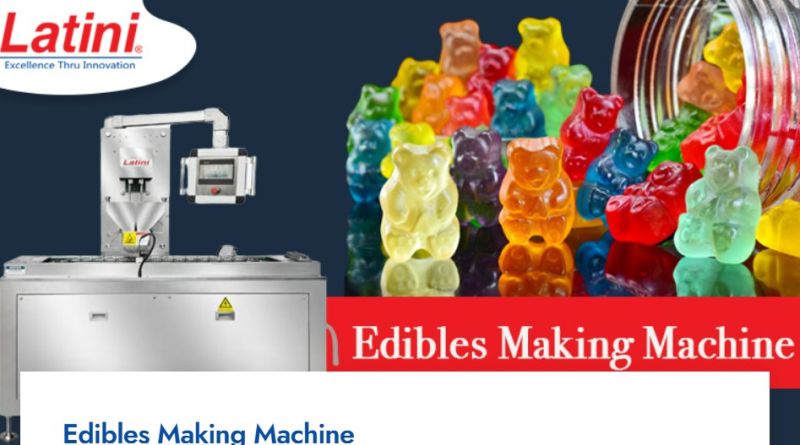
The confectionery industry is constantly evolving as manufacturers introduce new flavours, creative product designs, and specialized candy varieties to meet consumer expectations. Producing these products consistently requires more than quality ingredients; it also depends on the right machinery and manufacturing techniques. An Edibles making machine is an important investment for businesses exploring specialty confectionery production, while dedicated forming, twisting, and shaping equipment helps manufacturers maintain accuracy across different product categories. Choosing suitable machinery can improve workflow, reduce manual operations, and support long-term manufacturing growth.
Edibles Making Machine: Expanding Opportunities in Specialty Confectionery
Specialty confectionery products have created new possibilities for manufacturers interested in developing innovative recipes and product formats. Edibles production, particularly gummy-based products, requires careful control over ingredients, heating, mixing, depositing, and cooling.
An Edibles making machine helps streamline these manufacturing stages by providing controlled processing conditions. Depending on the configuration, equipment may support small-batch product development, formulation testing, and specialized production requirements.
For manufacturers entering this segment, equipment selection should be based on the intended product rather than production capacity alone. Factors such as viscosity, ingredient compatibility, temperature requirements, depositing accuracy, and cleaning procedures can influence the final product.
A well-planned production setup also makes it easier to experiment with different flavours, shapes, and textures while maintaining consistent manufacturing standards.
Forming Dies Manufacturer: The Foundation of Accurate Candy Shapes
In candy manufacturing, product appearance is closely connected to the quality of the forming process. Whether producing traditional boiled sweets, filled candies, or uniquely shaped confectionery, manufacturers need equipment capable of delivering accurate dimensions and repeatable results.
A professional forming dies manufacturer plays an important role in meeting these requirements. Forming dies are engineered to shape prepared candy masses into specific designs during the production process.
What Makes Forming Dies Effective?
The performance of forming dies depends on several engineering considerations. Material quality, machining accuracy, surface finish, and compatibility with the production machine all influence their performance.
Manufacturers should pay particular attention to:
- Precision engineering: Accurate dimensions help maintain uniform candy shapes.
- Material durability: Suitable materials support repeated production cycles.
- Surface quality: Smooth surfaces help facilitate product release.
- Custom configurations: Special designs allow brands to develop distinctive confectionery products.
- Machine compatibility: Correct specifications help ensure smooth integration with existing equipment.
Selecting suitable dies can improve product consistency and help reduce interruptions caused by forming-related issues.
Swirl Lollipop Machines for Distinctive Candy Designs
In a competitive confectionery market, product differentiation can influence purchasing decisions. Swirl lollipops are a good example of how colour combinations and attractive patterns can transform a traditional candy into an eye-catching retail product.
Modern Swirl Lollipop machines are designed to support the production of lollipops featuring distinctive spiral patterns. These systems help coordinate candy feeding, rope handling, twisting, and forming operations to achieve a consistent appearance.
Why Manufacturers Are Investing in Swirl Lollipop Production
One major advantage of specialized lollipop machinery is the ability to develop different visual styles using multiple candy colours. Manufacturers can experiment with colour arrangements, product dimensions, and designs to create products for different customer segments.
For example, confectionery brands supplying supermarkets may prefer bright, colourful swirl lollipops, while businesses producing premium gift confectionery may focus on distinctive colour combinations and customized shapes.
Automation also helps reduce repetitive manual work and makes production planning more manageable.
When evaluating machinery, businesses should consider production speed, candy mass handling, twisting accuracy, ease of operation, and maintenance requirements.
Candy Cane Machine: Streamlining Traditional Candy Production
Traditional confectionery products continue to maintain their place in the market, particularly during festive seasons. Candy canes are a recognizable example, requiring a specific combination of colour, shape, and texture to achieve their familiar appearance.
A specialized Candy cane machine helps manufacturers manage important production operations, including candy rope preparation, sizing, twisting, and shaping.
Important Manufacturing Stages
Candy Mass Preparation: Ingredients are cooked and processed to achieve the required consistency and working properties.
Rope Sizing: The prepared candy mass is formed into ropes with controlled dimensions.
Striped Pattern Formation: Different coloured candy sections are combined to create the traditional striped appearance.
Twisting and Shaping: The rope is twisted and formed into the characteristic candy cane design.
Cutting and Finishing: Individual pieces are separated and prepared for subsequent cooling and packaging operations.
Each stage requires appropriate temperature management and process coordination. Specialized equipment can help manufacturers achieve more consistent results, particularly when preparing for seasonal production requirements.
Common Challenges in Confectionery Manufacturing
Even well-established manufacturers can encounter production difficulties when equipment is not properly matched to product requirements.
One common challenge is inconsistent product dimensions. This can occur when forming equipment is incorrectly adjusted or when dies are not suitable for the intended product.
Another concern is temperature variation. Candy masses can become difficult to process if their working temperature is not maintained appropriately, potentially affecting texture, shape, and production efficiency.
Equipment downtime is another important consideration. Regular inspection, preventive maintenance, proper operator training, and timely replacement of worn components can help minimize unexpected interruptions.
Manufacturers should also consider future production requirements when purchasing machinery. Equipment that supports different product specifications can provide greater flexibility as business needs change.
What to Look for When Investing in Candy Manufacturing Machinery
Before purchasing confectionery equipment, businesses should evaluate their current manufacturing requirements and long-term objectives.
Production capacity is an important starting point, but it should not be the only deciding factor. The machinery must also be compatible with the product formulation, available factory space, operating conditions, and downstream packaging arrangements.
Technical assistance, installation guidance, spare-parts availability, and maintenance support are equally important. Working with an experienced equipment supplier can help manufacturers make informed investment decisions and develop a more efficient production setup.
Latini-Hohberger Dhimantec offers confectionery machinery solutions for businesses looking to improve manufacturing processes and explore different candy production applications. Its equipment expertise can support manufacturers evaluating machinery for product development, forming, and confectionery processing.
Conclusion
Modern confectionery manufacturing requires a careful balance of engineering precision, production efficiency, and product creativity. From an Edibles making machine supporting specialty product development to a dependable forming dies manufacturer, advanced Swirl Lollipop machines, and a dedicated Candy cane machine, the right equipment can help businesses maintain consistent quality and expand their product portfolios.
Manufacturers who prioritize reliable machinery, appropriate technical support, and efficient production planning can respond more effectively to changing market demands. Investing in suitable confectionery equipment today can create valuable opportunities for innovation and sustainable business growth.
Source:
Click for the: Full Story
You might like









You Might Like this