


 Close Menu
 World
 Biography
 Health
 Education
 Business
 Lifestyle
 Sports
 Technology
 Animals
 History
 Food
 Religious
 Startups
 Movies
 Politics
 Fashion
 Covid
 Diet
 Fitness
 Marketing
 Travel
 Science
 Reviews
 Social media
 Stories
 Facts
 Art
 Entertainment
All Writers Destination
Business
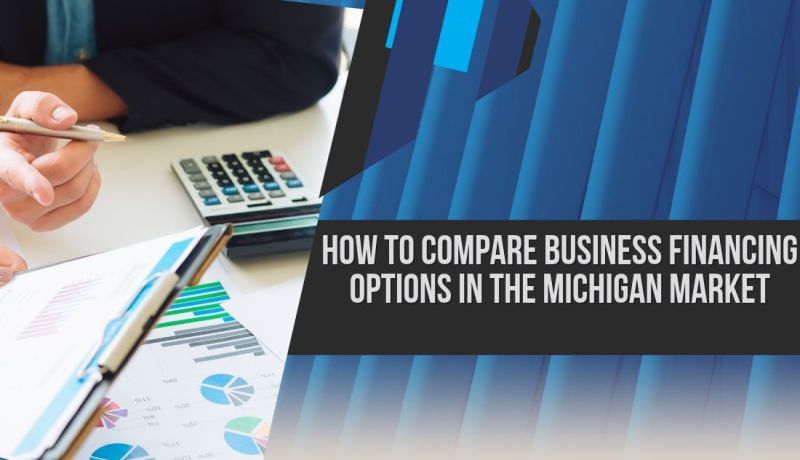
How to Compare Business Financing Options in the Michigan Market
 All Writers Destination
Quick summary: To compare business financing in Michigan, judge every offer on six factors: total cost (APR), repayment term, funding speed, collateral and guarantees, eligibility, and flexibility. SBA loans and bank term loans usually cost the least. Lines of credit and equipment financing give you flexibility. Online loans and merchant cash advances are the fastest but cost the most. The Michigan SBDC, MEDC, and local CDFI can help you find better terms.
One of the biggest decisions a Michigan owner makes is how to finance a business. Whether you’re running a machine shop in Grand Rapids or a restaurant in Ann Arbor or near Detroit, the financing you choose impacts your cash flow for years.
Offers rarely look alike. One lender quotes an interest rate, another a factor rate, and a third a weekly payment. Without a consistent method, it is easy to pick the option that sounds cheapest and ends up costing the most.
This guide from Coventry Enterprises LLC Loans gives you a simple framework for comparing business financing in Michigan, from SBA loans to lines of credit, so you can judge every offer on equal terms. Our site is educational only and does not originate or broker loans.
What are the main business financing options in Michigan?
Michigan businesses typically choose from seven options: SBA loans, bank term loans, business lines of credit, equipment financing, commercial real estate and bridge loans, online or short-term loans, and community lender (CDFI) programs.
- SBA 7(a) and 504 loans are government-backed, with long terms and competitive rates, but the application takes longer. See our SBA loan guide.
- Bank term loans have fixed or variable payments over one to ten years and suit established businesses with strong credit.
- Business lines of credit give you revolving access to cash for payroll or inventory, and you pay interest only on what you draw.
- Equipment financing uses the equipment as collateral, so approval is often easier. Learn more about equipment financing.
- Commercial real estate and bridge loans cover buying, building, or renovating property. Read about bridge loans.
- Online and short-term loans, including merchant cash advances, fund quickly at a higher cost.
- CDFI and community lenders are mission-driven and serve owners that banks may decline.
For a broader overview, see Understanding Business Financing Options in 2026.
How do you compare business financing options side by side?
Compare each offer on the same six factors: total cost (APR), repayment term, funding speed, collateral and personal guarantees, eligibility requirements, and repayment flexibility. Using one checklist for every lender makes offers directly comparable.
Ranges are general. Actual terms vary by lender, credit profile, and market conditions.
Which Michigan financing option fits your situation?
Match the financing to the purpose: long-term assets get long-term loans, and short-term needs get short-term tools. Borrowing short-term money for a long-term asset strains cash flow quickly.
- Buying a building: SBA 504 or a commercial real estate loan.
- Buying equipment or vehicles: equipment financing, which spreads the cost over the asset's useful life.
- Seasonal swings (tourism in northern Michigan, landscaping, agriculture): a line of credit.
- Closing a property deal quickly: a bridge loan with a clear exit strategy.
- Startup or limited credit history: an SBA microloan (up to $50,000) or a CDFI loan.
- Urgent, short-term need: an online loan, but only after calculating total cost.
Manufacturers and automotive suppliers often carry heavy equipment and long receivable cycles, while hospitality and construction businesses face strong seasonality. Match your financing to your industry's cash flow.
What Michigan resources can help you compare options?
Michigan offers free and low-cost support that many owners overlook.
- The Michigan Small Business Development Center (SBDC) gives no-cost consulting on loan readiness, financial projections, and comparing offers.
- The Michigan Economic Development Corporation (MEDC) has information on state business capital and support programs.
- The U.S. SBA Michigan District Office offers guidance on SBA programs and approved lenders.
- Community lenders and CDFIs, such as Invest Detroit and Detroit Development Fund, serve businesses that may not fit traditional bank criteria.
- Credit unions are often competitive on rates for members with established relationships.
Program availability and terms change, so confirm details with each organization. Our guide to Michigan commercial lending adds local context.
How do you calculate the true cost of business financing?
Convert every offer to an annual percentage rate (APR) and add all fees. A stated interest rate alone hides origination fees, guarantee fees, closing costs, and prepayment penalties.
Factor rates need extra caution. A $50,000 merchant cash advance at a 1.3 factor rate means you repay $65,000. That $15,000 cost looks modest, but if you repay it over six months, the effective APR can be far above 50%. A bank loan quoted at a single-digit or low double-digit rate is not comparable until you run the same math.
Ask every lender these questions:
- What is the APR, including all fees?
- Is there an origination, underwriting, or documentation fee?
- Is there a prepayment penalty, and how is it calculated?
- Is the payment fixed, variable, daily, or weekly?
- Does the loan require a personal guarantee or a lien on business assets?
What do Michigan lenders look for?
Most lenders evaluate five areas, and knowing them helps you target the right option.
- Credit: they review both personal and business credit history.
- Time in business: banks often prefer two or more years, while some online lenders accept six to twelve months.
- Cash flow: a debt service coverage ratio (DSCR) of 1.25 or higher is a common benchmark.
- Collateral: real estate, equipment, inventory, or receivables.
- Documentation: tax returns, profit-and-loss statements, balance sheets, bank statements, a debt schedule, and a business plan.
What are the red flags when comparing lenders?
Slow down or walk away if you see any of these:
- The lender will not state an APR or total repayment amount.
- You are pressured to sign the same day.
- Fees are required before approval or without a written agreement.
- The contract includes steep prepayment penalties or automatic renewals.
- Terms in the contract differ from what was promised verbally.
Our checklist for choosing an ethical commercial lending partner covers more warning signs.
How to compare Michigan business financing in 5 steps
- Define the purpose and amount. Know exactly what you are funding and how long it will generate returns.
- Gather your documents. Having financials ready speeds every application.
- Request offers from at least three lenders. Mix lender types, such as a bank, a credit union, and a CDFI or online lender.
- Normalize each offer. Put APR, total repayment, term, fees, and collateral in one comparison sheet.
- Get a second opinion. Have an accountant or attorney review contracts, and consider a free Michigan SBDC advisor.
Frequently asked questions
What is the easiest business loan to get in Michigan?
Online term loans, merchant cash advances, and equipment financing are generally the easiest to qualify for because they rely on cash flow or the asset itself. Easier approval usually means higher cost, so compare total repayment carefully.
What is the cheapest way to finance a business in Michigan?
SBA loans and traditional bank loans typically carry the lowest rates for qualified borrowers. The tradeoff is a longer application and stricter requirements.
How long does it take to get business financing in Michigan?
Online lenders can fund in one to three days. Banks often take two to six weeks, and SBA loans can take several weeks to a few months depending on the program and complexity.
Can I get business financing in Michigan with bad credit?
Yes, but options narrow and costs rise. Equipment financing, secured loans, CDFI loans, and some online lenders may work. Improving your credit and cash flow before applying can widen your choices.
Should I choose an SBA loan or a bank loan?
Choose an SBA loan if you want longer terms and lower payments and can wait for the process. Choose a conventional bank loan if you have strong credit and need faster closing.
Final thoughts
The best financing is the option with the lowest true cost that fits your purpose and cash flow, which is not always the fastest or the one with the lowest advertised rate. Apply the six-factor checklist to every offer, and don't sign until you understand the total repayment. Michigan's free advisory resources can help with both.
Coventry Enterprises LLC Loans publishes guides for Michigan owners who want to understand financing before they borrow. Explore our loan knowledge center, read the FAQ, or contact us with questions.
Source:
Click for the: Full Story
You might like






You Might Like this