



 Close Menu
 World
World
 Biography
 Health
 Education
 Business
 Lifestyle
 Sports
 Technology
 Animals
 History
 Food
Food
 Religious
 Startups
 Movies
 Politics
 Fashion
 Covid
Covid
 Diet
Diet
 Fitness
 Marketing
 Travel
 Science
 Reviews
 Social media
 Stories
 Facts
Facts
 Art
Art
 Entertainment
Rajan

Health
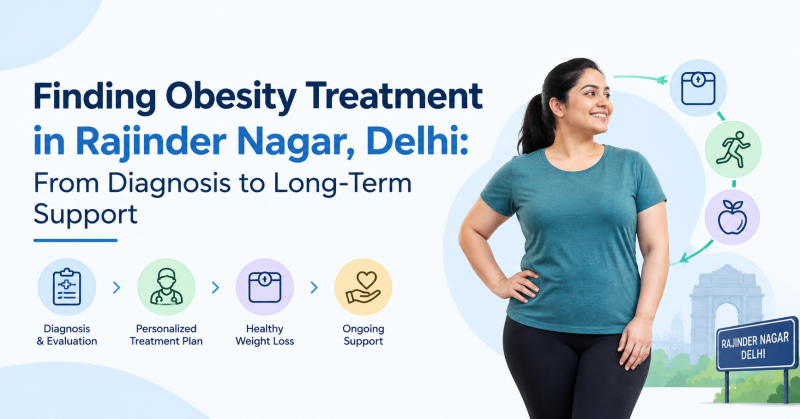
Finding Obesity Treatment in Rajinder Nagar, Delhi: From Diagnosis to Long-Term Support
 Rajan
Rajan
Obesity is far more than a cosmetic concern. It raises the risk of type 2 diabetes, high blood pressure, fatty liver, sleep apnoea, joint problems, and several cancers. Many people try diets and gym routines for years before asking whether medical help is appropriate. If you are at that stage, you may be searching for the best obesity surgeon in Rajinder Nagar, or wondering whether surgery is even the right path. This guide walks through the full journey: how obesity is diagnosed, which treatments exist, who qualifies for surgery, and what long-term support looks like.
Step 1: Understanding and Diagnosing Obesity
Doctors usually begin with Body Mass Index (BMI), calculated from height and weight. Indians tend to develop weight-related health problems at lower BMI levels than Western populations, so Asian cut-offs are used:
- Overweight: BMI 23 to 27.5
- Obese: BMI above 27.5
- Severe obesity: BMI above 32.5 to 37.5, depending on the guideline and other conditions
BMI is only a starting point. A proper evaluation also looks at waist circumference, body fat distribution, medical history, family history, and eating and activity patterns. Blood tests commonly check blood sugar, HbA1c, lipids, liver function, thyroid, and vitamin levels. Doctors also screen for sleep apnoea, hormonal causes, and mental health factors such as emotional eating.
Step 2: Non-Surgical Treatment
Surgery is not the first option for everyone. Treatment typically starts with:
- Dietary changes guided by a qualified dietitian, not crash diets
- Regular physical activity suited to your fitness and joint health
- Behavioural support to address habits, stress, and sleep
- Medication, where appropriate, prescribed and monitored by a doctor
These measures work well for many people with mild to moderate obesity. When weight remains high despite sincere, sustained effort, or when obesity is already causing serious illness, surgery may be considered.
Step 3: Who Is a Candidate for Weight Loss Surgery?
Indian and Asian guidelines set lower thresholds than Western ones. Surgery is generally considered when:
- BMI is about 37.5 or higher, or
- BMI is about 32.5 or higher with obesity-related conditions such as type 2 diabetes, hypertension, or sleep apnoea
- Non-surgical methods have not produced lasting results
- The patient understands the lifestyle changes required and is medically fit for anaesthesia
Exact criteria vary, and a specialist team makes the final judgement after assessment.
Step 4: Common Bariatric Procedures
- Sleeve gastrectomy: A large part of the stomach is removed, leaving a narrow tube. It limits food intake and reduces hunger hormones.
- Roux-en-Y gastric bypass: A small stomach pouch is created and connected to a lower section of the intestine, limiting intake and altering digestion.
- One-anastomosis (mini) gastric bypass: A simpler bypass design with a single intestinal connection, used in selected patients.
Most of these operations are done laparoscopically, through small incisions, and increasingly with robotic assistance. This usually means less pain, smaller scars, and a quicker return to routine than open surgery. The best procedure depends on your BMI, medical conditions, eating habits, and the surgeon’s assessment.
Choosing the Best Obesity Surgeon in Rajinder Nagar
Rajinder Nagar is home to a major tertiary hospital, and many people in Central Delhi prefer treatment close to home because bariatric care involves repeated follow-up visits. Whatever area you choose, these are the qualities that matter more than advertising:
- Specialised training in laparoscopic and bariatric surgery
- A multidisciplinary team that includes a dietitian, physician or endocrinologist, anaesthetist, and psychologist
- Experience with the specific procedure advised for you
- Honest counselling about risks, expected weight loss, and alternatives
- A structured follow-up programme, not just the operation itself
Patients comparing the best obesity surgeon in Delhi can also ask about complication rates, hospital ICU facilities, and how long-term follow-up is organised.
Step 5: Life After Surgery and Long-Term Support
Surgery is a tool, not a cure. Lasting success depends on what happens afterwards. A good long-term plan usually includes:
- Staged diet progression: liquids first, then soft foods, then regular meals in small portions
- Protein focus to protect muscle while losing fat
- Lifelong vitamin and mineral supplements, such as B12, iron, calcium, and vitamin D
- Regular check-ups at set intervals during the first year and yearly after that
- Physical activity built up gradually
- Emotional support, since changes in body and eating habits can be challenging
Many patients see improvement or remission of type 2 diabetes, blood pressure, and sleep apnoea, though results vary. Weight regain is possible if eating habits slip, which is why ongoing support is as important as the procedure. Those looking for the best obesity treatment in Delhi should therefore look at the whole programme, from assessment through years of follow-up.
Conclusion
Overcoming obesity is a long journey that begins with proper diagnosis, moves through lifestyle and medical options, and, for some, includes surgery with committed long-term support. Whether you are searching for the best obesity surgeon in Rajinder Nagar or comparing options across the city, prioritise training, team-based care, and honest guidance over promises of quick results. Informed decisions made with a qualified specialist give you the best chance of lasting health.
If you would like to consult Dr. Tarun Mittal, Senior Consultant and Vice Chairman, Department of Laparoscopic, Laser & General Surgery, you can visit him at Sir Ganga Ram Hospital, Old Rajinder Nagar, New Delhi, Delhi – 110060.
Disclaimer: This article is for general education and does not replace professional medical advice. Please consult a qualified specialist about your own condition.
Frequently Asked Questions
1. How do I know if I need weight loss surgery?
Your BMI, associated health conditions, and previous attempts at weight loss are assessed together. A bariatric specialist can tell you whether you qualify.
2. Is bariatric surgery safe?
Modern laparoscopic bariatric surgery has a good safety record in experienced hands, though every operation carries risks such as bleeding, infection, leaks, or nutritional deficiencies. Careful selection and follow-up reduce these risks.
3. How much weight can I expect to lose?
It varies by procedure and individual. Many patients lose a large share of excess weight over 12 to 18 months, provided they follow dietary and exercise guidance.
4. Will I need supplements for life?
Most patients do, particularly after bypass procedures. Your team will advise on the right regimen.
5. Is surgery the only effective treatment?
No. Lifestyle changes and medication help many people. Surgery is usually reserved for severe obesity or obesity with serious related illness.
Source:
Click for the: Full Story
You might like









You Might Like this