Close Menu
 World
World
 Biography
 Health
 Education
 Business
 Lifestyle
 Sports
 Technology
 Animals
 History
 Food
Food
 Religious
 Startups
 Movies
 Politics
 Fashion
 Covid
Covid
 Diet
Diet
 Fitness
 Marketing
 Travel
 Science
 Reviews
 Social media
 Stories
 Facts
Facts
 Art
Art
 Entertainment
Yatin Samra

Technology
Gold-Backed Tokens Explained: Redemption Options, Benefits, and Key Considerations
 Yatin Samra
Gold has historically been bought in the form of jewelry, coins, or bars; however, the development of digital technologies allows ownership of gold using different instruments. One of the instruments is gold-backed tokens, which let users store digital assets linked to the precious metal with the help of blockchain technologies. Thanks to gold tokenization app development services, companies are able to develop applications that will provide users with the opportunity to purchase tokens, store a portfolio, and redeem the tokens for physical gold when it is possible.
Investors wonder about the extent of the link between digital tokens and the gold represented by them. Is it possible to obtain real gold from tokens? What kind of storage of the asset is provided? What happens if the issuer of the tokens fails to provide redemption of the digital asset?
This question is relevant in relation to companies in the USA and other countries that seek to use tokenized real-world assets. Despite the benefits, the features of gold-backed tokens may differ greatly.
This article will explain what gold-backed tokens are, the available redemption possibilities, the determinants of the token value, and the issues that investors and companies need to consider
What Is a Gold-Backed Token?
A gold-backed token is a digital asset designed to represent a claim, ownership interest, or other contractual right associated with gold. It is commonly issued on a blockchain, where transactions and token balances can be recorded and transferred digitally.
The exact structure depends on the issuer. Some tokens represent a specified quantity of physical gold held by a custodian. Others provide a contractual claim against an issuer or track the price of gold without granting holders direct ownership of particular gold reserves.
For example, a token may be designed to represent one gram of gold stored in a vault. If its governing terms provide an enforceable redemption right, an eligible holder may be able to exchange a sufficient number of tokens for physical gold.
However, the stated gold equivalent alone does not prove that the holder owns a specific quantity of allocated gold or can demand immediate delivery. The legal documentation and custody arrangements determine what rights the token actually provides.
Before purchasing a gold-backed token, users should understand whether it represents physical ownership, a contractual claim, or simply digital exposure to gold prices.
How Does Gold Tokenization Work?
Gold tokenization involves representing rights associated with gold through digital tokens. A typical arrangement includes several connected components.
1. Physical Gold Acquisition and Storage
The issuer or an associated entity acquires gold and arranges for it to be stored with an appropriate custodian. The storage arrangement should define how the gold is held, insured where applicable, and accounted for.
2. Token Issuance
The platform issues tokens according to its defined issuance rules. The number of tokens created should be reconciled with the relevant gold backing or contractual structure.
3. Digital Ownership Records
Blockchain technology records token transactions and balances. Users may be able to view their holdings through a digital wallet or an application dashboard.
4. Token Transfers and Trading
Depending on the token's design and applicable restrictions, holders may be able to transfer tokens to other eligible users or trade them through supported platforms.
5. Redemption or Sale
If physical redemption is supported, eligible holders can submit a request to exchange tokens for gold under the issuer's terms. Alternatively, they may sell their tokens through a supported marketplace, subject to liquidity and transaction costs.
The important point is that blockchain technology manages the digital representation and movement of tokens. It does not, by itself, verify the existence of physical gold or guarantee that an issuer will fulfill its obligations.
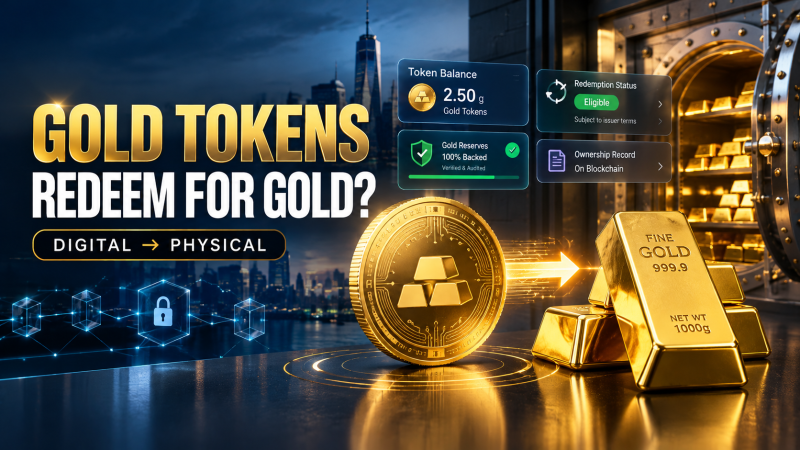
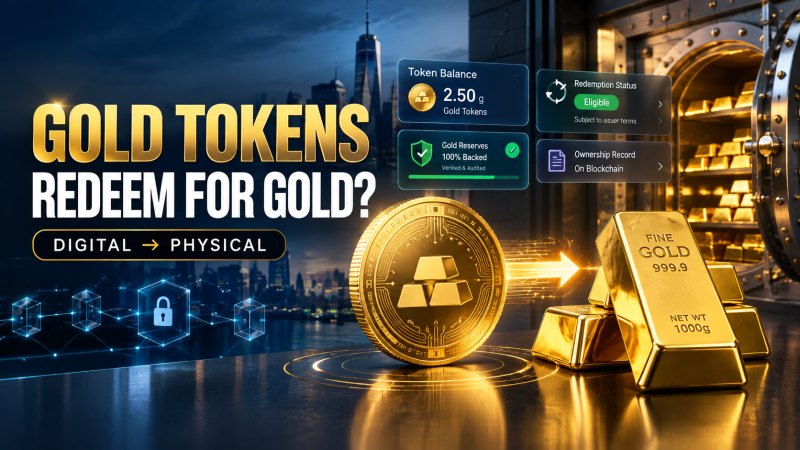
Can Gold-Backed Tokens Be Exchanged for Physical Gold?
Yes, some gold-backed tokens offer physical redemption, but not all of them do. The ability to receive gold depends on the token's contractual rights, issuer policies, minimum redemption requirements, and available delivery services.
A redemption process may require users to:
- Hold the minimum number of tokens needed for an eligible gold product.
- Complete identity verification and any required compliance checks.
- Submit a redemption request through the platform.
- Pay applicable processing, fabrication, shipping, or insurance charges.
- Select an available delivery or collection option.
For example, an issuer may allow physical redemption only in the form of specified gold bars rather than jewelry or coins. Another may restrict delivery to particular countries or require a minimum quantity that exceeds the user's current holdings.
Users should also understand how tokens are handled during redemption. Depending on the system, tokens may be transferred, locked, or burned when the physical gold is released.
Before purchasing a token specifically to obtain physical gold, review the redemption terms carefully. A platform that advertises gold backing may still impose conditions that make redemption impractical for some holders.
What Are the Main Redemption Options?
Gold token issuers may provide different ways for users to realize the value of their holdings.
Physical Gold Delivery
Eligible holders exchange tokens for physical gold that is shipped to an approved address. Availability depends on the issuer, the gold product, and the destination.
Collection Through an Approved Provider
Some arrangements may allow holders to collect physical gold through an authorized location or partner. The availability of this option depends on the provider's operating model.
Selling Tokens for Money
If the token is supported by a trading platform or redemption mechanism that permits cash settlement, users may be able to sell their tokens rather than receive physical gold. The sale price may differ from the underlying gold value because of market conditions, liquidity, spreads, or fees.
Holding Tokens for Future Use
Some holders may choose to retain their tokens instead of redeeming them immediately. This approach remains subject to the token's legal structure, platform availability, and the risks associated with the issuer and underlying arrangements.
These options should not be assumed to exist for every gold-backed token. Investors should confirm which methods are actually supported and understand the associated costs before making a decision.
How Is the Value of a Gold Token Determined?
The value of a gold-backed token may be influenced by several factors, depending on how it is structured.
Underlying gold price: If a token represents a fixed quantity of gold, changes in the market price of gold generally affect the estimated value of that quantity.
Token design: The amount of gold represented by each token and the rights associated with it determine how its value should be assessed.
Trading liquidity: If a token trades on a secondary market, its market price may differ from the estimated value of its gold backing.
Fees and redemption costs: Transaction charges, storage costs, fabrication premiums, and delivery expenses can affect the net value a holder receives.
Issuer and counterparty risk: A token holder's ability to realize the expected value may depend on the issuer's financial position, custody arrangements, and ability to fulfill its obligations.
For example, a token linked to one gram of gold may have an estimated underlying value based on the current gold price. However, that does not mean it can always be sold for precisely that amount or redeemed for a gram of physical gold without additional costs.
Gold-backed tokens should therefore be evaluated according to both the underlying asset and the structure of the digital product.
What Are the Benefits of Gold Tokenization?
When supported by clear legal rights and reliable operational arrangements, tokenized gold can offer several potential advantages.
Digital Convenience
Users may be able to view and manage their holdings through a digital platform rather than relying entirely on in-person transactions.
Fractional Access
Some platforms allow users to purchase small quantities of gold through tokens, potentially reducing the minimum amount needed to gain exposure to the asset.
Digital Transferability
Depending on the token's design and restrictions, users may be able to transfer holdings digitally rather than physically moving gold.
Easier Portfolio Monitoring
An application can display token balances, transaction histories, and estimated gold values in one place, helping users review their holdings.
Potential Physical Redemption
Where the terms provide for it, redemption gives eligible holders a way to exchange digital tokens for physical gold.
These benefits depend on the platform and do not eliminate the risks of investing in digital assets. Users still need to consider fees, issuer reliability, custody, liquidity, and legal protections.
What Risks Should Investors Consider?
Gold-backed tokens combine exposure to a traditional asset with the operational and technological features of digital platforms. This creates several areas that require careful evaluation.
Issuer and Custody Risk
The issuer may depend on custodians, vault operators, and other service providers. If a provider fails, the effect on token holders depends on the ownership structure, contractual protections, and applicable law.
Reserve Transparency
An issuer's claims about physical backing should be supported by appropriate evidence. Independent assurance reports and clear reserve disclosures can help, but users should examine their scope and limitations.
Redemption Restrictions
Minimum quantities, fees, geographic limitations, and processing delays may make it difficult or costly to receive physical gold.
Technology and Cybersecurity Risk
Wallet compromise, phishing, smart-contract vulnerabilities, and platform outages may affect access to tokens or the ability to complete transactions.
Liquidity and Price Differences
A token may not always trade at a price that closely matches the value of its underlying gold. Low trading activity or limited platform support can make selling more difficult.
Regulatory and Tax Considerations
The legal and tax treatment of tokenized gold varies according to the asset's structure, the services offered, and the jurisdictions involved.
In the USA, businesses and users should consider applicable federal and state requirements, including relevant financial, consumer-protection, tax, and anti-money-laundering obligations. The precise requirements depend on the product and how it is operated.
Investors should review these risks before purchasing a token, particularly if they expect to redeem it for physical gold at a later date.
How Can Businesses Build a Gold Tokenization Platform?
For businesses, creating a gold tokenization platform requires coordination between blockchain infrastructure, physical asset management, compliance processes, and user-facing services.
Gold tokenization app development should begin with a clear definition of the asset and the rights represented by the token. Businesses must establish how gold is sourced and stored, how tokens are issued, and how the platform will handle transfers and redemptions.
Several elements deserve particular attention.
Token architecture: Define the issuance, transfer, and redemption rules. Ensure that the token's technical behavior matches the legal rights it is intended to represent.
Reserve management: Establish reliable systems for recording physical gold holdings and reconciling reserves with tokens in circulation.
Custodian integration: Coordinate with appropriate vault operators or custodians and document their responsibilities.
Redemption management: Build clear workflows for eligibility checks, token handling, fee calculations, request tracking, and delivery coordination.
Security controls: Use suitable wallet protections, access management, smart-contract testing, transaction monitoring, and incident-response procedures.
Compliance and verification: Evaluate identity verification, recordkeeping, reporting, and other obligations that may apply to the issuer and platform.
Transparent user experience: Explain the gold backing, ownership rights, fees, redemption conditions, and risks in language users can understand.
Independent verification: Consider appropriate independent audits or assurance processes to help establish confidence in reserve reporting.
Businesses should involve legal, compliance, security, and asset-custody specialists early in the planning process. The right technical design depends on the business model, the rights granted to token holders, and the jurisdictions in which the product will operate.
What Should Users Check Before Choosing a Gold Token?
Before purchasing a token, investors can use the following checklist to evaluate the product.
- Gold backing: Does the issuer clearly explain the asset or claim represented by each token?
- Ownership rights: Do the terms explain whether holders own allocated gold or have a different contractual interest?
- Reserve verification: Are reserve disclosures and independent assurance reports available?
- Redemption terms: Are physical delivery options, minimum quantities, and fees clearly stated?
- Issuer reliability: Is the issuer's legal identity and operating structure disclosed?
- Security: Does the platform explain how wallets, accounts, and personal data are protected?
- Liquidity: Can users sell or transfer tokens through supported channels, and what costs might apply?
- Legal and tax considerations: Have the relevant requirements been assessed for the user's location and transaction?
A careful review can help users distinguish between a token that offers practical redemption rights and one that simply tracks the price of gold.
Conclusion
Tokens backed by gold are a digital means of representing the rights attached to gold; however, their characteristics differ depending on the issuer. Some provide an option for the qualified recipient to swap tokens for actual gold, whereas other issuers will offer various exposures or have certain limitations.
A thorough understanding of the token structure, reserve policies, redemption options, fees, and security practices is crucial for investment in such tokens. The mere fact of having a digital account balance does not ensure the possession of physical gold or its availability at all times.
Tokenization of gold for companies involves much more than just generating tokens using blockchain technology.
Source:
Click for the: Full Story
You might like