Close Menu
 World
World
 Biography
 Health
 Education
 Business
 Lifestyle
 Sports
 Technology
 Animals
 History
 Food
Food
 Religious
 Startups
 Movies
 Politics
 Fashion
 Covid
Covid
 Diet
Diet
 Fitness
 Marketing
 Travel
 Science
 Reviews
 Social media
 Stories
 Facts
Facts
 Art
Art
 Entertainment
Codezeros

Technology
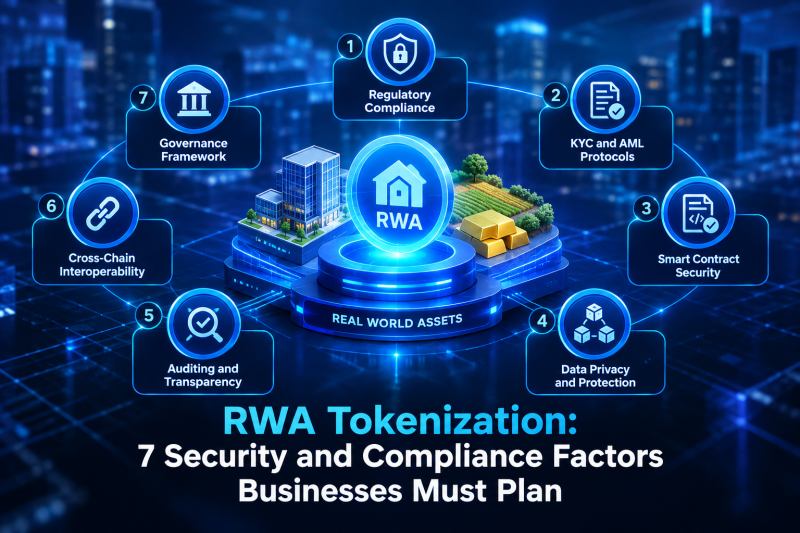
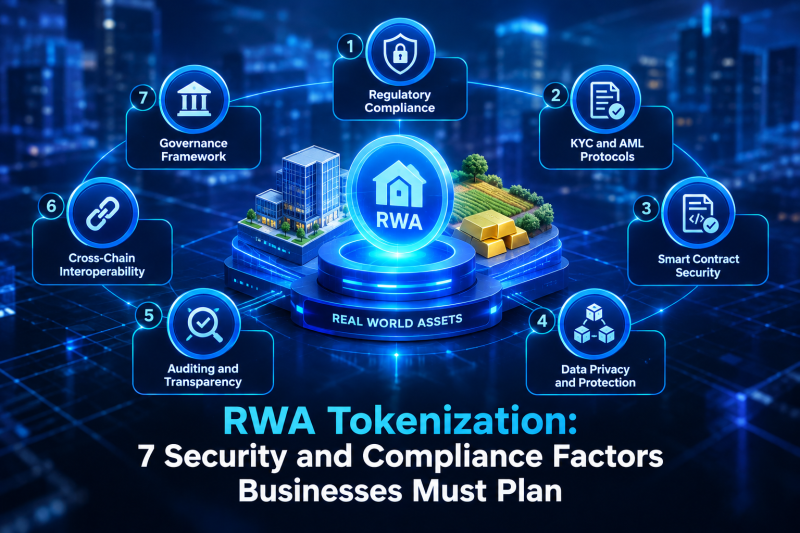
RWA Tokenization: 7 Security and Compliance Factors Businesses Must Plan
 Codezeros
Real world asset tokenization is revealing real estate, private credit, investment funds, commodities, bonds and other assets as new use cases for blockchain-based infrastructure and the creation of tokens. Security and compliance are as critical to enterprise use as blockchain capabilities as more enterprises venture into the realm of tokenized assets.
A RWA tokenisation solution must build a connection between the digital tokens and the rights to the underlying assets, the investors, the custodianship and management of the tokens, identity controls and the applicable regulations. The process of tokenization does not automatically make the asset legally owned by someone or enable it to be traded.
For businesses that are planning a tokenization project for 2026, security and compliance must be at the forefront, not an afterthought.
Why Security and Compliance Matter in RWA Tokenization
In the realm of RWA, security and compliance are of paramount importance.
Tokens can be worth a lot of money, in terms of assets. Any flaw in the smart contract, wallet, access control approach, or compliance procedure, then, can lead to financial, legal and operational risks.
Businesses need to consider the entire tokenization ecosystem, such as:
Key Components of the RWA Tokenization Ecosystem
- Blockchain infrastructure
- Smart contracts
- Wallets
- Investor onboarding
- Data systems
- APIs
- Administrative measures
1. Describe the Rights That Are Granted in the Background of a Token
The first aspect of security and compliance is knowing what exactly the token is.
It can be a right of ownership, a debt, a unit of a fund, a revenue right or another contractual right. The legal provisions should clearly indicate the connection of digital token to the underlying asset.
Businesses Should Establish
- Asset ownership structure
- Investor rights
- Transfer conditions
- Redemption rules
- Distribution rights
- Applicable jurisdiction
- Legal documentation
This base allows the technology teams to create smart contracts based on relevant business and legal requirements.
2. Implement Comprehensive KYC and AML Controls
To be able to facilitate participation or transfers, investor verification might be necessary for tokenized asset platforms.
KYC and AML can help businesses identify the users of their platform and which transactions require extra scrutiny.
An Enterprise Tokenization Platform Can Include
- Identity verification
- Investor onboarding
- Geographic restrictions
- Sanctions screening
- Transaction monitoring
- Risk-based verification
The requirements for compliance will vary depending on the asset, the jurisdiction, the type of investor and the legal entity of the business. Businesses should establish what they need before beginning the development process.
3. Ensure Token Standards and Contracts Are Secure
Key operations of important tokens are managed by smart contracts, which include token issuance, transfers, permissions, distributions, and redemption.
Poorly designed contracts may have issues that affect the logic of the transaction, access rights, or the number of tokens.
Security Practices for RWA Tokenization Development
When developing a tokenization application for RWA, developers should use structured development and testing techniques, such as:
- Code review
- Unit and integration testing
- Permission testing
- Edge-case testing
- Independent security audits
- Controlled deployment
- Post-deployment monitoring
Well-designed governance provisions may also be necessary to make sure that upgrades can only be implemented with proper authorization.
4. Protect Wallets, Custody and Private Keys
Another major security element of real-world asset tokenization is wallet security.
Managed custody or a hybrid between non-custodial wallets and institutions can be used to manage users' accounts..
Key Wallet and Custody Security Measures
Some of the security measures that can be put in place include:
- Multi-factor authentication
- Multi-signature authorization
- Hardware security modules
- Transaction limits
- Role-based access
- Recovery procedures
There are administrative wallets that can be given permissions to mint, pause, transfer, and perform other operations relating to tokens, which are of particular interest.
5. Use Compliance-Based Transfer Controls
Many assets in the form of digital tokens can have transfer restrictions, but some do not.
A tokenization platform might have the ability to introduce regulations that determine who is able to be issued and accepted for a particular asset.
Factors That Can Be Checked Before a Transfer
For instance, the system can compare:
- Investor identity
- Jurisdiction
- Whitelist status
- Holding limits
- Transfer restrictions
- Accreditation status
- Regulatory conditions
In doing so, this provides a regulated transaction environment and facilitates the match with the needs of the underlying asset structure.
6. Link APIs, Ensure Data Security and Integrate With Business Systems
RWA tokenization platforms are not standalone systems. They are able to communicate with payment gateways, accounting software, banking systems, identity servers, analytics, and enterprise databases.
Every integration introduces another potential attack point.
Key API and Data Security Considerations
Businesses should pay attention to security when selecting and integrating APIs.
It can also help reduce accidental exposure of sensitive off-chain data by keeping it separate from on-chain data.
7. Get Ready for AI, Automation and Enterprise Controls
In 2026, AI is taking on greater significance for tokenization platforms. AI can be used by businesses to monitor transactions, analyze documents, report on the portfolio, detect anomalies, and provide insights to investors.
Besides, automation can be applied to:
- Onboarding processes
- Compliance screening
- Reporting workflows
- Distribution workflows
Establish Controls for Agentic AI
There need to be more controls for Agentic AI.
Agentic AI opens up a more sophisticated potential for AI systems to handle multiple-step operational tasks.
In the case of a tokenized portfolio, for instance, an AI agent could track the portfolio and generate a report once certain criteria are fulfilled. Approved workflows are available to be started for more complex applications.
These systems can interface with financial infrastructure, so businesses should enforce:
- Strict permission boundaries
- Human control
- Audit logs
- Transaction limits
- Approval processes
Choosing RWA Tokenization Development Services
Companies don't merely evaluate RWA Tokenization Development Services according to blockchain programming proficiency.
Key Factors to Consider
When developing a suitable approach, the following should be taken into account:
- Smart contract security
- Enforcement of law and compliance issues
- Investor identity verification
- Wallet and custody architecture
- Transfer restrictions
- Blockchain selection
- API security
- Enterprise integration
- Incident monitoring and response
- Platform scalability
Requirements and risk assessment should be done first in the development process before technical implementation.
Any business looking to hire an RWA Tokenization Development Company can assess the company's capacity to cater to the entire technology ecosystem instead of just the development of tokens.
For example, in the context of RWAs infrastructure development options, users can compare Codezeros and consider other factors like architecture, smart contracts, security and integration.
Conclusion
Security and compliance are key to the success of RWA tokenization. Legal rights involving tokens, investor verification procedures, securing smart contracts and wallets, managing transfers, safeguarding integrations, and anticipating new AI-powered workflows are all crucial aspects businesses must understand.
The best tokenization solutions treat compliance, security and business operations as part of the blockchain. This can enable a company to develop a more resilient, strong and flexible infrastructure for the expansion of asset classes, regulations and institutional adoption.
If you're considering the technology and compliance of the real world asset program, reach out to us today to discuss your RWA tokenization journey.
FAQ’s
1. What Are the Greatest Security Risks to an RWA Token?
Dangers consist of smart contract vulnerabilities, loss of private keys, administrative access, insecure APIs, weak identity verification, inadequate transfer controls, and other security issues.
2. Why Is Compliance Important for Real World Asset Tokenization?
Examples of assets that can be tokenized include securities, property rights, debt claims and more. Compliance requirements can help identify the parties involved, determine how assets might be transferred, and address which jurisdictions have an interest.
3. How Can Businesses Improve the Security of RWA Tokenization Platforms?
Audited smart contracts, comprehensive wallet security, identity verification, role-based permissioning, secure APIs, transfer controls, monitoring, and regular security audits can be integrated into businesses.
4. Could AI Be Applied to RWA Tokenization?
Yes. Some areas where AI can be used include:
- Transaction monitoring
- Asset analytics
- Document processing
- Anomaly detection
- Reporting
- Operational workflows
Source:
Click for the: Full Story
You might like