


 Close Menu
 World
 Biography
 Health
 Education
 Business
 Lifestyle
 Sports
 Technology
 Animals
 History
 Food
 Religious
 Startups
 Movies
 Politics
 Fashion
 Covid
 Diet
 Fitness
 Marketing
 Travel
 Science
 Reviews
 Social media
 Stories
 Facts
 Art
 Entertainment
samiksha
Business
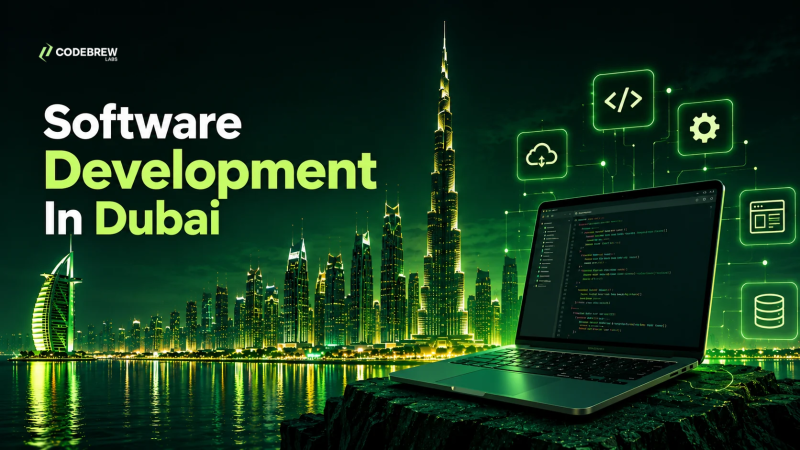
How AI Is Reshaping the Future of Software Development in Dubai?
 samiksha
Artificial intelligence is changing how businesses plan, build, and use software. From automating routine tasks to improving business decisions, AI is becoming an important part of modern digital solutions. In Dubai, where companies across industries are investing in technology, this shift is creating new opportunities for innovation and business growth.
Businesses are no longer looking at software only as a tool for managing daily operations. They want systems that can analyse information, respond to customer needs, automate workflows, and support faster decisions. This growing demand is influencing the direction of Software Development Dubai, encouraging technology companies to explore AI-powered applications and intelligent business platforms.
As Dubai continues to strengthen its position as a technology and business hub, AI is expected to play a bigger role in software development. Let's explore how this technology is changing the industry and what businesses can expect in the coming years.
1. AI Is Making Software Development More Efficient
Traditional software development includes planning, coding, testing, and maintenance, all of which require time, technical knowledge, and team coordination.
AI-powered tools are streamlining tasks by helping developers generate code suggestions, identify errors, explain functions, and create test cases. While these tools enhance efficiency, they do not replace the need for skilled developers.
For businesses in Dubai, this can lead to shorter development cycles and easier software updates as requirements change.
2. Custom Software Is Becoming More Intelligent
Businesses have different operational requirements, and standard software may not always support their workflows. This is one reason many organisations invest in custom software development.
AI is adding another layer to these solutions by allowing software to analyse data, identify patterns, and provide useful recommendations.
For example, a retail business can use AI-powered software to study purchasing patterns and forecast product demand. A logistics company can analyse delivery information to improve route planning, while a financial organisation can use automated systems to identify unusual transaction activity.
These capabilities help businesses build software around their actual requirements rather than relying only on fixed features.
3. AI-Powered Automation Is Reducing Manual Work
Many business processes involve repetitive activities such as data entry, invoice processing, appointment scheduling, and customer enquiry management. Handling these tasks manually can take up valuable employee time.
AI-powered automation allows businesses to manage selected activities with less manual involvement.
For example:
- Healthcare: Automating appointment reminders and administrative workflows.
- Retail: Managing customer enquiries and providing product recommendations.
- Real Estate: Organising property enquiries and assisting with lead management.
- Logistics: Supporting shipment tracking and delivery updates.
- Finance: Assisting with document processing and transaction monitoring.
As more organisations adopt automation, software development companies in Dubai are likely to see growing demand for solutions that connect AI with existing business systems.
4. Better Customer Support Through AI Chatbots
Customer support is another area where AI is changing software development. Businesses increasingly use AI-powered chatbots to answer common questions, provide information, and guide customers through basic processes.
Unlike traditional rule-based chatbots, modern AI assistants can understand natural language and respond to a wider range of questions. Depending on their configuration and access to business information, they can also help customers find products, check service details, or navigate support processes.
For example, an online store can use an AI assistant to answer questions about product availability, delivery policies, and order updates.
Dubai businesses operating in competitive markets can use these tools to manage customer enquiries more efficiently while allowing support teams to focus on complex requests.
5. AI Is Improving Software Testing and Quality Checks
Testing is an essential part of software development. Before an application is released, developers need to check its functionality, performance, security, and compatibility.
AI-powered testing tools can help identify potential defects, analyse test results, and highlight areas that may require additional attention. Some tools can also assist with generating test cases and prioritising testing activities based on identified risks.
This can be useful for businesses developing applications with multiple features and frequent updates.
However, human review remains important. Developers and quality assurance teams must validate results, investigate errors, and ensure that software performs according to the required specifications.
6. Cloud Computing and AI Are Working Together
Cloud computing has made it easier for businesses to access computing resources without maintaining all their infrastructure locally. When combined with AI, cloud platforms can support applications that process large amounts of information and provide intelligent features.
Businesses can use cloud-based AI services for data analysis, document processing, customer support, and predictive reporting.
For growing companies in Dubai, this combination can offer flexibility as software requirements increase. Organisations can expand their systems based on demand rather than investing in all infrastructure at the beginning.
Security, data storage, access controls, and regulatory requirements should still be considered when selecting cloud-based AI services.
AI Is Creating New Opportunities Across Industries
AI adoption is not limited to one business sector. Companies across Dubai are exploring ways to apply intelligent software to their specific operations.
Some examples include:
- Healthcare: Supporting medical administration, patient communication, and clinical data management.
- Banking and Fintech: Improving fraud monitoring, transaction analysis, and customer services.
- Real Estate: Automating property enquiries, analysing market information, and organising leads.
- Education: Supporting personalised learning tools and administrative management.
- Ecommerce: Improving product discovery, inventory planning, and shopping recommendations.
- Travel and Hospitality: Automating bookings, handling customer questions, and personalising service suggestions.
The opportunities will depend on the quality of available data, the business problem being addressed, and how well AI features are integrated into existing systems.
Data Security Is Becoming More Important
As businesses introduce AI into their software, they also need to pay closer attention to data security and privacy.
AI applications may process customer details, financial records, employee information, and other business data. Without suitable security controls, this information can be exposed to unnecessary risks.
Companies should consider encryption, user permissions, secure authentication, data retention policies, and regular security assessments when developing AI-powered software.
Businesses operating in the UAE should also review applicable data protection requirements and industry-specific regulations before deploying AI solutions.
A well-planned development process should include security considerations from the beginning rather than treating them as a final step.
9. Low-Code and AI Tools Are Changing Development Workflows
Low-code platforms allow teams to build certain applications using visual development tools and prebuilt components. When combined with AI, these platforms can help create prototypes, automate workflows, and develop internal business applications.
This can be useful for organisations that need simple digital tools without building every feature from scratch.
However, low-code development is not suitable for every project. Complex applications involving advanced integrations, specialised business logic, performance requirements, or strict security needs may require traditional software engineering.
Businesses should choose development methods based on their project scope rather than assuming one approach will work for everything.
AI-Ready Software Will Shape Business Technology in 2027
The next stage of software development will involve more than adding a chatbot or an automated feature to an existing application. Businesses will increasingly look at how AI can become part of their complete digital systems.
This may include applications that analyse business information, recommend actions, automate selected workflows, and adapt to changing operational requirements.
For example, an enterprise platform could combine customer management, reporting, and AI-assisted analysis in one system. Similarly, a retail application could connect inventory information with demand forecasting and personalised product suggestions.
Companies planning new software projects should consider whether their systems can support future AI integrations without requiring major redevelopment.
How to Choose the Right AI Software Development Partner in Dubai
Selecting a suitable development company is important when planning an AI-powered software project. Businesses should look beyond general AI claims and understand how a development team approaches real project requirements.
Here are a few points to consider:
- AI and software expertise: Check whether the team understands both software engineering and AI integration.
- Relevant project experience: Review previous work involving automation, data processing, AI applications, or intelligent platforms.
- Data security: Understand how the company protects information and manages access to business systems.
- Integration capabilities: Make sure the proposed solution can connect with existing applications and databases.
- Long-term support: Discuss testing, maintenance, performance monitoring, and future improvements.
A development partner should be able to explain which AI features are practical for the project and how their performance will be evaluated.
Conclusion
Artificial intelligence is influencing how businesses develop and use software in Dubai. From automating routine work and improving customer support to analysing business data and building intelligent applications, AI is creating new possibilities across industries.
However, successful AI adoption requires more than choosing the latest technology. Businesses need clear objectives, reliable data, suitable infrastructure, strong security practices, and a development team that understands their requirements.
Code Brew Labs is a Dubai-headquartered technology company established in 2013, with over 13 years of industry experience and a team of 250+ developers, designers, and technology experts. Its services include AI solutions, custom software development, mobile applications, cloud development, and automation for businesses across different industries.
As companies continue exploring AI-driven solutions, investing in software that addresses real business needs can help them prepare for changing market expectations and future technology opportunities.
Source:
Click for the: Full Story
You might like







You Might Like this