



 Close Menu
 World
World
 Biography
 Health
 Education
 Business
 Lifestyle
 Sports
 Technology
 Animals
 History
 Food
Food
 Religious
 Startups
 Movies
 Politics
 Fashion
 Covid
Covid
 Diet
Diet
 Fitness
 Marketing
 Travel
 Science
 Reviews
 Social media
 Stories
 Facts
Facts
 Art
Art
 Entertainment
Codezeros

Technology
How Governance Models Influence Decentralized Exchange Development Solutions
 Codezeros
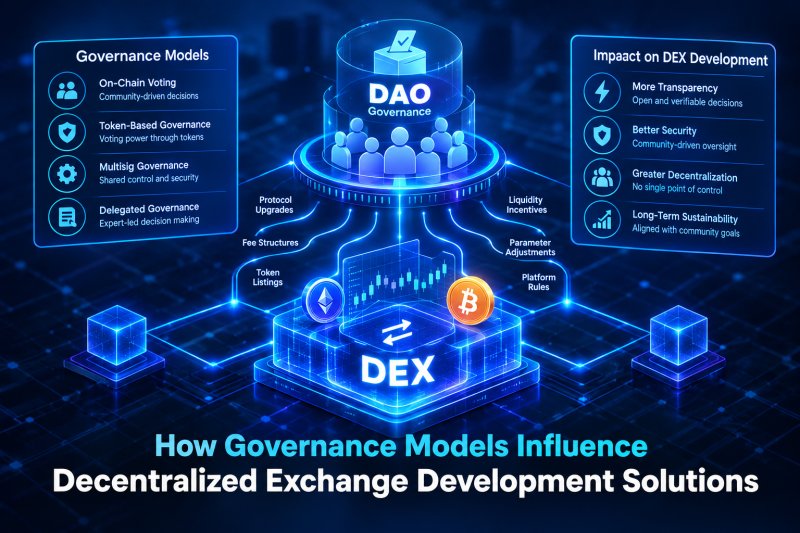
Governance models influence how decentralized exchanges make decisions, manage protocol upgrades, allocate resources, and respond to security risks. A well-designed governance structure defines who can propose changes, how voting works, and which safeguards apply before decisions affect users and liquidity providers.
For businesses planning decentralized finance infrastructure in 2026, governance is both a technical and operational consideration. Token-based voting, delegated governance, multisignature controls, and automated execution mechanisms can affect a platform's security, accountability, and long-term sustainability. Selecting an appropriate model early helps align protocol decisions with business objectives and user expectations.
What Is Governance in Decentralized Exchange Development?
Governance is the framework through which a decentralized exchange makes and implements decisions about its protocol. Depending on the design, decisions may involve trading fees, liquidity incentives, treasury spending, supported assets, smart contract upgrades, and risk parameters.
Some DEX platforms use decentralized autonomous organization (DAO) structures, allowing eligible token holders to submit proposals and vote. Others combine community voting with a development team or security council responsible for specific operational decisions.
Effective governance balances community participation with clear accountability. Decentralization alone does not guarantee fair decision-making, particularly when voting power is concentrated among a small number of participants.
Common Governance Models for DEX Platforms
1. Token-Based Governance
Token-based governance allows eligible holders to vote on protocol proposals according to defined voting rules. It can give users and stakeholders a formal role in shaping the exchange's direction.
However, large token holders may accumulate disproportionate influence, while smaller participants may not actively vote. Developers should consider quorum requirements, voting periods, delegation options, and protections against vote manipulation.
Best suited for: Protocols seeking broad stakeholder participation in economic and strategic decisions.
2. Delegated Governance
Delegated governance allows token holders to assign their voting power to representatives who evaluate proposals and vote on their behalf. This can make governance more practical when decisions require technical or financial expertise.
Its effectiveness depends on representative accountability, transparent voting records, and clear procedures for changing delegates.
Best suited for: DEX platforms with active communities and frequent technical or economic proposals.
3. Multisignature and Council-Based Governance
A multisignature arrangement requires approval from multiple authorized signers before specified actions can proceed. A security council may also be given limited authority to respond to emergencies or approve sensitive changes.
These mechanisms can support faster incident response, but excessive centralized control may weaken decentralization. Permissions should therefore be restricted, documented, and subject to oversight.
Best suited for: Protocols requiring defined emergency procedures or carefully controlled administrative actions.
4. Hybrid Governance
Hybrid governance combines community participation with specialized review or restricted operational authority. For example, token holders may approve strategic changes while a security council manages narrowly defined emergency actions.
This model can balance participation, expertise, and responsiveness. Its success depends on clear boundaries between community authority and privileged permissions.
How Governance Influences DEX Architecture
Smart Contract Upgrades and Protocol Security
Governance rules often determine whether smart contracts can be upgraded, who can authorize upgrades, and how long changes must wait before execution. Timelocks can provide a review period between proposal approval and implementation, giving users an opportunity to evaluate significant changes.
A decentralized exchange development solution should document administrative permissions, upgrade procedures, emergency controls, and the risks of irreversible contracts. Independent audits and proposal simulations should be part of the process before major changes go live.
Trading Fees and Liquidity Incentives
Governance can influence trading fees, liquidity mining rewards, treasury allocation, and other economic parameters. Poorly designed proposals may create incentives that attract short-term capital without supporting sustainable liquidity.
Before voting on economic changes, teams should model potential effects on trading volume, liquidity depth, protocol revenue, and liquidity provider returns. Clear reporting can help stakeholders understand the trade-offs.
Asset Listings and Risk Parameters
Some protocols use governance to approve new assets, adjust collateral requirements, or modify risk limits. These decisions may affect price exposure, liquidity, and users' ability to exit positions during market stress.
A sound process should define listing criteria, require relevant risk assessments, and make the rationale for important decisions publicly available.
Governance Trends Shaping DEX Development in 2026
AI-Assisted Proposal Analysis
AI tools can summarize governance proposals, compare historical votes, identify unusual voting patterns, and help stakeholders understand technical documents. These tools can reduce the effort required to evaluate complex changes, but their outputs need human review and reliable source data.
Automation and Agentic AI
Automation can support proposal tracking, quorum monitoring, reporting, and execution of approved actions through predefined smart contract rules. Agentic AI may coordinate research and recommend governance actions, but it should not receive unrestricted authority over treasury funds or critical protocol settings.
High-impact actions need verifiable authorization, auditable records, and clearly defined permission boundaries.
Greater Enterprise Participation
Enterprise users may require stronger reporting, documented approval processes, access controls, and predictable upgrade procedures. These needs can influence how a decentralized exchange development service structures governance without removing meaningful community participation.
Projects should also consider applicable legal and regulatory obligations, which vary by jurisdiction and business model.
Conclusion
Governance affects the security, economics, and long-term direction of a decentralized exchange. By defining voting rights, upgrade procedures, emergency powers, and accountability mechanisms early, businesses can build protocols that are easier to manage and evaluate. In 2026, AI-assisted analysis and automated workflows can support better-informed decisions when paired with human oversight and verifiable controls.
For organizations planning a governance-ready DEX, contact us today to discuss architecture and implementation requirements with Codezeros.
FAQ’s
1. Why is governance important in decentralized exchange development?
Governance determines how protocol changes, fees, liquidity incentives, and security decisions are approved. Clear rules can improve accountability and reduce uncertainty for users and stakeholders.
2. Which governance model is best for a DEX?
There is no universally best model. Token-based, delegated, council-based, and hybrid governance each offer different trade-offs involving participation, speed, expertise, and control.
3. Can AI manage DEX governance automatically?
AI can support proposal analysis, reporting, and monitoring. However, unrestricted autonomous control over treasury funds, upgrades, or critical protocol settings introduces significant risks. Permissions and execution rules should remain transparent and auditable.
4. How can a DEX reduce governance attacks?
Projects can consider voting-power safeguards, transparent proposal requirements, quorum rules, timelocks, multisignature controls, and independent reviews. The appropriate combination depends on the protocol's threat model.
Source:
Click for the: Full Story
You might like







You Might Like this