



 Close Menu
 World
World
 Biography
 Health
 Education
 Business
 Lifestyle
 Sports
 Technology
 Animals
 History
 Food
Food
 Religious
 Startups
 Movies
 Politics
 Fashion
 Covid
Covid
 Diet
Diet
 Fitness
 Marketing
 Travel
 Science
 Reviews
 Social media
 Stories
 Facts
Facts
 Art
Art
 Entertainment
Abhishek Tiwari

Technology
The Role of HR Automation in Building a More Efficient Workplace
 Abhishek Tiwari
Managing human resources efficiently is essential for businesses looking to improve productivity, reduce operational costs, and create a positive work environment. However, traditional HR processes often involve repetitive administrative tasks, manual recordkeeping, and lengthy approval procedures. These activities can consume valuable time and prevent HR professionals from focusing on strategic workforce initiatives.
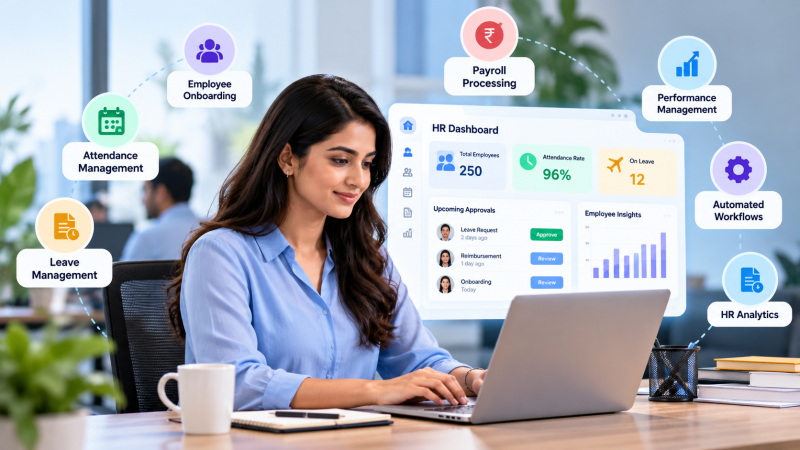
HR automation is changing the way organizations manage their employees and daily operations. By adopting digital tools and an employee management system, businesses can streamline routine tasks, centralize workforce information, and improve the accuracy of essential HR processes. From attendance tracking and payroll processing to employee onboarding and performance management, automation helps organizations build a more organized, responsive, and efficient workplace.
As businesses continue to embrace digital transformation, understanding the role of HR automation has become increasingly important for long-term operational success.
What Is HR Automation?
HR automation refers to the use of technology to manage repetitive and time-consuming human resource activities with minimal manual intervention.
Instead of relying on spreadsheets, physical documents, and email-based approvals, organizations can use digital solutions to automate processes such as employee record management, leave approvals, payroll calculations, and HR reporting.
For example, when an employee submits a leave request through an online portal, an automated workflow can forward it to the reporting manager, notify the relevant stakeholders, and update the employee's leave balance after approval.
This eliminates unnecessary manual steps and improves process consistency.
HR automation does not replace the need for human resource professionals. Rather, it reduces the administrative burden on HR teams and allows them to focus on responsibilities that require human judgment, communication, and strategic planning.
Why HR Automation Matters in Modern Workplaces
As businesses expand, the complexity of managing employees also increases. HR teams must handle growing volumes of employee information, organizational policies, compliance requirements, and workforce-related requests.
Managing these responsibilities manually can lead to delays, inconsistencies, and operational inefficiencies.
HR automation addresses these challenges by establishing standardized digital processes that can be managed more efficiently.
Automated systems can help organizations maintain accurate employee records, improve communication between departments, and provide faster access to essential HR services.
Furthermore, digital workflows make it easier for businesses to monitor pending tasks, track approvals, and identify administrative bottlenecks.
By reducing repetitive work, HR teams can dedicate more attention to improving employee engagement, developing talent, and supporting organizational growth.
1. Reducing Repetitive Administrative Tasks
One of the most significant advantages of HR automation is its ability to reduce repetitive administrative activities.
HR professionals frequently handle tasks such as updating employee records, reviewing attendance information, processing leave applications, generating documents, and preparing routine reports.
When performed manually, these activities can consume a considerable amount of time.
Automation simplifies these responsibilities by allowing predefined workflows to handle routine actions.
For instance, automated notifications can remind managers about pending approvals, while digital document management systems can organize employee records without extensive paperwork.
This reduction in manual effort allows HR professionals to focus on initiatives that contribute directly to employee satisfaction and business performance.
It also helps organizations maintain consistent processes as their workforce grows.
2. Improving Employee Onboarding
Employee onboarding is an important stage in the employee lifecycle because it influences how new hires perceive an organization.
Traditional onboarding processes often involve multiple forms, document submissions, email exchanges, and coordination between departments.
These activities can become difficult to manage when organizations recruit employees frequently or operate across multiple locations.
HR automation makes onboarding more structured by digitizing document collection, employee information entry, and approval workflows.
New employees can complete required formalities through online platforms and access relevant company information before or during their joining process.
Automated onboarding checklists can also help HR teams track completed and pending activities.
A streamlined onboarding experience reduces administrative confusion and helps new employees settle into their responsibilities more comfortably.
3. Simplifying Attendance and Leave Management
Attendance and leave management are essential HR functions that require regular monitoring and accurate recordkeeping.
Manual attendance tracking can lead to data inconsistencies, while email-based leave applications may result in approval delays and communication gaps.
Automated attendance systems help organizations record working hours, manage shift schedules, and maintain updated attendance information.
Similarly, digital leave management solutions allow employees to submit applications, check balances, and track approval statuses.
Managers can review requests through centralized dashboards, while HR teams gain better visibility into attendance trends and leave utilization.
By simplifying these processes, businesses can improve operational accuracy and reduce the time spent resolving routine attendance-related queries.
4. Making Payroll Processing More Accurate
Payroll processing involves several interconnected activities, including attendance verification, salary calculations, deductions, reimbursements, and statutory compliance.
When these activities depend heavily on manual calculations, errors may occur.
Payroll automation reduces repetitive data entry and supports more consistent salary processing.
Integrated HR and payroll systems can use approved attendance, leave, and salary information to calculate employee earnings and applicable deductions according to configured rules.
For Indian businesses, payroll processes may include statutory requirements related to Provident Fund, Employee State Insurance, Professional Tax, and Tax Deducted at Source, depending on applicability.
Automation can support these calculations and reporting activities, but HR and payroll teams must continue reviewing outputs and ensuring that the relevant legal requirements are met.
Accurate and timely salary processing strengthens employee confidence and helps organizations maintain efficient payroll operations.
5. Empowering Employees Through Self-Service
Employees often contact HR departments for routine information such as leave balances, payslips, attendance records, and personal details.
While these requests are important, handling them individually can place an unnecessary burden on HR teams.
Employee self-service technology allows employees to access relevant information and complete selected HR activities independently.
Through employee portals or mobile applications, employees can apply for leave, download payslips, review attendance, and update permitted personal information.
This reduces dependency on HR professionals for basic administrative support.
Self-service platforms also improve transparency by allowing employees to monitor the status of their requests.
By making HR services more accessible, organizations can create a more convenient and employee-friendly workplace.
6. Improving HR Communication and Approval Workflows
Efficient communication is essential for maintaining smooth workplace operations.
Traditional approval processes often involve lengthy email conversations, manual follow-ups, and difficulties identifying the current status of requests.
HR automation helps simplify communication through structured workflows and automated notifications.
For example, employee requests can be routed to designated managers based on organizational policies and reporting hierarchies.
Managers can receive notifications about pending tasks, while employees can track approvals without repeatedly contacting HR.
Automated reminders and escalation rules can also help reduce unnecessary delays.
These capabilities are particularly valuable for organizations with multiple departments, office locations, or complex reporting structures.
When communication and approvals become more organized, workplace operations can function more efficiently.
7. Supporting Better Performance Management
Employee performance management requires consistent communication, goal tracking, feedback, and evaluation.
Manual performance review processes may involve spreadsheets, disconnected documents, and irregular follow-ups.
Digital performance management tools help organizations establish structured evaluation processes and maintain centralized records of employee goals and achievements.
Managers can track performance objectives, provide feedback, and monitor review timelines through a single platform.
Automated reminders can help ensure that performance evaluations are completed according to defined schedules.
Employees also benefit from improved visibility into their goals, progress, and development opportunities.
Although technology can simplify administrative aspects of performance management, meaningful feedback and fair evaluations still require human involvement.
A balanced approach helps organizations create a more transparent and constructive performance management experience.
8. Enabling Data-Driven HR Decisions
Modern HR departments are increasingly expected to contribute to business planning and workforce strategy.
However, when employee information is maintained across multiple spreadsheets and disconnected systems, preparing accurate reports can become time-consuming.
HR automation helps organizations collect and organize workforce information more consistently.
Digital dashboards and reporting tools can provide insights into attendance patterns, employee turnover, workforce distribution, leave utilization, and other operational indicators.
These insights can support decisions related to workforce planning, resource allocation, and employee engagement initiatives.
For example, analyzing absenteeism patterns may help HR teams identify departments where additional investigation or support is required.
Organizations should use workforce information responsibly, maintain appropriate access controls, and avoid making significant employee-related decisions solely on automated recommendations.
When combined with professional judgment, data-driven insights can help HR teams make more informed decisions.
9. Strengthening Consistency and Compliance
Businesses must maintain accurate employee records and follow relevant workplace regulations and organizational policies.
Manual processes can make it difficult to ensure consistent application of rules, particularly when companies operate across multiple locations.
HR automation helps standardize processes by applying configured policies and maintaining digital records of important activities.
For example, systems can track approval histories, preserve relevant employee documents, and provide reminders for recurring administrative obligations.
This can make internal reviews and audits more manageable.
However, automated systems do not independently guarantee regulatory compliance.
Organizations must regularly review system configurations, update processes when legal requirements change, and ensure that employee information is handled securely.
When implemented correctly, automation can provide a more reliable foundation for consistent HR operations.
10. Supporting Business Growth and Scalability
As an organization grows, its workforce management requirements become more complex.
Businesses may need to manage additional employees, departments, locations, shifts, and reporting structures.
Processes that are manageable for a small team may become inefficient as employee numbers increase.
HR automation provides a structured approach to handling growing operational requirements without proportionally increasing administrative effort.
Cloud-based HR solutions can also help organizations provide consistent employee services across different locations.
Centralized records, configurable workflows, and integrated HR processes make it easier to maintain operational visibility as the workforce expands.
By establishing scalable HR processes, businesses can support growth while minimizing unnecessary administrative complexity.
Challenges of Implementing HR Automation
Although HR automation offers several advantages, businesses may encounter challenges during implementation.
One common difficulty is employee resistance to changing familiar processes. HR professionals and employees may require time and training to become comfortable with new technology.
Data migration can also present challenges, particularly when existing employee records are incomplete, duplicated, or inconsistent.
Organizations must additionally consider data security, system integration, and the suitability of software for their specific operational requirements.
To address these concerns, businesses should begin by evaluating existing HR processes and identifying areas where automation can deliver meaningful improvements.
A phased implementation approach can reduce disruption and provide opportunities to address challenges before expanding automation across additional functions.
Providing proper training, communicating expected benefits, and gathering employee feedback can further improve adoption.
Best Practices for Successful HR Automation
Successful HR automation requires a clear understanding of business needs and employee expectations.
Organizations should prioritize processes that involve repetitive work, frequent errors, or unnecessary approval delays.
Selecting a user-friendly solution is equally important because complex software interfaces can discourage adoption.
Businesses should also ensure that automated workflows align with their existing HR policies and organizational structures.
Regular system reviews can help identify configuration issues, outdated processes, and opportunities for improvement.
Training employees and managers to use digital HR tools effectively is essential for realizing the benefits of automation.
Finally, organizations should measure outcomes through indicators such as processing time, administrative workload, error rates, and employee satisfaction.
Continuous evaluation helps businesses refine their HR processes and maintain long-term efficiency.
The Future of HR Automation
HR automation is expected to evolve as artificial intelligence, cloud technology, and advanced analytics become more integrated into workplace systems.
AI-powered tools can assist with employee queries, document processing, workforce analysis, and other administrative activities.
Intelligent workflows may also help organizations identify unusual patterns, recommend actions, and highlight processes that require attention.
At the same time, employee expectations for convenient, mobile-friendly, and personalized HR services are likely to continue influencing technology adoption.
Despite these advancements, human involvement will remain essential in activities such as employee relations, conflict resolution, performance discussions, and sensitive decision-making.
The most effective HR strategies will combine the efficiency of technology with the understanding and judgment of experienced HR professionals.
Conclusion
HR automation plays an important role in building a more efficient, organized, and employee-friendly workplace. By reducing repetitive tasks, simplifying payroll and attendance management, and improving access to employee services, automation helps businesses manage daily HR responsibilities more effectively.
It also enables HR professionals to dedicate more time to strategic activities such as employee development, workforce planning, and engagement.
However, achieving meaningful results requires more than implementing digital tools. Organizations must select suitable technology, establish effective workflows, provide adequate training, and continuously evaluate their processes.
Businesses that adopt HR automation thoughtfully can create a stronger operational foundation, improve employee experiences, and prepare their workforce management practices for future growth.
Source:
Click for the: Full Story
You might like








You Might Like this