


 Close Menu
 World
 Biography
 Health
 Education
 Business
 Lifestyle
 Sports
 Technology
 Animals
 History
 Food
 Religious
 Startups
 Movies
 Politics
 Fashion
 Covid
 Diet
 Fitness
 Marketing
 Travel
 Science
 Reviews
 Social media
 Stories
 Facts
 Art
 Entertainment
IT TEAM

Education
How Technology is Changing Distance Education
 IT TEAM
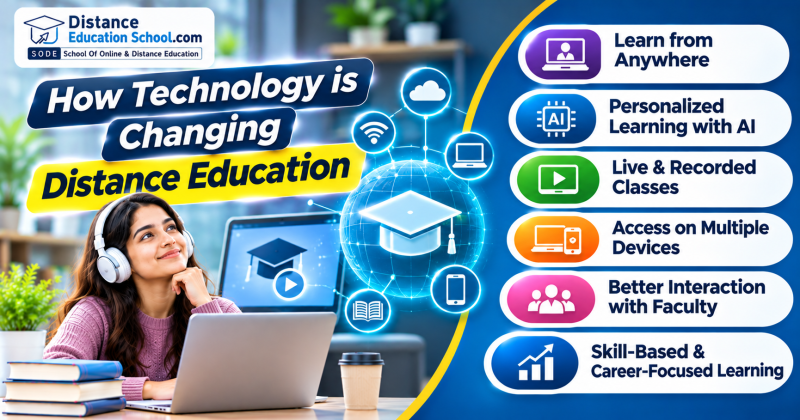
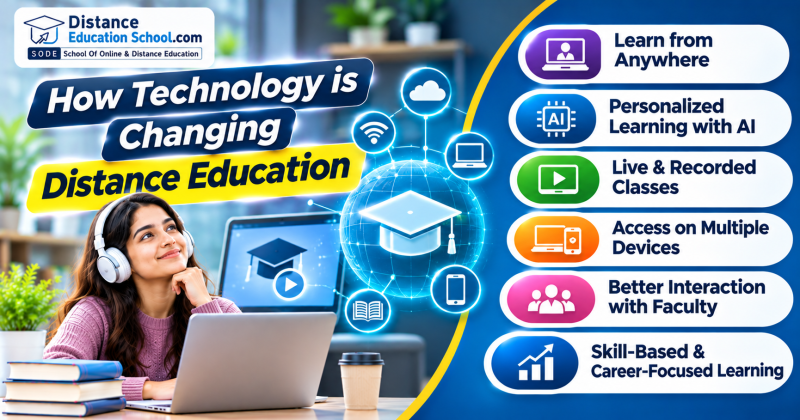
Distance education has evolved significantly with the Internet, communication devices, and information and communication technologies (ICT). Today, students can access educational materials, attend classes, interact with instructors, and complete assessments online from almost anywhere. Technology in education offers flexible, more personalized ways for students to learn. Learning management systems and other educational applications, as well as artificial intelligence, have contributed to the transformation of e-learning.
One of the most significant impacts of technology on education has been the creation of various ways to learn and teach at a distance. The use of the Internet and mobile communication technologies has led to innovations in distance education.
Let’s explore how technology is changing distance education and shaping the future of online learning.
1. Making Education More Accessible and Flexible
One of the biggest impacts of technology in distance education has been to make education more accessible and flexible. The days are gone when students had to move to a different city or country to pursue education. A recognized Distance Education School can help students access structured academic programs and learning resources without the limitations of traditional classroom-based education. With internet access, you can now study from anywhere, including the comfort of your home. Online learning management systems have large datasets and resources, including lectures, ebooks, study materials, assignments, and videos.
2. Virtual Classrooms Are Transforming Online Learning
Virtual classrooms have become an important part of modern distance learning. Video conferencing tools, interactive whiteboards, screen-sharing applications, and live chat features help recreate many aspects of traditional classroom experiences.
Students can now do many things online, such as attend virtual lectures, ask questions, participate in group discussions, and even interact with their teachers in real time. These technologies encourage collaboration through virtual group projects and online presentations.
3. Learning Management Systems Simplify Education
Learning Management Systems (LMS) make educational processes easier and more efficient. Educational institutions can use LMS to design, organize, control, and monitor the entire educational process, from distributing educational materials to tracking student performance and assessments.
Modern learning management systems offer several useful features, including:
- Create and manage educational content.
- Create, administer, and evaluate online assessments.
- Track student performance.
- Assignment submission and grading.
- Manage discussion forums.
- Progress reports and learning analytics.
Because of these features, educational technology can make learning easier and more productive for both students and teachers. Learning Management Systems can also be hosted in the cloud, enabling users to access educational content on any Internet-connected device.
4. Artificial Intelligence Is Personalizing the Learning Experience
Artificial Intelligence (AI) in education creates new opportunities to personalize learning. The major benefit of using AI in education is its ability to analyze student performance and suggest academic content based on learning gaps. Intelligent tutoring systems provide instant feedback and recommend next steps based on the learner’s performance. AI-powered systems can also answer students’ academic questions and help them use course materials. Although the benefits of using artificial intelligence in the classroom to support teachers are many, teachers should use this technology to enhance learning, not replace themselves.
5. Digital Resources Make Learning More Interactive
Interactive online learning resources enable the individualization of distance education. Students can now access educational videos, podcasts, digital libraries, interactive simulations, and online practice exercises. These resources support different learning preferences and make complex subjects easier to understand. Digital resources simplify challenging concepts through recorded demonstrations that can be replayed at any time.
6. Major Benefits of Technology in Education
- Great Flexibility: Students can learn according to their schedules and personal commitments.
- Global Reach: Distance education is available beyond geographical boundaries.
- Financial Savings: Digital resources reduce certain expenses related to printed materials.
- Personalized Learning: AI-powered tools can recommend resources according to individual learning needs.
- Revision: Students can review learning materials at any time, at their convenience, using recorded lessons.
These benefits of educational technology have been vital to integrating digital learning into the education system. With the growing availability of digital learning platforms, students can now pursue Online Degree Courses that offer greater flexibility and allow them to balance higher education with professional and personal commitments.
7. The Future of Distance Education
The future of distance education will revolve around advances in artificial intelligence, virtual reality, augmented reality, and advanced learning analytics. Distance education allows students to engage in remote virtual practical training through virtual reality, while improved mobile technology will make digital learning accessible to more people.
However, successful digital transformation in education will require more than adopting advanced tools. Educational institutions must ensure that technology supports meaningful learning outcomes, qualified teaching, and equal opportunities.
Final Thoughts
The use of technology in distance education gives learners the opportunity to study in ways that best suit their needs and preferences. Learning management systems, virtual classrooms, digital learning resources, and educational artificial intelligence can help overcome traditional educational barriers. Many challenges associated with the use of technology in distance education still exist, such as unequal distribution of the internet, digital distractions, and threats to learners’ privacy. However, the increased opportunities for teaching and learning presented by technology outweigh these challenges. The ultimate aim of technology in education should be to help teachers and educators provide better, inclusive, active, and meaningful teaching and learning practices for all learners.
Source:
Click for the: Full Story
You might like






You Might Like this