Close Menu
 World
 Biography
 Health
 Education
 Business
 Lifestyle
 Sports
 Technology
 Animals
 History
 Food
 Religious
 Startups
 Movies
 Politics
 Fashion
 Covid
 Diet
 Fitness
 Marketing
 Travel
 Science
 Reviews
 Social media
 Stories
 Facts
 Art
 Entertainment
Hemant Code brew

Business
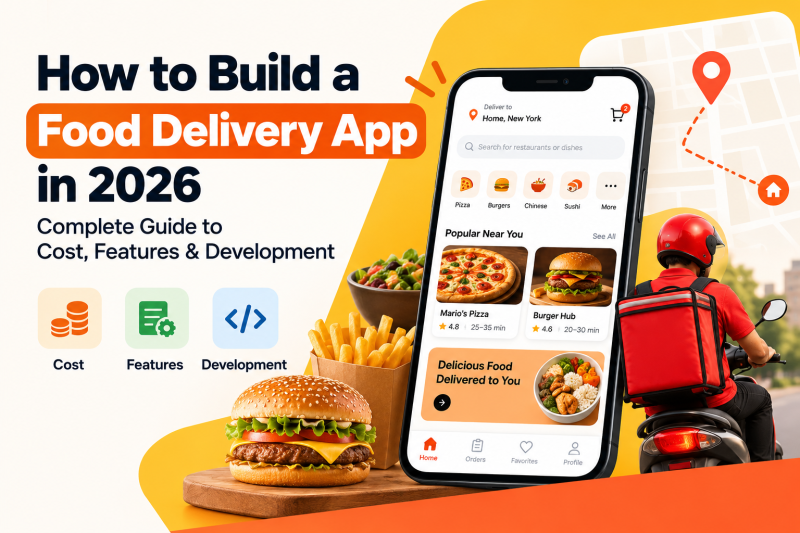
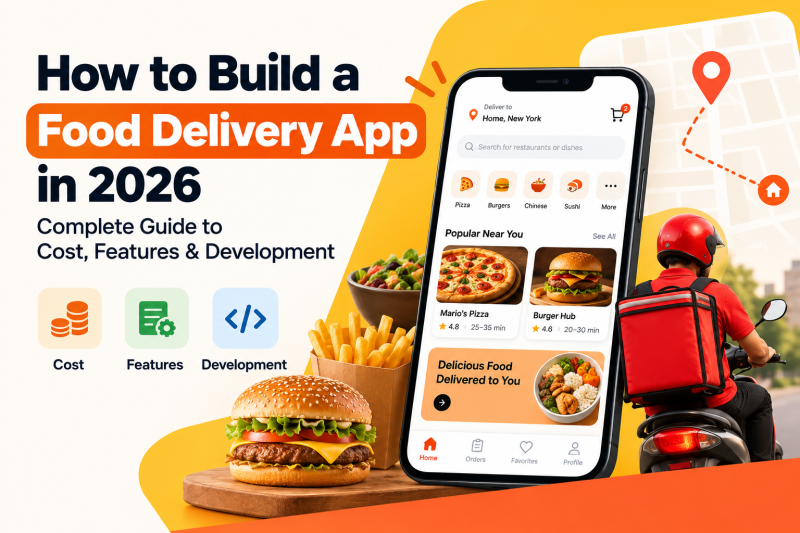
How to Build a Food Delivery App in 2026: Complete Guide to Cost, Features & Development
 Hemant Code brew
Ordering food online has become part of everyday life. Whether it's a quick lunch at work, dinner after a busy day, or a late-night craving, people expect their favorite meals to arrive with just a few taps on their phones.
For restaurants and entrepreneurs, this growing dependence on digital ordering creates an interesting business opportunity. But launching a successful Food Delivery App takes more than putting restaurant menus on a screen.
Behind every smooth delivery is a system managing orders, payments, restaurant operations, delivery partners, and customer communication.
If you're planning to enter this industry, understanding the development process, investment requirements, and essential features can help you avoid expensive mistakes.
This guide explains how to build a food delivery app in 2026, what it might cost, and how to create a platform customers will actually want to use.
Why Invest in Food Delivery App Development in 2026?
The food delivery industry has become increasingly competitive, but that doesn't mean new businesses have no room to grow.
Large platforms serve millions of customers, while smaller businesses can focus on specific cities, neighborhoods, cuisines, or customer groups.
For example, a regional delivery service could specialize in connecting local restaurants with nearby customers. A cloud kitchen might develop its own ordering app to reduce its reliance on third-party marketplaces.
Restaurants also have a strong reason to invest in their own digital platforms. Direct ordering helps businesses manage customer relationships, introduce loyalty programs, and create personalized offers.
However, success depends on more than attractive app design. Customers want straightforward ordering, transparent pricing, dependable delivery times, and responsive support.
A business that delivers these basics consistently can build a strong foundation for long-term growth.
What Can We Learn From the Best Food Delivery Apps?
Before investing in development, it's worth studying the best food delivery apps and understanding what makes them convenient.
Popular platforms such as Uber Eats, DoorDash, Zomato, and Swiggy have helped establish expectations around online food ordering.
While their interfaces and services differ, several important features are common across leading delivery platforms.
Easy restaurant discovery: Customers should be able to explore nearby restaurants, compare menus, and find food without unnecessary steps.
Simple ordering: Adding items, customizing meals, and completing payments should feel effortless.
Order tracking: Customers appreciate knowing whether their food is being prepared, picked up, or delivered.
Reliable payment options: Multiple payment methods make checkout more convenient.
Ratings and reviews: Customer feedback helps people make informed ordering decisions.
Offers and loyalty programs: Relevant discounts and rewards can encourage repeat purchases.
The lesson for new businesses is simple: you don't need to copy every feature from established platforms.
Instead, focus on the experience your particular customers need most.
Essential Features to Include in a Food Delivery App
When developing a food delivery platform, remember that customers aren't the only people using your software.
Restaurants, delivery partners, and administrators all need tools to manage their responsibilities.
1. Customer Application
The customer-facing app should make food ordering quick and convenient.
Important features include:
- User registration and profile management
- Restaurant listings and menu browsing
- Search and food filters
- Shopping cart and secure checkout
- Multiple payment options
- Real-time order status and tracking
- Order history, ratings, and reviews
A well-designed customer app reduces confusion and makes the ordering process more enjoyable.
2. Restaurant Dashboard
Restaurants need an easy way to handle incoming orders without disrupting kitchen operations.
A restaurant dashboard should allow owners and staff to update menus, change item availability, accept orders, manage preparation times, and review sales.
Clear order notifications and simple controls can make a significant difference during busy periods.
3. Delivery Partner Application
Delivery personnel need access to essential information without navigating complicated screens.
Useful features include order acceptance, pickup details, navigation, delivery status updates, and earnings summaries.
The goal should be to help drivers complete deliveries efficiently while keeping their interface easy to use.
4. Admin Management Panel
The administrative panel brings the entire operation together.
Platform owners should be able to manage restaurant accounts, oversee orders, handle customer complaints, configure commissions, and review business performance.
These capabilities become increasingly important as the business expands.
How to Create Food Delivery App: Step-by-Step Development Process
If you want to Create Food Delivery App solutions that can compete in today's market, start by building a clear development plan.
Step 1: Understand Your Target Audience
Before writing code, decide who your app is meant to serve.
Are you targeting office workers, college students, families, or customers in smaller cities?
Understanding your audience will help determine your pricing structure, delivery coverage, restaurant partnerships, and app features.
Step 2: Choose Your Business Model
Food delivery businesses generally operate through different models.
A restaurant-owned app allows customers to order directly from one restaurant or restaurant group.
A marketplace connects multiple restaurants with customers, while a delivery-focused service may provide logistics for businesses that already accept their own orders.
Each model requires a different level of investment and operational planning.
Step 3: Plan the User Experience
Keep the interface simple.
Customers shouldn't have to search through several screens just to place an order.
Focus on clear menu categories, readable prices, convenient checkout, and understandable delivery updates.
Step 4: Select the Technology
Your development team may use technologies such as Flutter or React Native for mobile applications, Node.js or Python for backend services, and cloud infrastructure for hosting.
Maps, payment gateways, notifications, and database services will also need to be integrated.
The final technology stack should depend on the features, budget, and scale of your project.
Step 5: Build and Test the MVP
Rather than launching a feature-heavy platform immediately, develop a Minimum Viable Product containing the essential ordering and delivery functions.
Test it with a limited group of restaurants and customers.
This allows you to identify payment issues, incorrect order statuses, confusing screens, and operational problems before expanding.
Step 6: Launch and Improve
Once the platform is stable, launch it in your chosen service area.
Monitor customer feedback, delivery performance, order completion rates, and repeat purchases.
Use this information to improve the app instead of adding features based only on assumptions.
How Much Does It Cost to Build Food Delivery App in 2026?
One of the most common questions entrepreneurs ask is how much they need to invest.
The cost to Build Food Delivery App platforms depends on their complexity, supported devices, development team, and number of integrations.
Here is an illustrative development budget for 2026.
App Development Type
Estimated Cost
Basic Single-Restaurant App
5,000–15,000
Food Ordering App with Essential Features
15,000–35,000
Multi-Restaurant Delivery Platform
35,000–80,000
Advanced Food Delivery Marketplace
80,000–150,000+
These figures are broad planning estimates, not fixed quotations. Complex production platforms can exceed these ranges significantly.
A single-restaurant application generally costs less than a marketplace that connects hundreds of restaurants and delivery partners.
Additional features such as intelligent dispatch, loyalty programs, advanced analytics, and third-party integrations can increase the development budget.
Entrepreneurs should also account for expenses beyond development, including cloud hosting, map services, payment processing fees, app maintenance, marketing, customer support, and delivery operations.
A realistic budget considers both the initial launch and the cost of running the service afterward.
How AI Can Improve Food Delivery Apps
Artificial intelligence is introducing useful improvements to food delivery platforms, particularly in areas involving customer preferences and operational efficiency.
For example, AI-powered recommendation systems can suggest restaurants or meals based on previous orders and customer interests.
Demand forecasting tools can help restaurants understand busy periods and prepare inventory more effectively.
Delivery platforms may also use intelligent route planning and estimated arrival-time models to improve logistics.
AI chatbots can assist with common customer questions, although complicated disputes and sensitive issues should still have access to human support.
Not every startup needs these capabilities from day one.
It's generally more practical to create a reliable ordering and delivery experience first, then introduce advanced features when there is a clear business need.
Common Challenges in Food Delivery App Development
Developing the app is only part of the challenge. Running a food delivery business involves coordinating several moving parts.
Restaurants need to prepare orders on time, delivery partners must reach the correct locations, and customers expect accurate updates.
Other challenges include managing delivery costs, keeping menus updated, preventing payment failures, and maintaining service quality during peak hours.
Customer retention is another important consideration.
Discounts might encourage someone to place their first order, but consistent service and a convenient experience are what help bring them back.
Businesses that understand these operational challenges early can make better decisions about technology, staffing, and expansion.
How to Make Your Food Delivery App Stand Out
Competing directly with established food delivery companies can be difficult, especially when they have large restaurant networks and substantial marketing budgets.
Instead of trying to offer everything immediately, consider building a more focused service.
You might specialize in healthy meals, corporate lunch deliveries, local restaurants, or a particular geographic area.
Building strong restaurant partnerships can also help you offer better menus, dependable preparation times, and a more consistent customer experience.
Most importantly, make ordering easy.
Customers may try a new app because of an attractive offer, but they return when the overall experience is dependable.
Final Thoughts
Building a successful Food Delivery App in 2026 requires a combination of thoughtful planning, reliable technology, and a clear understanding of customer expectations.
Whether you're a restaurant owner developing a direct ordering system or an entrepreneur launching a multi-restaurant marketplace, the best approach is to begin with a focused product.
Study the features offered by the best food delivery apps, identify the needs of your target audience, and invest in the functions that make ordering and delivery easier.
If you're ready to Create Food Delivery App solutions for your business, start with a realistic budget and a well-defined development strategy.
You don't have to launch with every advanced feature available. A simple, well-built platform that delivers a reliable experience can be a much stronger starting point.
The real opportunity isn't just to build another food delivery app. It's to create a service that customers trust, restaurants value, and people genuinely enjoy using.
Source:
Click for the: Full Story
You might like