Close Menu
 World
 Biography
 Health
 Education
 Business
 Lifestyle
 Sports
 Technology
 Animals
 History
 Food
 Religious
 Startups
 Movies
 Politics
 Fashion
 Covid
 Diet
 Fitness
 Marketing
 Travel
 Science
 Reviews
 Social media
 Stories
 Facts
 Art
 Entertainment
Sara W

Business
How Trusted Air Duct Cleaners Ensure Safe and Healthy Air Circulation Throughout All Seasons
 Sara W
Every time your HVAC system kicks on, a hidden network of metal pathways channels conditioned air into the rooms where your family sleeps, cooks, relaxes, and works. Because these ducts remain concealed behind drywall, above ceilings, and beneath floorboards, they are easy to overlook. Over months and years, however, supply and return lines capture an alarming volume of microscopic debris, biological matter, pet dander, and regional outdoor particulate matter.
When seasonal shifts push weather extremes, your heating and cooling equipment runs longer cycles, continually cycling those trapped contaminants through your living spaces. Ensuring that your indoor atmosphere remains clean, odorless, and safe requires specialized maintenance. Homeowners throughout northern and central Utah increasingly rely on professional care; whether you are scheduling air duct cleaning services in Heber City Utah or working with Logan's trusted air duct cleaners, partnering with dedicated duct specialists provides the mechanical baseline needed for balanced, healthy air year-round.
The Hidden Anatomy of HVAC Contamination: What Happens Inside Your Ducts
Indoor air quality problems rarely emerge overnight. Instead, they develop gradually through everyday domestic activity, building dynamics, and local geography. Return vents suck in ambient room air to be heated or chilled. While standard disposable furnace filters catch large debris like hair and prominent carpet fibers, smaller particles bypass standard filtration with ease.
Once inside the ductwork, fine dust settles along horizontal runs and clings to the rough surfaces of flexible ducting, interior insulation lining, turning vanes, and plenum boxes. In homes across the Wasatch Back and Cache Valley, dry summer breezes carry agricultural dust and construction debris indoors, while winter conditions bring fine particulate pollution from regional valley inversions.
As humidity levels fluctuate with the seasons, this accumulated sediment can transform into an incubator for unwanted pollutants. A typical residential duct network can collect several pounds of particulate matter over a few years, including:
- Dead skin cells and pet dander: The primary food supply for microscopic dust mite colonies.
- Pollen and botanical spores: Tracked indoors during spring blooms and trapped inside return lines.
- Soot and micro-particulates: Residual matter from kitchen cooking, wood-burning fireplaces, and external smog.
- Drywall dust and sawdust: Leftover construction residues that linger inside ductwork long after home renovations conclude.
- Fungal spores and mildew: Encouraged by condensation that forms along cool metal supply boots during humid stretches or sudden temperature swings.
When your blower fan runs, it acts like an aerosol delivery system, redistributing settled irritants back into your bedrooms and living areas. Wiping down furniture only addresses the surface symptom; the source remains untouched inside the distribution passages.
Seasonal Air Dynamics: Why Clean Ducts Matter in Every Phase of the Year
HVAC demands change dramatically with each passing quarter. The operational stresses placed on a system in January look nothing like those in July, yet clean passages are the common denominator that keeps airflow smooth and hygienic across all four seasons.
[ Winter ] [ Spring ] Heavy furnace cycles Pollen blooms & thawing Sealed home traps dust Moisture enters ductwork │ │ ▼ ▼ ══════════════════════════════════════════════ SAFE, CLEAN INDOOR AIRFLOW ══════════════════════════════════════════════ ▲ ▲ │ │ [ Autumn ] [ Summer ] Dust mites & dry air Peak AC condensation Pre-heating season tune-up High blower fan runtimeWinter: Overcoming Sealed Environments and Heavy Furnace Loads
Winter forces households into lockdown mode. Windows stay shut, weatherstripping seals entryways, and outdoor fresh air ventilation drops to near zero. Consequently, whatever pollutants reside inside the home remain trapped inside the indoor breathing loop.
Furnaces run frequent, long cycles to combat sub-freezing mountain temperatures. As dry, super-heated air pushes through dusty ducts, it desiccates organic matter, breaking it down into finer, more easily respirable particles. Families often notice increased morning congestion, dry coughs, irritated sinuses, and itchy eyes during this stretch. Keeping supply pathways free of accumulated detritus prevents the furnace from baking and circulating concentrated dust clouds through closed-door rooms.
Spring: Rinsing Away Allergens and Mitigating Thaw Moisture
As snowbanks melt and temperatures moderate, high-elevation plants burst into bloom. Tree pollen counts spike rapidly, entering the house on jackets, shoes, and open windows. Simultaneously, spring weather brings erratic swings in relative humidity.
When moist outside air meets cool interior ductwork, condensation can form inside unconditioned crawlspaces or attic runs. Dust deposits act like sponges, absorbing this ambient moisture and creating an ideal environment for microbial colonies and musty odors. A targeted spring cleaning clears out winter residue before pollen and moisture combine to aggravate seasonal allergies.
Summer: Maintaining Blower Efficiency and Preventing AC Condensation
Summer demands unrelenting performance from your central air conditioning system. Evaporator coils pull heat and moisture out of the air, and that condensate must drain away cleanly. If return ducts are choked with pet hair and lint, airflow across the indoor cooling coil drops significantly.
Restricted airflow can cause coils to ice over, spike indoor humidity, and place heavy electrical loads on the compressor. Clean ducts ensure that maximum cubic feet per minute (CFM) of air pass freely over cooling surfaces, delivering even temperatures throughout two-story floor plans without overworking the machinery.
Autumn: Pre-Heating Prep and Clearing Fire Season Fallout
Late summer and early autumn frequently introduce wildfire smoke and fine silica dust into regional valleys. By the time autumn arrives, ventilation systems have spent months filtering this outdoor fallout.
Before switching the system over from cooling to heating, autumn provides the ideal window to clear out summer particulate buildup. When you switch on the heat for the first time, you avoid that distinct, unpleasant burning dust smell that often plagues households during the first cold snap of the year.
How Professional Technicians Clean Air Ducts: The Step-by-Step Standard
A comprehensive duct cleaning is an intricate mechanical process requiring heavy commercial equipment, deep diagnostic understanding, and systematic containment. True professionals follow rigorous national standards, such as those established by the National Air Duct Cleaners Association (NADCA), rather than merely running a consumer-grade vacuum nozzle down a few floor registers.
Here is the exact progression trusted specialists use to restore residential ventilation systems:
┌─────────────────────────────────────────────────────────────┐ │ 1. SYSTEM INSPECTION & STATIC PRESSURE ASSESSMENT │ │ Camera scopes check for blockages, pests, and duct leaks │ └──────────────────────────────┬──────────────────────────────┘ │ ▼ ┌─────────────────────────────────────────────────────────────┐ │ 2. ISOLATION & HIGH-POWER NEGATIVE PRESSURE SETUP │ │ Commercial vacuum connects directly to main trunk line │ └──────────────────────────────┬──────────────────────────────┘ │ ▼ ┌─────────────────────────────────────────────────────────────┐ │ 3. MECHANICAL AGITATION & DEBRIS EXTRACTION │ │ Whips, brushes, and air sweeps dislodge stuck matter │ └──────────────────────────────┬──────────────────────────────┘ │ ▼ ┌─────────────────────────────────────────────────────────────┐ │ 4. HVAC COMPONENT CLEANING & AIR BALANCE AUDIT │ │ Blower motor, coils, and plenums sanitized and tested │ └─────────────────────────────────────────────────────────────┘Step 1: Pre-Inspection and System Assessment
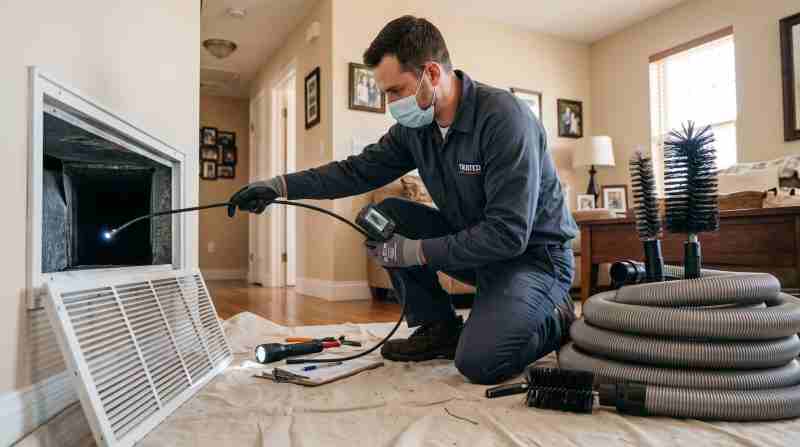
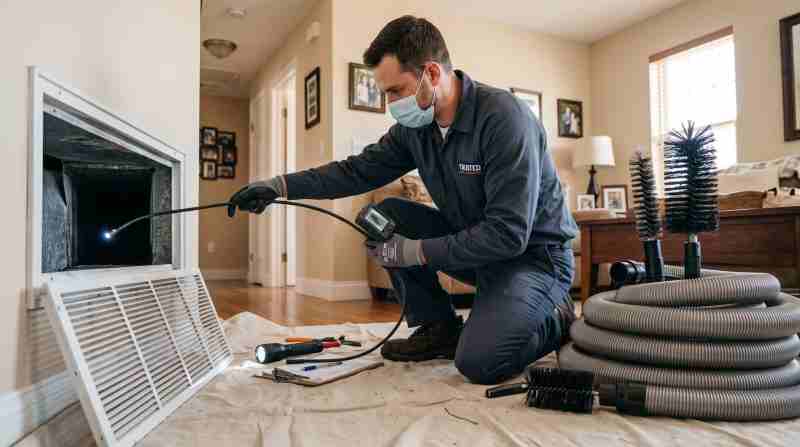
A certified technician begins by assessing the entire configuration. Using specialized inspection cameras, they inspect internal trunk lines, check the integrity of flexible joints, identify tears or loose seams, and verify whether mold or pest intrusion has occurred. This diagnostic step determines whether standard mechanical agitation is safe, especially in homes with older fiberglass duct board or delicate flex ducting.
Step 2: Establishing Negative Air Pressure
True decontamination requires containing dislodged debris so it never escapes into living spaces. Technicians hook a high-capacity vacuum unit, often truck-mounted or equipped with multi-stage HEPA filtration, directly into the main supply and return trunks near the furnace.
They seal off all individual supply registers and return grilles throughout the house with temporary magnetic or plastic covers. When the extractor starts, it pulls the entire duct system under negative pressure. Air now flows backward from the registers toward the collection vessel, ensuring that dislodged debris travels directly into sealed filtration tanks outside the home.
Step 3: Agitation and Targeted Dislodgement
Negative pressure alone cannot pull loose sticky debris, cobwebs, and caked-on pet hair. Technicians remove register covers room by room and feed specialized agitation tools down each run. These tools include:
- Rotary mechanical brushes: Stiff nylon bristles spin against metal duct interiors to scrape away stubborn accumulations.
- Compressed-air whip systems: Multi-fingered rubber whips blast high-velocity air in 360-degree sweeps, flicking heavy dirt free from corners and seams.
- Forward and reverse air nozzles: Pneumatic "skipper balls" push debris forward into the main trunk line, guiding it straight toward the negative vacuum collection point.
The technician works systematically from the furthest register back toward the primary air handler, guaranteeing that no branch line is skipped.
Step 4: Cleaning Key Air Handling Components
Duct cleaning is incomplete if the air handler remains dirty. Dust dislodged from ducts will quickly settle right back onto the motor, blower wheel, and heat exchanger. Professionals wipe and vacuum the blower motor housing, remove dust from individual fan blades, clean the air return drop, and inspect the evaporator coil.
When homeowners invest in comprehensive air duct cleaning services in Heber City Utah, local experts ensure high-elevation furnace configurations receive complete component cleanings that preserve operational efficiency. Similarly, calling upon Logan's trusted air duct cleaners provides property owners with the security of knowing that rural agricultural dust and cold-season soot are entirely cleared from vital mechanical parts.
Step 5: Final Sanitization and Seal Check
After extracting all particulate matter, technicians seal any service access ports cut into the metal trunks using heavy-gauge metal patch plates, gaskets, and sheet-metal screws, followed by mastic tape to ensure an airtight seal. When appropriate and requested, an EPA-registered antimicrobial mist can be fogged through the system to eliminate lingering fungal spores or persistent odors, leaving the internal metal clean, sanitary, and ready for use.
Meaningful Relief for Respiratory Conditions
For family members living with asthma, chronic bronchitis, or severe seasonal allergies, contaminated air ducts represent a continuous challenge. Sub-micron particles irritate bronchial passages, prompting inflammation, nighttime coughing fits, and restless sleep. Removing years of built-in allergens removes an invisible burden from your lungs, creating a safe sanctuary inside your home regardless of regional air quality alerts outside.
Measurable Energy Savings
When return registers and supply ducts collect heavy coats of dust, the system struggles against elevated static pressure. The blower motor draws more amperage to push air through restricted pathways.
Furthermore, when fine dust blankets the cooling evaporator coil or the furnace heat exchanger, it acts as an insulator, slowing thermal exchange. The equipment runs longer to achieve the same temperature setting, driving up monthly utility bills. Thorough cleanings restore unrestricted static pressure dynamics, allowing your system to cycle off sooner and saving real money on seasonal energy costs.
Elimination of Persistent, Stale Odors
Lingering household scents from tobacco smoke, cooking oils, household pets, and past water leaks eventually embed themselves inside duct liners and settled dust. Room fresheners, candles, and aerosol sprays only mask these odors temporarily. Comprehensive duct cleaning extracts the odor-holding physical matter completely, freshening the underlying baseline scent of your home.
When to Schedule Service: Warning Signs Your Ducts Need Immediate Attention
While a standard rule of thumb recommends thorough professional duct cleaning every three to five years, certain conditions indicate an urgent need for service sooner:
- Visible dust plumes: You see clouds of fine particulate puffing out of supply registers whenever the fan kicks on.
- Rapid dust settlement: Tabletops, shelves, and baseboards collect a visible layer of gray dust within 24 to 48 hours after a thorough cleaning.
- Recent structural renovations: You completed drywall work, hardwood floor refinishing, or tile cutting, which pulls immense amounts of silica dust into return air vents.
- New home purchase: You moved into an existing home where prior owners had multiple indoor pets or neglected system maintenance.
- Unexplained spikes in power bills: Your energy costs are rising without an accompanying change in local utility rates or extreme weather.
- Rodent or insect evidence: Droppings, nesting materials, or unpleasant smells emerge from vent floor boxes.
Clean Air Begins Behind Your Walls
Safe, restorative indoor air does not happen by accident. It requires thoughtful care of the mechanical systems that keep your home warm in the depths of winter and cool during the peak heat of summer. Letting dust, mold spores, dander, and outdoor pollution accumulate unchecked inside your ductwork compromises your health, taxes your expensive mechanical equipment, and diminishes your indoor comfort.
Do not wait for strange odors, rising utility costs, or persistent morning sneezes to address the air you breathe every day. Reach out to verified, highly rated professionals in your area to schedule a comprehensive duct inspection. Homeowners in the Heber Valley can count on experienced technicians providing air duct cleaning services in Heber City Utah, while Cache County residents can easily connect with Logan's trusted air duct cleaners. Schedule an appointment today to clear out years of built-up debris, lower your energy expenses, and ensure fresh, healthy air circulation across every season.
Source:
Click for the: Full Story
You might like