



 Close Menu
 World
World
 Biography
 Health
 Education
 Business
 Lifestyle
 Sports
 Technology
 Animals
 History
 Food
Food
 Religious
 Startups
 Movies
 Politics
 Fashion
 Covid
Covid
 Diet
Diet
 Fitness
 Marketing
 Travel
 Science
 Reviews
 Social media
 Stories
 Facts
Facts
 Art
Art
 Entertainment
Sakshi Padiyar

Education
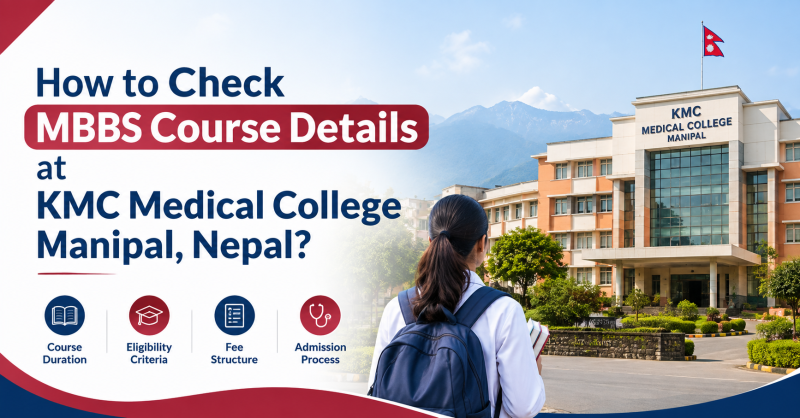
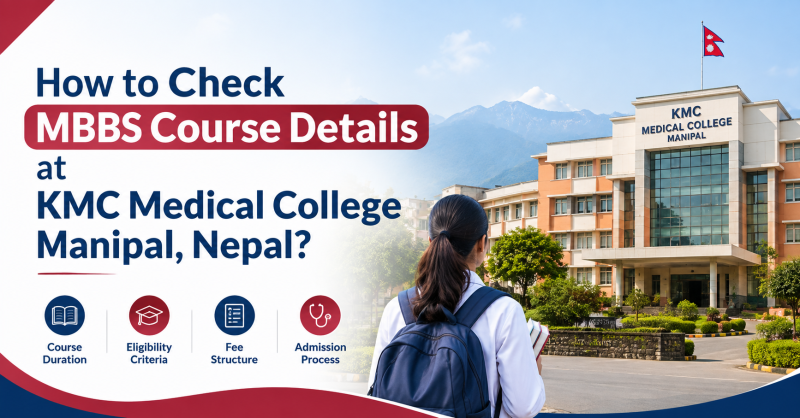
How to Check MBBS Course Details at KMC Medical College Manipal, Nepal?
 Sakshi Padiyar
Students exploring MBBS options abroad often shortlist KMC Medical College Manipal, Nepal for its academic reputation and clinical training environment. Before applying, it helps to understand how the college is structured, what admission pathways exist, and where to verify official information. This guide walks through the key details students and parents should check, along with practical notes on eligibility, quota seats, fees, and campus facilities.
Overview of KMC Medical College Manipal, Nepal
KMC Medical College Manipal, Nepal, functions under the Manipal College of Medical Sciences framework and is affiliated with Kathmandu University. It offers an MBBS programme designed around a structured pre-clinical and clinical curriculum, drawing on decades of medical education experience from the broader Manipal group of institutions.
Location and Institutional Background
The college is situated in Pokhara, Nepal, a location that gives students access to a dedicated teaching hospital alongside academic blocks. Its institutional background is tied to an established medical education group, which many families find reassuring when comparing it with newer or lesser-known colleges.
Recognition and Approval Status
Before shortlisting any medical college abroad, recognition status should be the first thing verified. Approval details, affiliation status, and eligibility for Indian licensing examinations such as FMGE/NExT can change, so students should always cross-check the latest status through the National Medical Commission (NMC) website and the university's official portal rather than relying solely on agent claims.
MBBS Admission in Nepal at KMC Manipal
MBBS Admission in Nepal generally follows a structured process involving eligibility screening, entrance requirements, and document verification. Understanding this process early helps avoid last-minute confusion during the actual admission cycle.
Eligibility Criteria for MBBS Admission
Most Nepal medical colleges, including KMC, expect candidates to have completed Class 12 with Physics, Chemistry, and Biology, along with a qualifying score in a recognised entrance exam such as NEET (for Indian applicants) or the respective national medical entrance test. Minimum age and subject-specific percentage requirements may also apply. Since eligibility norms are reviewed periodically, applicants should confirm the current criteria directly with the college or through authorised counselling channels.
Application Process and Timeline
The application process typically includes submitting academic transcripts, entrance exam scores, and identification documents, followed by a review and offer stage. Timelines vary each year depending on the academic calendar and intake cycle, so students should track official announcements closely instead of assuming previous years' dates will repeat exactly.
Quota Admission in Nepal – How It Works
Quota Admission in Nepal is a common route many Indian students consider, as certain seats are allocated separately from the general intake. This pathway can differ in eligibility, deposit structure, and processing time compared to direct or management-quota admissions.
Types of Quota Seats Available
Depending on the college and academic year, quota seats may be categorised for local Nepali students, SAARC nationals, or international applicants. Each category can carry different fee structures and documentation requirements, which is why verifying the exact quota classification applicable to a student's nationality is important before proceeding.
Counselling Process for Quota Admission
Counselling for quota-based MBBS seats usually involves document verification, seat allotment based on eligibility and preference, and confirmation through a formal admission letter. Because counselling schedules, seat matrices, and cut-off requirements are revised every session, students are advised to rely on verified counselling authorities or the college's admission office rather than informal sources.
Course Curriculum and Duration at KMC Medical College Manipal, Nepal
The MBBS programme at KMC Medical College Manipal, Nepal, follows a curriculum broadly aligned with standard medical education structures — pre-clinical subjects in the initial years, followed by para-clinical and clinical postings. The total duration, including a compulsory internship period, generally spans between five and six years, though exact structuring should be confirmed from the current academic handbook.
Academic Structure and Clinical Exposure
Clinical exposure is introduced progressively, with students moving from theoretical foundations to hospital-based learning in later years. Access to a teaching hospital on or near campus allows students to observe real patient care, which is a factor many applicants weigh when comparing colleges for practical training quality.
Faculty and Teaching Hospital Facilities
Faculty experience and hospital infrastructure directly influence the quality of clinical training. Prospective students should look into faculty qualifications, patient inflow at the attached hospital, and availability of specialised departments, since these details affect hands-on learning opportunities during clinical years.
Fees, Hostel and Campus Life
Financial planning is a major part of choosing any MBBS destination, and fee structures for Nepal-based colleges can vary depending on quota category, nationality, and academic year.
Fee Structure and Related Costs
Tuition fees, hostel charges, examination fees, and other institutional costs should be checked directly from the official fee schedule published by the college, as figures are revised periodically and may differ for local, SAARC, or international applicants. Avoid finalising a budget based on outdated or unofficial sources.
Hostel, Infrastructure and Student Support
On-campus or nearby hostel facilities, library access, laboratories, and general campus infrastructure contribute to a student's day-to-day academic experience. Parents evaluating a college from a distance should specifically ask about hostel safety, mess facilities, and support systems available for international students settling into a new country.
Frequently Asked Questions
Common Questions on Admission and EligibilityIs NEET qualification required for admission?
Indian students generally need a qualifying NEET score, though exact requirements should be confirmed with current admission guidelines.
What is the minimum eligibility for MBBS Admission in Nepal at this college?
Class 12 with Physics, Chemistry, and Biology, along with the applicable entrance exam score, is typically required.
Are seats available every year for Quota Admission in Nepal?
Seat availability under quota categories depends on the academic year and should be checked through official counselling updates rather than assumed in advance.
Common Questions on Fees and Course DetailsDoes the MBBS fee remain the same throughout the course?
Fees can be revised periodically, so students should refer to the latest fee notification issued by the college.
How long does the MBBS programme take to complete?
It generally spans five to six years, inclusive of internship, though the exact duration should be verified from current academic records.
Choosing a medical college is a significant decision, and details like recognition status, quota structure, fees, and clinical training facilities at KMC Medical College Manipal, Nepal, should always be verified through official and updated sources before applying. Cut-offs, counselling schedules, and seat availability change each year, and no admission outcome can be assumed in advance.
For students and parents who want personalised guidance while evaluating MBBS options in Nepal, College Storia offers admission counselling support to help clarify eligibility, documentation, and college-selection queries. You can reach out to College Storia at +91 9310937372 for further assistance.
Source:
Click for the: Full Story
You might like






You Might Like this