



 Close Menu
 World
World
 Biography
 Health
 Education
 Business
 Lifestyle
 Sports
 Technology
 Animals
 History
 Food
Food
 Religious
 Startups
 Movies
 Politics
 Fashion
 Covid
Covid
 Diet
Diet
 Fitness
 Marketing
 Travel
 Science
 Reviews
 Social media
 Stories
 Facts
Facts
 Art
Art
 Entertainment
Sakshi Padiyar

Education
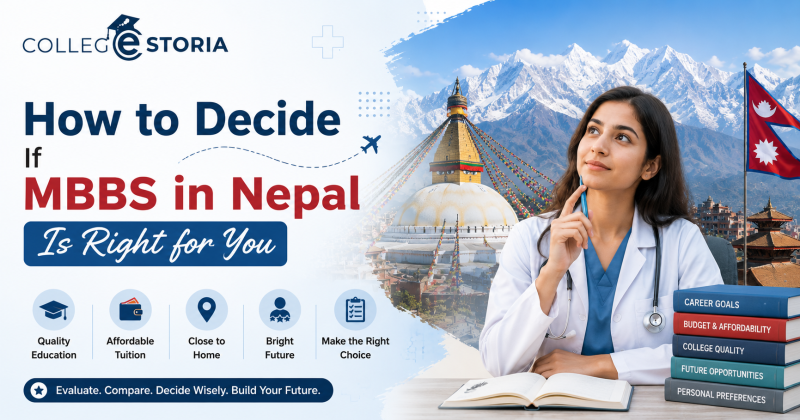
How to Decide If MBBS in Nepal Is Right for You
 Sakshi Padiyar
Choosing where to study medicine is a major decision for any NEET aspirant. For Indian students who have completed NEET and are exploring options outside India, MBBS in Nepal can be one of the destinations worth considering.
However, the right question is not simply, "Is MBBS in Nepal good?" The more useful question is: "Is MBBS in Nepal right for my academic goals, budget and future career plans?"
Every student has different priorities. Some may value proximity to home, while others may focus more on clinical exposure, college reputation, total cost or their plans after graduation.
If you are considering MBBS Admission in Nepal, this guide will help you evaluate whether it genuinely fits your situation.
Why Do Indian Students Consider MBBS in Nepal?
After NEET, students may find that their preferred MBBS college in India is difficult to secure because of competition, rank, budget or limited seat availability.
Nepal can become an alternative for students who want to pursue medical education outside India while remaining relatively close to their home country.
Some factors that may attract Indian students include:
- Geographic proximity to India
- Familiar regional environment
- Availability of medical colleges
- Opportunities for clinical education
- Relatively convenient travel for some Indian families
- An alternative when preferred Indian MBBS options are unavailable
But these advantages should be considered alongside the responsibilities and requirements of studying medicine abroad.
Also Check:
Start With Your Long-Term Career Goal
Before researching colleges, identify what you want to do after MBBS.
Ask yourself:
Do I want to practice in India?
If yes, understand the regulations and licensing pathway applicable to foreign medical graduates before choosing a college.
Do I want to pursue postgraduate education later?
Research how your planned MBBS pathway fits into your future postgraduate goals.
Do I want to build my career in another country?
Then you should investigate the licensing and eligibility requirements of that destination as well.
Your long-term goal should influence the college and country you select.
1. Check Whether You Meet the Admission Requirements
The first practical question is whether you are eligible.
Indian students should verify the current requirements applicable to their admission year, including:
- Academic qualifications
- Required subjects
- Minimum marks
- NEET-related requirements
- Age-related requirements, where applicable
- Entrance or counselling requirements
- Documentation
Admission rules can change, so don't rely entirely on information from older students or previous admission cycles.
Before beginning MBBS Admission in Nepal, confirm the latest requirements from the relevant official authorities and the institution.
2. Can Your Family Manage the Total Cost?
Budget is one of the most important factors.
Don't look only at the tuition fee.
Calculate the broader cost of studying abroad, including:
- Tuition
- Hostel
- Food
- Books and study materials
- Travel
- Visa or administrative expenses, where applicable
- Examination-related charges
- Personal expenses
- Other institutional charges
A college that appears affordable based on tuition alone may have a considerably different overall cost.
Ask the institution for a detailed fee structure and payment schedule before making a financial commitment.
3. Are You Comfortable Studying Outside India?
Moving to another country is a significant adjustment.
Even though Nepal is geographically close to India, you will still be living away from your home environment.
Think about whether you are comfortable with:
- Living independently
- Managing daily responsibilities
- Adapting to a new campus
- Adjusting to a different local environment
- Staying away from family
- Managing your own schedule
- Handling administrative requirements
If you are comfortable with these changes, studying in Nepal may be easier to adapt to.
4. How Important Is Being Close to Home?
For some students, proximity to family is a major factor.
Nepal's location can make it appealing compared with destinations that require much longer international travel.
However, travel convenience depends on your home city and the location of the medical college.
Consider:
- Travel time
- Transportation options
- Travel costs
- Frequency of trips home
- Accessibility during emergencies
If staying relatively close to your family is important to you, include this factor when comparing destinations.
5. Evaluate the Medical College, Not Just the Country
One of the biggest mistakes students make is treating "Nepal" as the complete decision.
The quality of your education depends heavily on the specific medical college and teaching hospital.
Before choosing an institution, investigate:
Teaching Hospital
Look at:
- Patient volume
- OPD services
- Inpatient departments
- Emergency facilities
- Clinical specialties
- Practical training opportunities
Academic Infrastructure
Check:
- Laboratories
- Library
- Lecture facilities
- Practical facilities
- Academic departments
Faculty
Research the teaching staff and department structure.
Student Facilities
Check:
- Hostel
- Food
- Internet
- Transportation
- Safety
- Student support
The country may be suitable, but a particular college may still not match your expectations.
6. How Important Is Clinical Exposure to You?
Medical education is not limited to textbooks.
As you progress through MBBS, exposure to real patients becomes increasingly important.
When researching MBBS in Nepal, investigate the attached teaching hospital and understand:
- Number and variety of patients
- OPD exposure
- Ward postings
- Emergency exposure
- Clinical departments
- Practical training
- Internship arrangements
Don't assume that a large campus automatically means strong clinical training.
The teaching hospital and the opportunities available to students deserve careful attention.
7. Understand the Internship Structure
Internship is an important part of medical training.
Before admission, understand:
- Where the internship is conducted
- How long it lasts
- What departments students rotate through
- What practical exposure is available
- What requirements apply to Indian students
- Whether the internship structure aligns with the regulations relevant to your future plans
This is particularly important if you intend to return to India after graduation.
Get these details from official sources and keep documentation of the applicable rules.
8. Check the Recognition and Regulatory Position
Never skip this step.
Before paying any admission fee, verify the current status of the institution with the relevant authorities.
Indian students should also understand the requirements that may apply to foreign medical graduates who want to pursue registration or practice in India.
Regulations can change over time.
Therefore, don't rely on claims such as:
"The college is accepted everywhere."
Instead, verify the applicable requirements for your admission year and future career plans.
9. Think About Your Learning Style
Your personal learning style also matters.
Ask yourself whether you prefer:
- More classroom-based learning
- Practical learning
- Patient-based learning
- Structured academic schedules
- Independent study
- Group discussions
- Research activities
You should investigate whether the medical college's teaching environment matches the way you learn best.
10. Consider Your Ability to Adapt
Medical school itself is demanding.
Moving to another country can add another layer of adjustment.
Before choosing Nepal, think about whether you can comfortably adapt to:
- New surroundings
- Different institutional procedures
- A different social environment
- New classmates
- Living away from home
- A demanding medical curriculum
Students who are adaptable and comfortable with independence may find the transition easier.
11. Don't Choose Nepal Only Because Someone Promised Admission
This is an important warning for students and parents.
Avoid making a decision based solely on statements such as:
- "Admission is guaranteed."
- "You don't need to worry about documents."
- "The rules are the same everywhere."
- "The college is automatically recognized."
- "You can practice anywhere after graduation."
Always verify important claims independently.
Before paying money, obtain official information regarding eligibility, fees, admission procedures, institutional status and applicable regulations.
12. Compare Nepal With Your Indian Options
Choosing Nepal should not happen in isolation.
If you have realistic MBBS options in India, compare them carefully.
Consider:
College quality
Clinical exposure
Total cost
Location
Hostel
Academic environment
Future career pathway
Regulatory requirements
A foreign medical college should be chosen because it makes sense for your circumstances—not simply because you did not get your first-choice Indian college.
Who May Find MBBS in Nepal Suitable?
Nepal may be worth considering for students who:
- Have completed the required NEET and academic requirements
- Want to explore medical education outside India
- Prefer a geographically closer international destination
- Have researched their chosen institution
- Can manage the complete financial commitment
- Are comfortable living away from home
- Understand the applicable regulations
- Have a clear long-term career plan
Who Should Reconsider or Research Further?
You should take more time if you:
- Have not verified the college's recognition
- Are unsure about the total cost
- Have not researched clinical exposure
- Don't understand the internship requirements
- Are uncomfortable living away from home
- Are choosing only because admission appears easier
- Are relying entirely on an agent's claims
- Have not compared Nepal with your realistic Indian options
Final Thoughts
There is no universal answer to whether MBBS in Nepal is right for an Indian student. The decision depends on much more than NEET marks or the availability of a seat.
If the college is appropriately recognized, the teaching hospital provides suitable clinical exposure, the total cost fits your family's budget and the program aligns with your long-term career plans, Nepal may be worth considering.
However, don't choose a college simply because it offers an easier alternative after NEET. Research carefully, verify official information and compare your options before making a commitment.
For students exploring MBBS Admission in Nepal, CollegeStoria can help you understand different admission options, compare medical colleges and approach your decision with greater clarity.
FAQs
1. Is MBBS in Nepal right for every Indian student?
No. The suitability of Nepal depends on the student's academic goals, financial situation, preferred college, comfort with living abroad and long-term career plans.
2. What should I check before MBBS Admission in Nepal?
Check eligibility, recognition, teaching hospital, clinical exposure, faculty, complete fees, accommodation, internship structure and the applicable pathway for your future medical registration.
3. Is Nepal a good option after NEET?
It can be an option for eligible students who want to pursue medical education outside India. However, the decision should be based on the specific institution and the student's long-term plans rather than the country alone.
4. How do I choose a medical college in Nepal?
Compare colleges based on recognition, teaching hospital, patient exposure, faculty, academic facilities, fees, hostel, location and student support.
5. Should I compare MBBS in Nepal with colleges in India?
Yes. Before making a final decision, compare the Nepal option with the Indian colleges available to you in terms of education quality, cost, clinical exposure and future career requirements.
6. Is MBBS in Nepal suitable for students who want to practice in India?
It may be possible, but students must understand and meet the regulatory and licensing requirements applicable to foreign medical graduates. These requirements should be verified before admission.
Source:
Click for the: Full Story
You might like





You Might Like this