Close Menu
 World
World
 Biography
 Health
 Education
 Business
 Lifestyle
 Sports
 Technology
 Animals
 History
 Food
Food
 Religious
 Startups
 Movies
 Politics
 Fashion
 Covid
Covid
 Diet
Diet
 Fitness
 Marketing
 Travel
 Science
 Reviews
 Social media
 Stories
 Facts
Facts
 Art
Art
 Entertainment
Sakshi Padiyar

Education
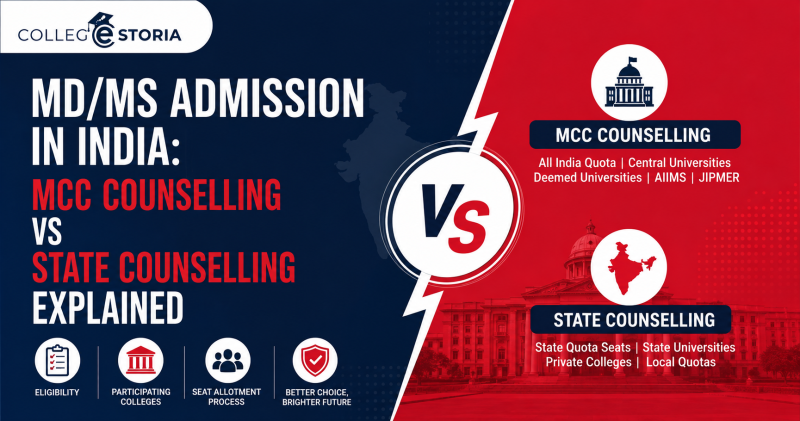
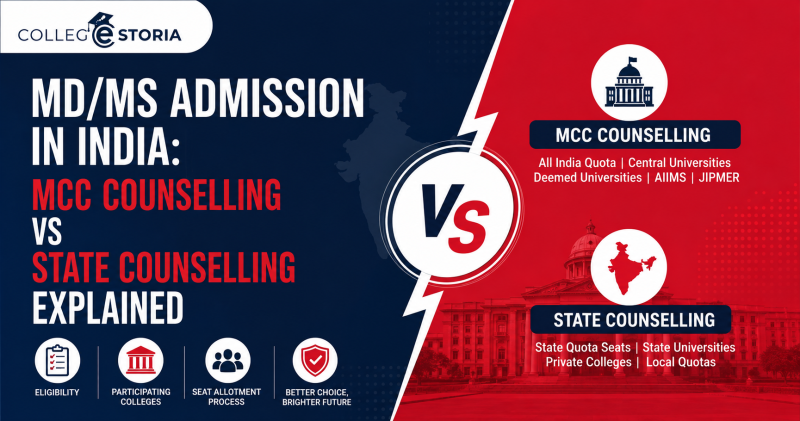
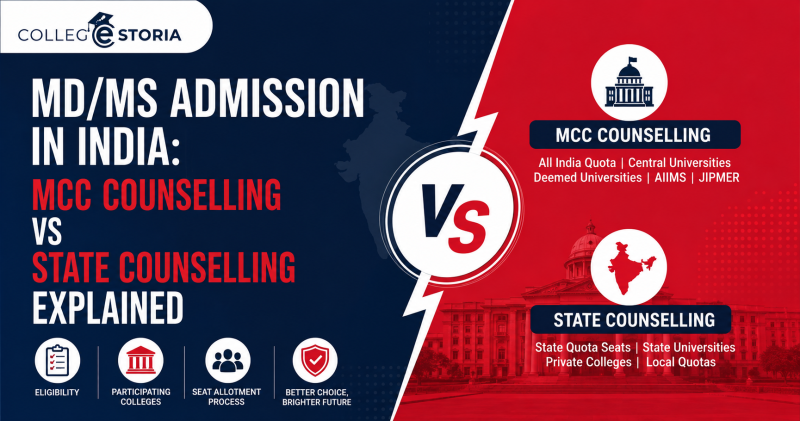
MD/MS Admission in India: MCC Counselling vs State Counselling Explained
 Sakshi Padiyar
After qualifying for NEET PG, the next major step is counselling. This is where many medical graduates become confused because postgraduate medical seats in India are not allotted through one single counselling system.
For candidates planning MD/MS Admission in India, understanding the difference between MCC counselling and state counselling is essential. Choosing the right counselling route, understanding eligibility and preparing preferences carefully can significantly improve the admission experience.
MCC and state counselling authorities have different responsibilities, seat categories and processes. Therefore, candidates should understand where they can participate before preparing their college preference list.
What Is MCC Counselling for MD/MS Admission?
The Medical Counselling Committee (MCC) conducts counselling for specific postgraduate medical seats at the national level.
MCC handles counselling for 50% All India Quota (AIQ) PG seats of participating states, as well as 100% of postgraduate seats in deemed universities and certain central institutions, among other categories covered under its counselling framework.
Through MCC counselling, eligible candidates can compete for applicable seats across different parts of India, depending on their rank, eligibility and the rules of the relevant counselling cycle.
This makes MCC particularly important for students who want to explore colleges outside their home state.
Also Check:
Management Quota Admission in NEET PG
What Is State Counselling?
State counselling is conducted by the respective state or designated counselling authority.
It generally covers postgraduate seats that fall under the state's counselling jurisdiction. The exact seat distribution, eligibility conditions, reservation rules and participation requirements can vary between states.
For example, a candidate interested in MD/MS in India may need to participate in both MCC counselling and their state counselling if they want to keep multiple admission possibilities open.
State counselling can be particularly important for candidates who have eligibility for seats offered through their state system.
Why Should You Participate in Both?
If you are eligible for both systems, participating in both can give you a broader set of possibilities for MD/MS Admission in India.
For example, you might find a suitable speciality through MCC while your state counselling may provide another college or seat category that fits your preferences better.
However, participating in multiple counselling systems also requires careful tracking.
You should maintain a calendar containing:
- Registration deadlines
- Fee payment deadlines
- Choice-filling dates
- Choice-locking deadlines
- Result dates
- Reporting deadlines
- Withdrawal or resignation rules, where applicable
Missing an important deadline can affect your opportunity to participate in a particular round.
How Does Choice Filling Differ?
Choice filling is one of the most important parts of MD/MS in India counselling.
In MCC counselling, candidates fill choices from the institutions and seats available through the MCC system. In state counselling, the available options depend on the state's seat matrix and counselling rules.
Do not simply copy the same preference list into both portals.
Your list should be prepared according to the actual options available in that counselling system.
Before filling choices, consider:
- Preferred speciality
- College reputation
- Clinical exposure
- Patient volume
- Fees
- Location
- Hostel availability
- Seat category
- Previous counselling trends
Most importantly, list choices in the order you genuinely prefer them.
Can You Get a Government College Through MCC?
Yes, MCC counselling includes applicable government medical college seats under the All India Quota system. However, admission depends on the candidate's rank, eligibility, seat availability, category and the choices submitted during counselling.
A student should therefore not assume that a particular government college will be available simply because it appeared in a previous year's counselling list.
The current year's seat matrix and official counselling notices should always be checked before making preferences.
Can Private Medical Colleges Be Available Through MCC?
Yes. MCC counselling includes certain private/deemed university seats depending on the category and institution covered by its counselling process.
The important point is that private college does not automatically mean one fixed fee structure. Fees can differ significantly based on the institution and seat category.
Before adding a private college to your preference list, check the applicable fee information and understand the complete financial commitment.
A seat that appears attractive academically may not be practical if its overall cost is beyond your budget.
What Should You Check Before State Counselling?
Every state may have its own counselling requirements and procedures. Therefore, candidates should not assume that the rules of one state will automatically apply to another.
Before registering, check:
- Eligibility requirements
- Domicile-related conditions, if applicable
- Available seat categories
- Fee structure
- Reservation provisions
- College list
- Choice-filling procedure
- Reporting requirements
- Round-wise rules
- Latest official notice
This is especially important for candidates who are considering multiple states for MD/MS Admission in India.
Which Counselling Is Better: MCC or State?
There is no universal answer.
MCC counselling may be more useful for candidates who want to explore All India Quota and nationally managed seat options. State counselling may be more relevant when a candidate is eligible for state-specific seats and wants to explore colleges within that counselling system.
The better option depends on your rank, speciality preference, eligibility and the colleges you want.
Instead of asking which counselling is “better,” ask:
Which counselling routes give me access to the colleges and specialities I actually want?
That question leads to a more practical strategy.
Common Counselling Mistakes to Avoid
Candidates planning MD/MS in India should be careful about a few common mistakes.
Filling Choices Without Research
Do not add dozens of colleges without understanding their fees, speciality availability and clinical environment.
Ignoring Fee Differences
The fee difference between seat categories can be significant, especially in private and deemed institutions.
Depending Only on Previous Cut-Offs
Previous closing ranks are useful for understanding trends but cannot guarantee future allotment.
Missing Deadlines
Registration, payment, choice filling and reporting each have their own deadlines.
Not Understanding Seat Categories
Always check which category the seat belongs to and what financial and eligibility conditions apply.
Copying Someone Else's Preference List
Your rank, budget, speciality preference and career plans are different from another candidate's. Your choice list should be personalised.
How to Build a Better Counselling Strategy
A practical strategy can be divided into four steps.
Step 1: Know your rank and eligibility.
Understand which counselling systems and seat categories you can realistically access.
Step 2: Decide your speciality priorities.
Create a list of preferred MD and MS branches rather than selecting a college first.
Step 3: Research colleges.
Compare clinical exposure, hospital workload, fees, location and academic environment.
Step 4: Prepare separate preference lists.
Create one list for MCC counselling and another for each state counselling process you plan to join.
This approach can make the counselling process more organised and reduce last-minute confusion.
Final Thoughts
Understanding the difference between MCC and state counselling is an important part of MD/MS Admission in India. MCC provides access to specific national-level counselling categories, while state authorities manage applicable seats under their respective counselling systems.
For candidates, the best strategy is to understand eligibility, track official deadlines, research colleges and create realistic preference lists for every counselling route in which they participate.
Do not choose a college solely because someone else recommended it. Your ideal option should match your NEET PG rank, speciality preference, budget, clinical expectations and long-term career plans.
If you need guidance with MD/MS in India, college comparison, counselling options, speciality selection or choice-filling strategy, College Storia can help you understand your available options and plan your admission journey more effectively.
Source:
Click for the: Full Story
You might like