Close Menu
 World
World
 Biography
 Health
 Education
 Business
 Lifestyle
 Sports
 Technology
 Animals
 History
 Food
Food
 Religious
 Startups
 Movies
 Politics
 Fashion
 Covid
Covid
 Diet
Diet
 Fitness
 Marketing
 Travel
 Science
 Reviews
 Social media
 Stories
 Facts
Facts
 Art
Art
 Entertainment
Sakshi Padiyar

Education
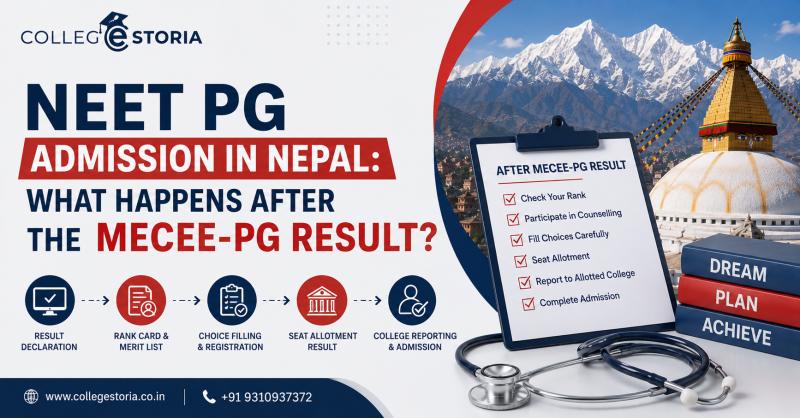
NEET PG Admission in Nepal: What Happens After the MECEE-PG Result?
 Sakshi Padiyar
Getting the MECEE-PG result is an important milestone for medical graduates planning postgraduate education in Nepal. However, receiving your result does not mean that the admission process is automatically complete. There are still several steps to follow, including checking your rank, understanding eligibility, reviewing available seats, submitting preferences, participating in the matching process and completing admission formalities.
For Indian MBBS graduates researching Top NEET PG Admission in Nepal, knowing what happens after the MECEE-PG result can help reduce confusion and prevent missed deadlines.
The exact process, dates and requirements can change with each admission cycle. Therefore, candidates should always follow the latest instructions issued by the Medical Education Commission (MEC).
What Should You Do Immediately After the MECEE-PG Result?
The first step is to carefully check your result and rank.
Do not immediately start filling college preferences without understanding what your result means. Take some time to review your position and determine which postgraduate programmes may realistically fit your profile.
After receiving the result, check:
- Your examination score
- Rank or merit position
- Applicant category
- Eligibility status
- Available admission information
- Matching schedule
- Preference submission dates
Keep a digital and printed copy of your result and other important documents for future admission requirements.
Does the MECEE-PG Result Guarantee an MD/MS Seat?
No.
A result or rank does not by itself guarantee admission to a particular college or speciality.
For MD/MS Admission in Nepal, seat allocation depends on the applicable admission and matching process, available seats, candidate preferences and the relevant rules for the admission cycle.
This is why students should treat the result as the beginning of the next stage rather than the final admission confirmation.
A good rank can improve your options, but your preference list still needs to be planned carefully.
Understand the Matching Process
After the result, eligible candidates generally move toward the preference and matching stage.
This is an important part of MD/MS in Nepal because candidates need to express which colleges and specialities they prefer.
Instead of creating a list based only on college popularity, consider:
- Preferred speciality
- College
- Teaching hospital
- Clinical exposure
- Department facilities
- Fees
- Location
- Accommodation
- Long-term career goals
Your preferences should reflect what you would genuinely be comfortable accepting.
How Should You Prepare Your Preference List?
A useful way to organise your choices is to divide them into three groups.
High-Priority Choices
These are the specialities and colleges you would most like to join.
Realistic Choices
These are options that appear suitable based on your rank, eligibility, available seats and previous admission trends.
Backup Choices
These are alternatives that you would still genuinely accept if your preferred options are unavailable.
Do not add a college merely to make your preference list longer. Before including an option, research its fees, speciality, hospital exposure and location.
Should You Choose the College or Speciality First?
There is no universal answer.
Some students have a very clear speciality preference and are willing to consider several colleges. Others may prioritise a particular institution and remain flexible about the branch.
Before finalising your choices, ask yourself:
Would I prefer my desired speciality at another college?
Would I accept a different speciality at my preferred college?
How important is location to me?
What is my maximum budget?
Which type of clinical work do I want to pursue?
Your answers can help determine the correct order of your preferences.
Research the College Before Accepting a Seat
Students looking for Top NEET PG Admission in Nepal should research the institution beyond its name.
The attached teaching hospital is especially important because postgraduate training involves extensive clinical learning.
Look at:
Patient Load
A hospital with a diverse patient population may provide broader clinical exposure.
Emergency Services
Emergency workload can be an important part of residency, depending on the speciality.
Department Facilities
Check whether the department has appropriate infrastructure and equipment.
Faculty
Understand the strength of the teaching team and academic environment.
Practical Training
For MS branches, look closely at surgical and procedural exposure. For MD branches, consider clinical workload and diagnostic experience.
This department-level research can help you make a more meaningful college comparison.
Don't Forget the Fee Structure
After the MECEE-PG result, students often become focused on getting a seat and forget to review the complete cost.
Before accepting an option for MD/MS Admission in Nepal, calculate:
- Tuition fees
- Hostel charges
- Food and mess expenses
- Registration costs
- Examination charges
- Academic materials
- Transportation
- Personal living expenses
- Travel expenses
The total cost can differ significantly between institutions and specialities.
Indian students should also consider currency conversion and the cost of travelling between India and Nepal.
Always confirm the latest official fee information before making a payment.
What Documents Should You Keep Ready?
Once the result is announced, document preparation should become a priority.
Depending on the applicable requirements, students may need documents such as:
- MBBS degree or provisional certificate
- Academic transcripts
- Internship completion certificate
- Medical registration documentation
- Identity proof
- Passport, where applicable
- MECEE-PG result/rank document
- Passport-size photographs
- Other certificates required for the applicant category
Indian students should check the latest MEC instructions because the document requirements can vary depending on the admission category.
Keeping both scanned and physical copies can make the admission process easier.
What Happens If You Don't Get Your First Choice?
Not receiving your first preference does not necessarily mean the admission process is over.
Depending on the current matching and admission rules, there may be further opportunities through subsequent rounds, rematching or available vacant seats.
The exact options depend on the admission cycle and the applicable regulations.
Therefore, do not make a rushed decision immediately after an unexpected result. Check the official instructions and understand what options remain available.
You may still have opportunities to obtain another preferred speciality or institution.
Should You Participate in Further Rounds?
If the applicable rules allow you to participate in additional rounds, you should evaluate whether doing so makes sense for your situation.
Consider:
- Your current seat
- Preferred speciality
- Remaining vacancies
- Available colleges
- Financial requirements
- Rules concerning participation
- Consequences of changing or leaving a seat
Never assume that moving to another round is risk-free. Read the official instructions carefully before making a decision.
What If You Receive a Seat?
If you receive a seat that you are willing to accept, carefully review the admission instructions.
The next steps may include:
- Confirming the seat and admission status
- Checking the reporting deadline
- Preparing original documents
- Paying the required fees
- Completing document verification
- Reporting to the institution
- Completing institutional registration
- Following orientation and joining instructions
Do not delay these steps because admission windows can be limited.
What If You Don't Get a Seat?
If you do not receive a seat in the initial matching stage, remain updated about subsequent opportunities.
Depending on the current cycle, there may be further matching rounds or vacancies.
At this point, reassess your strategy rather than abandoning your postgraduate plans immediately.
You can review:
- Whether you should broaden your speciality preferences
- Whether additional colleges are acceptable
- Whether your budget allows more options
- Whether further rounds are available
- Whether another admission pathway suits your career plans
Flexibility can sometimes create additional opportunities.
Important Point for Indian Medical Graduates
Indian students considering MD/MS in Nepal should think beyond the immediate admission.
Before accepting a postgraduate programme, understand the requirements that may apply to your future career in India.
This includes checking the current regulatory and registration framework relevant to graduates who complete postgraduate medical education outside India.
Do not rely solely on statements such as “the degree is recognised.” Find out what the recognition means for your intended career pathway and what additional requirements may apply.
This should be done before paying substantial admission fees, not after completing the course.
Common Mistakes After the MECEE-PG Result
Candidates can make avoidable mistakes when they become anxious about getting a seat.
Some common errors include:
- Filling preferences without researching colleges
- Choosing a speciality only because it is popular
- Ignoring the total cost
- Missing preference submission deadlines
- Not checking subsequent-round rules
- Using outdated fee information
- Assuming a rank guarantees a specific seat
- Ignoring future registration requirements
- Paying fees before verifying important admission details
A calm and organised approach is usually better than making quick decisions under pressure.
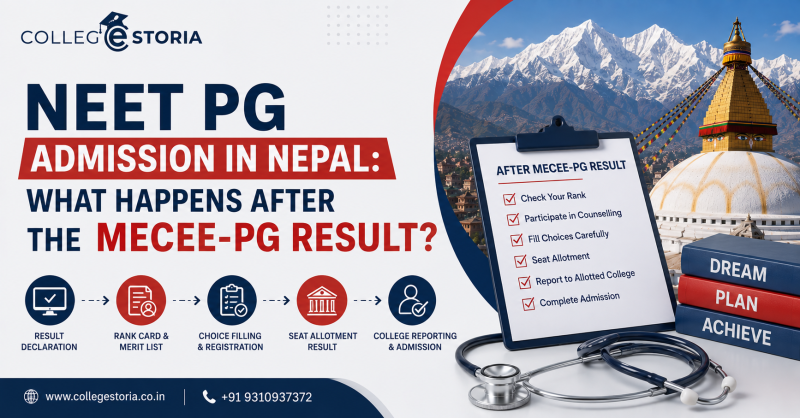
A Simple Post-Result Checklist
Use this checklist after your MECEE-PG result:
✔ Check your rank and result
✔ Read the latest MEC admission notice
✔ Confirm your eligibility
✔ Research available MD/MS programmes
✔ Compare colleges and teaching hospitals
✔ Calculate the complete cost
✔ Prepare your documents
✔ Create a realistic preference list
✔ Track matching and admission deadlines
✔ Verify future registration requirements
This can help you stay organised throughout the admission process.
Final Thoughts
The MECEE-PG result is an important milestone, but it is only one part of the postgraduate admission journey. For Indian medical graduates exploring Top NEET PG Admission in Nepal, the next steps require careful planning rather than rushing into the first available option.
Understand your rank, research the available MD/MS Admission in Nepal choices, compare specialities and colleges, calculate the complete cost and carefully follow the official matching and admission instructions.
Most importantly, think about your long-term career before accepting a seat. A postgraduate degree is a major professional decision, so the right choice should balance speciality, training quality, affordability, location and future career requirements.
If you need assistance with MD/MS in Nepal, college comparison, speciality selection, fee evaluation or understanding the admission process after the MECEE-PG result, College Storia can help you assess your options and plan your postgraduate admission journey more confidently.
Source:
Click for the: Full Story
You might like