



 Close Menu
 World
World
 Biography
 Health
 Education
 Business
 Lifestyle
 Sports
 Technology
 Animals
 History
 Food
Food
 Religious
 Startups
 Movies
 Politics
 Fashion
 Covid
Covid
 Diet
Diet
 Fitness
 Marketing
 Travel
 Science
 Reviews
 Social media
 Stories
 Facts
Facts
 Art
Art
 Entertainment
Deepak

Health
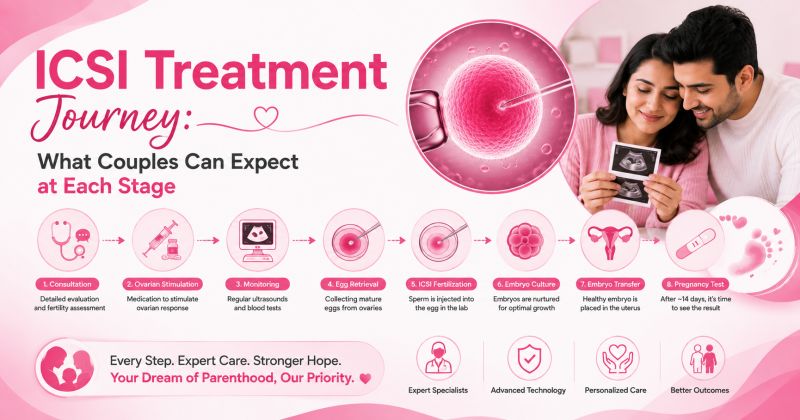
ICSI Treatment Journey: What Couples Can Expect at Each Stage
 Deepak
Starting fertility treatment can feel overwhelming, especially when couples are unfamiliar with procedures such as Intracytoplasmic Sperm Injection, commonly called ICSI. Knowing what happens at each stage can make the process easier to understand and help couples prepare for consultations, investigations, procedures, and follow-up.
ICSI is a specialized fertilization technique generally performed as part of an IVF cycle. It may be recommended for selected couples, particularly when there are certain sperm-related fertility problems or previous fertilization difficulties.
For couples considering ICSI Treatment in Delhi, understanding the complete treatment journey can help them ask relevant questions and make informed decisions with their fertility specialist.
What Is an ICSI Treatment Journey?
An ICSI treatment journey involves several stages rather than one single procedure. It can include an initial consultation, fertility testing, ovarian stimulation, monitoring, egg retrieval, sperm preparation, laboratory fertilization, embryo development, embryo transfer, and pregnancy follow-up.
The exact sequence and duration can vary because fertility treatment is personalized according to the couple's medical circumstances.
Stage 1: Initial Consultation
The journey usually begins with a detailed consultation with a fertility specialist.
The doctor may review:
- How long the couple has been trying to conceive
- Previous pregnancies
- Previous IVF or fertility treatments
- Menstrual and reproductive history
- Previous surgeries or relevant medical conditions
- Lifestyle factors
- Previous semen analysis or fertility investigations
Both partners may be evaluated because fertility difficulties can involve female factors, male factors, or a combination of factors.
The purpose of this stage is to understand the couple's fertility history before deciding whether ICSI is appropriate.
Stage 2: Fertility Investigations
After the initial consultation, the specialist may recommend investigations based on the couple's individual circumstances.
For the female partner, testing may include ultrasound, hormonal evaluation, and ovarian reserve assessment where appropriate.
For the male partner, semen analysis can provide information about sperm concentration, movement, and morphology.
Additional tests may be suggested when medically indicated.
The results help the fertility specialist develop a treatment strategy rather than relying on a standard approach for every patient.
Also Check:
Best ICSI Treatment In Yamuna Vihar Delhi
Stage 3: Creating an Individual Treatment Plan
Once the available information has been reviewed, the fertility team discusses the recommended treatment plan with the couple.
This may include the type of ovarian stimulation protocol, monitoring schedule, expected procedures, laboratory techniques, and embryo transfer strategy.
At this point, couples should ask questions about why ICSI has been recommended and what alternatives may be available.
For anyone researching ICSI Treatment in Delhi, choosing a specialist who explains the reasoning behind treatment recommendations can make the process more transparent.
Stage 4: Ovarian Stimulation and Monitoring
If an IVF-ICSI cycle is planned, medications may be prescribed to stimulate the ovaries to develop multiple follicles.
The response to these medications is monitored through ultrasound examinations and, when required, blood tests.
The treatment team may adjust medication depending on the patient's response.
Regular monitoring allows the specialist to assess follicular development and determine when the eggs are ready for retrieval.
Stage 5: Egg Retrieval
Once the follicles reach the appropriate stage, the fertility specialist schedules egg retrieval.
During this procedure, eggs are collected from the ovaries using ultrasound guidance and a specialized needle. Appropriate pain relief or sedation may be used depending on the clinical setting.
The collected eggs are then transferred to the embryology laboratory.
Not every collected egg will necessarily be mature or suitable for fertilization, which is why the laboratory assessment is an important part of the process.
Stage 6: Sperm Collection and Preparation
The male partner generally provides a sperm sample around the time of egg retrieval.
The laboratory processes the sample and identifies suitable sperm for the ICSI procedure.
In selected cases where sperm cannot be obtained through ejaculation, a fertility specialist may consider a sperm-retrieval procedure.
The appropriate approach depends on the underlying cause of male infertility.
Stage 7: The ICSI Procedure
This is the central laboratory stage of the treatment journey.
The embryologist identifies a suitable mature egg and carefully holds it in place using specialized equipment. A selected sperm is then injected directly into the egg.
The purpose of ICSI is to assist fertilization by placing the sperm inside the egg.
Following the procedure, the eggs are observed to determine whether normal fertilization has occurred.
Stage 8: Embryo Development
Fertilized eggs are cultured under controlled laboratory conditions.
The embryology team monitors embryo development over the following days. The number of embryos available can vary considerably between patients.
Some embryos may not continue developing normally, while others may progress to a stage where they can be considered for transfer or freezing.
The fertility team discusses the available options based on the individual circumstances.
Stage 9: Embryo Transfer
When an embryo is selected for transfer, the fertility specialist places it inside the uterus using a thin catheter.
Embryo transfer is generally a short procedure and does not usually involve surgery.
Depending on the treatment strategy, the transfer may occur during the same treatment cycle or may involve a frozen embryo transfer at a later time.
The appropriate approach depends on the patient's clinical situation.
Stage 10: The Waiting Period
After embryo transfer, there is usually a period before pregnancy testing.
This stage can be emotionally challenging for many couples because they may be uncertain about the outcome.
Patients should continue prescribed medications according to their fertility team's instructions and avoid making medication changes without medical advice.
It is also important to follow the clinic's specific recommendations regarding daily activities, follow-up appointments, and pregnancy testing.
Stage 11: Pregnancy Test and Follow-Up
A pregnancy test is performed at the time recommended by the fertility team.
If the test is positive, further follow-up may be scheduled to monitor the early pregnancy. An ultrasound may be recommended at the appropriate stage.
If the result is negative, the fertility specialist may discuss the outcome and review the treatment cycle with the couple. Depending on the circumstances, the doctor may suggest whether additional evaluation or another treatment approach should be considered.
How Long Does the ICSI Journey Take?
There is no universal timeline for every couple.
Some stages, such as initial consultations and fertility testing, occur before the treatment cycle begins. The active IVF-ICSI cycle then involves ovarian stimulation, monitoring, egg retrieval, fertilization, embryo development, and embryo transfer.
The overall timeline may therefore vary depending on the treatment protocol and whether a fresh or frozen embryo transfer is planned.
Couples should ask their fertility specialist for a personalized schedule.
What Should Couples Consider When Choosing a Clinic?
Couples searching for the Best ICSI Treatment in Delhi should evaluate more than the advertised cost or success rate.
Important factors include:
- Qualifications and experience of the fertility specialist
- Quality of fertility investigations
- Embryology laboratory facilities
- Personalized treatment planning
- Clear communication
- Transparent explanation of costs
- Appropriate follow-up care
- Accessibility of the clinic
A clinic that provides clear information at every stage can help couples understand their treatment journey and make informed decisions.
Conclusion
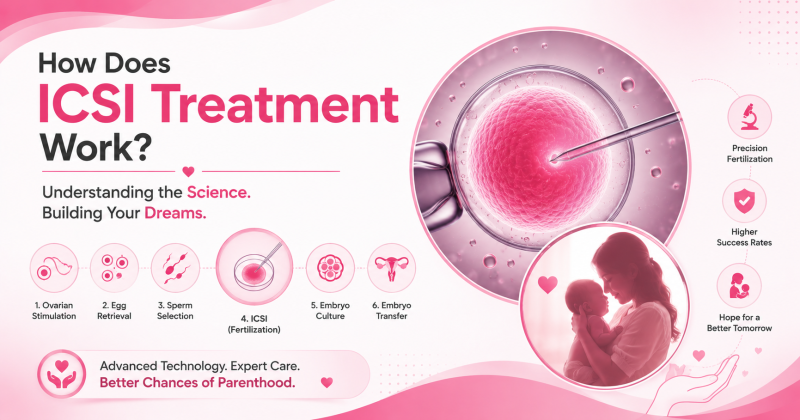
The ICSI treatment journey involves several carefully coordinated stages, beginning with fertility assessment and treatment planning and continuing through ovarian stimulation, egg retrieval, sperm preparation, ICSI fertilization, embryo development, embryo transfer, and pregnancy follow-up.
For couples considering ICSI Treatment in Delhi, understanding these stages can make the process more manageable and help them communicate effectively with their fertility specialist.
When looking for the Best ICSI Treatment in Delhi, couples should consider medical expertise, laboratory standards, individualized care, transparent communication, and appropriate follow-up rather than making a decision based on cost or promotional claims alone.
Frequently Asked Questions
1. Is ICSI a separate treatment from IVF?
ICSI is a specialized fertilization technique that is generally performed as part of an IVF cycle. It involves injecting a selected sperm directly into a mature egg.
2. Is ICSI recommended for every couple undergoing IVF?
No. ICSI may be recommended in selected circumstances. The decision depends on factors such as sperm characteristics, previous fertilization outcomes, and the couple's overall fertility assessment.
3. What happens after ICSI fertilization?
After fertilization, the resulting embryos are monitored in the laboratory. Depending on the treatment plan, an embryo may subsequently be transferred to the uterus or embryos may be frozen for future use.
4. Does ICSI guarantee pregnancy?
No. ICSI assists the fertilization process but cannot guarantee pregnancy. Treatment outcomes depend on several biological and clinical factors.
5. How can couples prepare for an ICSI cycle?
Couples should understand their treatment plan, attend scheduled appointments, take prescribed medications as directed, discuss concerns with their fertility team, and maintain realistic expectations about the process.
Source:
Click for the: Full Story
You might like






You Might Like this