Close Menu
 World
World
 Biography
 Health
 Education
 Business
 Lifestyle
 Sports
 Technology
 Animals
 History
 Food
Food
 Religious
 Startups
 Movies
 Politics
 Fashion
 Covid
Covid
 Diet
Diet
 Fitness
 Marketing
 Travel
 Science
 Reviews
 Social media
 Stories
 Facts
Facts
 Art
Art
 Entertainment
Dhiman Group

Business
Lollipop Manufacturing and Packaging Machines: Building an Efficient Production Line
 Dhiman Group
Producing lollipops at a commercial scale involves much more than simply forming candy and putting it into a wrapper. Manufacturers need to maintain consistency in shape, size, filling, stick placement, wrapping, sealing, and overall presentation. As production volumes increase, relying heavily on manual processes can make it difficult to maintain the same level of efficiency and consistency.
This is why automated confectionery machinery has become an important part of modern candy manufacturing. From a ball lollipop forming machine to a high-speed lollipop wrapping machine, each stage can be designed to work together as part of a streamlined production system.
Why Automation Matters in Lollipop Manufacturing
A successful lollipop production line needs to deliver consistent results over long production cycles. Variations in product size or shape can create problems during handling and packaging, while inconsistent wrapping can affect both appearance and product protection.
Automation helps manufacturers create a more controlled production environment by reducing unnecessary manual intervention.
The major advantages include:
- More consistent product dimensions
- Higher production efficiency
- Reduced manual handling
- Better packaging consistency
- Improved production control
- Easier integration between different manufacturing stages
For businesses producing confectionery products for supermarkets, wholesalers, export markets, or private-label brands, these advantages can become particularly important as order volumes increase.
Ball Lollipop Forming Machine for Consistent Production
The forming stage determines the basic shape and characteristics of the finished lollipop. A modern ball lollipop forming machine can be designed to produce round or cylindrical lollipops while also supporting different product configurations.
For example, DhimanGroup's BLP-500 is designed for adjustable-sized round or cylindrical lollipops and can accommodate centre fillings such as gum, chewy mass, or powder filling. The machine also incorporates stick insertion as part of the forming process.
This type of equipment can be particularly useful for manufacturers who need consistency across large production runs.
A reliable forming system should provide:
- Consistent product dimensions
- Accurate stick insertion
- Controlled forming pressure
- Suitable handling of different recipes
- Reliable continuous operation
- Easy access for cleaning and maintenance
The goal is not simply to produce more lollipops. It is to produce a consistent product that can move smoothly into subsequent cooling, handling, and packaging stages.
From Forming to Packaging: Why Integration Matters
One of the common challenges in confectionery manufacturing is creating bottlenecks between different stages. A fast forming machine does not necessarily improve overall output if the packaging section cannot handle the same production flow.
An efficient production line therefore needs appropriate coordination between:
Cooking → Forming → Stick Insertion → Cooling → Feeding → Wrapping → Sealing → Final Packing
This integrated approach can help manufacturers reduce unnecessary product handling and maintain a smoother production rhythm.
It also makes production planning easier because each stage can be evaluated according to its capacity and operational requirements.
Lollipop Wrapping Machine for Better Product Presentation
Packaging has a direct influence on how a confectionery product looks when it reaches the consumer. A lollipop wrapping machine can automate the process of feeding, positioning, wrapping, sealing, and handling the packaging material.
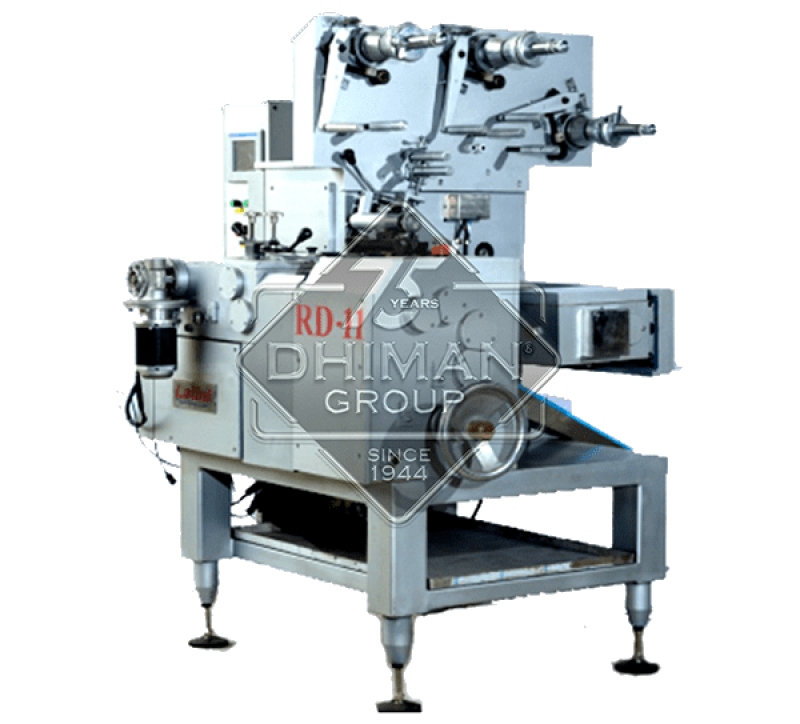
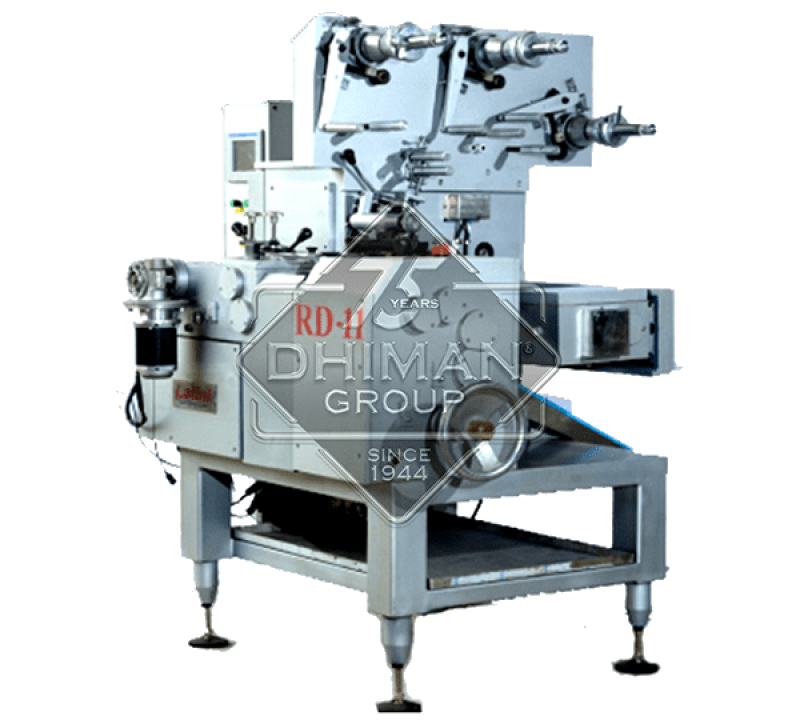
Depending on the machine configuration, wrapping systems can support different styles and packaging requirements. Ball lollipop wrapping equipment, for instance, can automatically cut packaging material to the required length before wrapping individual lollipops.
Automated wrapping offers several practical benefits:
- Uniform packaging appearance
- Consistent sealing
- Faster packaging operations
- Reduced manual handling
- Better control over packaging material
- Improved production hygiene
For brands where packaging forms an important part of product presentation, consistent wrapping can make a noticeable difference on retail shelves.
When to Consider an Automatic Cut and Flow Wrap Machine
Not every confectionery product requires the same packaging format. For products that need continuous wrapping and precise cutting, an automatic cut and flow wrap machine can be a practical solution.
Flow wrapping creates an individual package around the product before the packaging material is sealed and cut. This approach is commonly considered where manufacturers need consistent pack dimensions and efficient continuous packaging.
Before investing in such equipment, manufacturers should evaluate:
- Product dimensions
- Required packaging speed
- Film specifications
- Sealing requirements
- Product feeding method
- Available production space
- Changeover requirements
- Maintenance accessibility
The machine should be selected according to the product and production environment rather than simply focusing on maximum speed.
Understanding the Role of a Cut and Flow Wrap Machine
A Cut and Flow Wrap Machine can be especially valuable when packaging consistency and production efficiency are priorities.
The basic process involves feeding the product into the packaging section, forming the packaging material around it, sealing the package, and cutting individual packs. When correctly configured, this reduces repetitive manual operations and creates a consistent finished product.
For confectionery manufacturers, the biggest consideration is often how effectively the packaging machine integrates with the rest of the production line.
A machine that operates efficiently but requires frequent manual intervention may not deliver the same overall productivity as a properly integrated system.
What Should Manufacturers Consider Before Buying?
Selecting confectionery machinery is a significant investment, particularly for manufacturers planning long-term production. The right decision requires looking at the entire manufacturing process rather than evaluating one machine in isolation.
Consider the following factors:
- Current and projected production volume
- Product size and shape
- Filling requirements
- Packaging format
- Available factory space
- Automation requirements
- Ease of cleaning
- Spare parts availability
- Maintenance requirements
- Technical and after-sales support
Manufacturers should also consider whether the equipment can accommodate future product variations. Flexibility can be valuable when consumer preferences and product portfolios change.
The Future of Automated Confectionery Production
Modern confectionery manufacturing is moving toward greater automation, improved process consistency, and better integration between production stages. Equipment manufacturers are increasingly focusing on solutions that combine productivity with ease of operation, maintenance, and space efficiency.
For lollipop manufacturers, this means that forming and packaging should no longer be viewed as completely separate functions. The relationship between product consistency and packaging performance is becoming increasingly important.
A consistently formed lollipop is easier to handle, position, and package. Likewise, an efficient wrapping system helps ensure that the finished product maintains a consistent appearance from the production line to the retail shelf.
Conclusion
Building an efficient lollipop production operation requires the right combination of forming, handling, and packaging technology. A dependable ball lollipop forming machine can establish consistency at the beginning of the process, while a modern lollipop wrapping machine can improve the speed and uniformity of the final packaging stage.
For manufacturers handling products that require continuous packaging, an automatic cut and flow wrap machine or Cut and Flow Wrap Machine can provide another practical route toward streamlined production.
The key is to select equipment based on the complete production requirement rather than a single specification. With the right combination of machinery, confectionery manufacturers can create a production environment designed for consistency, efficiency, scalability, and reliable product quality.
Source:
Click for the: Full Story
You might like